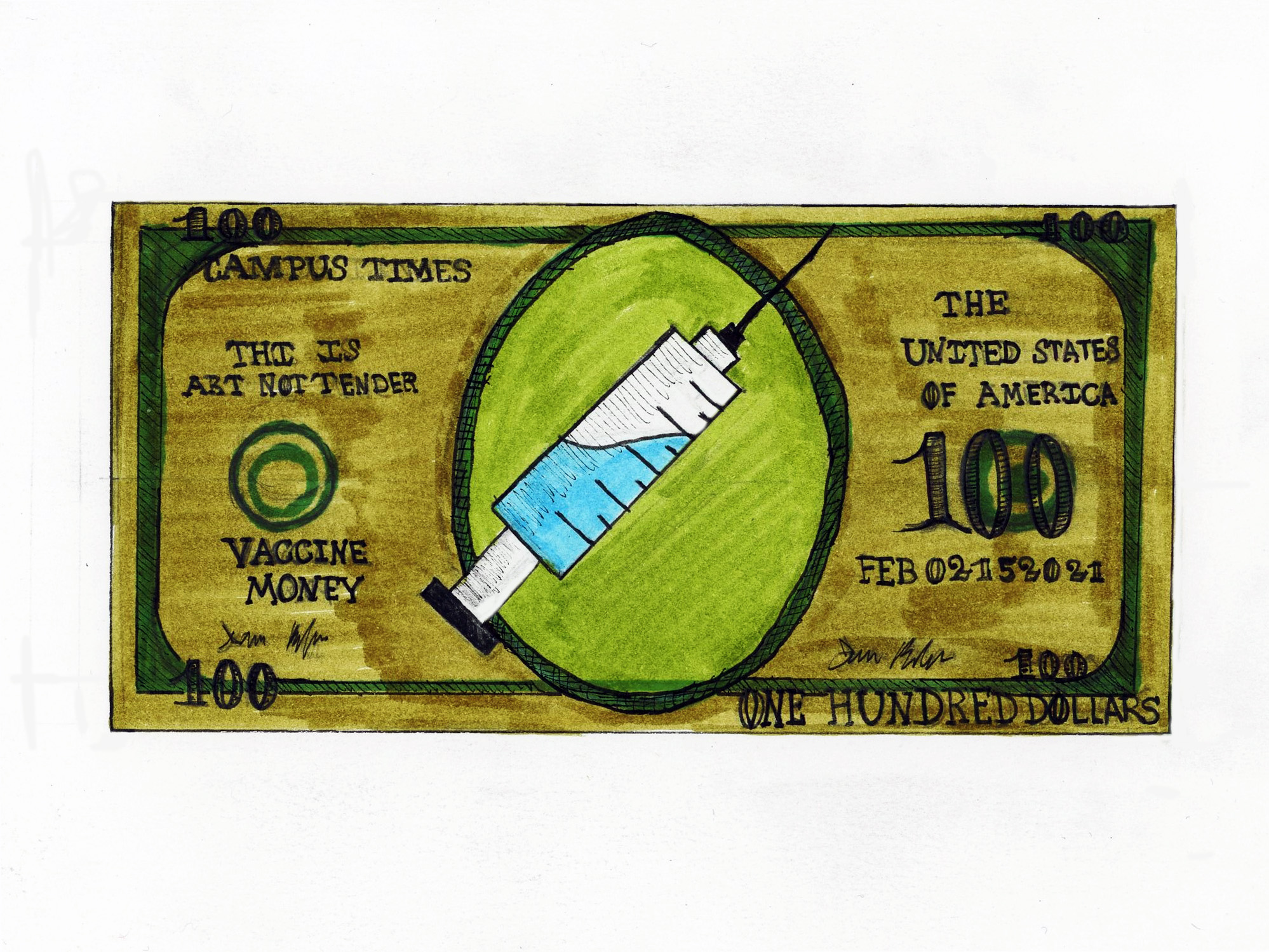
Imagine being paid to get the COVID-19 vaccine. Handing out wads of cash to vaccinated people sure sounds like a good way to end a pandemic. But is it really that simple?
Earlier this month, Kroger Co., the giant supermarket chain, announced that it will provide a $100 bonus to employees who receive the full dose of the COVID-19 vaccine. All you have to do is present proof of your vaccination to your superior and you’ll be $100 richer. For those who can’t get vaccinated for religious or medical reasons, completing an education and safety course is another way to get paid.
Since the CDC defines grocery store workers as frontline essential workers, it’s definitely important for Kroger workers to get their doses (hell, they deserve to be paid extra just for having to deal with all the Karens and Kevins on anti-mask crusades).
Kroger Chief People Officer Tim Massa told NPR in the above article that their goal is to “encourage [employees] to receive the COVID-19 vaccine as it becomes available to them to optimize their well-being as well as the community’s.” It won’t work.
People who planned on getting a vaccine since the pandemic started will do so anyways, whether they’re promised a bonus or not. The real problem lies with COVID-19 deniers and anti-vaxxers (who lack medical or religious reasons) who spew conspiracy theories and dangerous misinformation. I doubt that $100 will be sufficient persuasion for those afraid of the government putting tracking chips inside each vial.
This reward system isn’t effective. All that’s going to happen is that Kroger will lose a lot of money. The target audience (the anti-vaxxers) won’t be swayed and won’t be paid.
According to a recent CDC study, only about half of the U.S. population said that they plan to be vaccinated, implying that there’s a lot of uncertainty and mistrust clouding the air.
Kroger’s simple monetary reward scheme is not the only, or even the best, way to ensure that Americans get vaccinated. A measly $100 check won’t change mindsets.
The best-case scenario here is that workers on the fence get in line just for the money. But what’s the point if all they walk away with is $100, and no deeper understanding of what’s really at stake here?
For example, college kids line up for freebies all the time without really caring about the products’ significance. Sometimes the fact that we got something for free means more to us than the object itself. $100 won’t explain the danger this pandemic poses to non-immunized people or try to dissuade others of their vaccine hesitancy.
The best solution is a perfect combination of education and rewards. That education and safety course as the alternate option Kroger talked about? Fill it with more in-depth facts about COVID-19 risks and vaccines and provide it to all employees! Educate them on why the vaccine is not a hoax but a much-needed shield. Use some of the bonus money to cover this, and then provide the rest as a bonus incentive.
After all, to better “optimize their well-being as well as the community’s,” we need less focus on the selfish wish for money and more awareness of the importance of taking action.
More stores should follow this revised plan, too, since these major companies employ a large swath of the population. A world with more education and sensitivity to others will go a long way in controlling the pandemic. It will work only if we take action (get vaccinated) and resist our selfish motives (neither wearing masks nor getting immunized).