Drue Sokol, Photo Editor
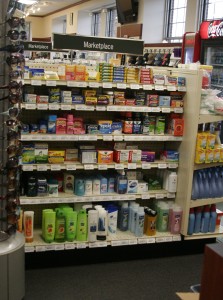
The first thing that struck me about UR’s campus was the beautiful architecture and abundance of wildlife; the dorms; the friendly, helpful people; the classes; the intelligent, engaging professors; and the UR Bookstore and its prices. I had been expecting the cost of books to be high, because I had been hearing college freshmen complain about spending their savings entirely on books for most of my life. But is it really necessary to charge six dollars for a travel-sized tube of toothpaste?
What really surprised me, though, wasn’t the outrageously high price of the toothpaste; it was the fact that about four had been taken from the stack in the bookstore. Therefore, four students had paid over three times the amount necessary for this toothpaste in the first week of school alone.
The bookstore, the Commons, Starbucks and Hillside Market technically have monopolies on each of their markets; the bookstore provides clothing and amenities, the Commons meals, Starbucks coffee and Hillside groceries. Anyone who has taken high school economics knows that this allows campus stores to charge exceedingly high prices without a corresponding drop in customers.
Furthermore, the fact that we can use declining to pay for these goods makes it likely that we will buy more than we would have had we paid with cash. That’s the danger of debit cards — when we can’t see ourselves handing over physical money, it is less agitating to part with hundreds of dollars at a time. We cannot use our declining after the year ends, and we must spend it on campus. This creates pressure to drain our declining quickly on campus goods we don’t actually need.
If we attended an extremely rural school like Bard College, or Williams College, or the University of Montana, occasionally getting things from campus stores would be completely justifiable. The travel expenses alone would make traveling half an hour for one trivial item idiotic. However, we have access to free shuttles that will take us into the city so that we can buy normal-people toothpaste.
Admittedly, shuttles do not run every day, are incredibly crowded and can take as long as an hour round-trip. This makes the handiness of accessible campus franchises incredibly tempting. So far, I have spent $50 of my declining on Starbucks alone, and I don’t even like their coffee — but a caffeine fix 200 feet from your door is hard to resist. However, the convenience of campus shops does not justify their exploitative costs.
It’s so ironic that students pay $60,000 to attend UR but have no problem spending too much money on campus goods. We have access to a kind of flourishing city with much cheaper options; we should use it.
Thomas is a member of the class of 2016.
