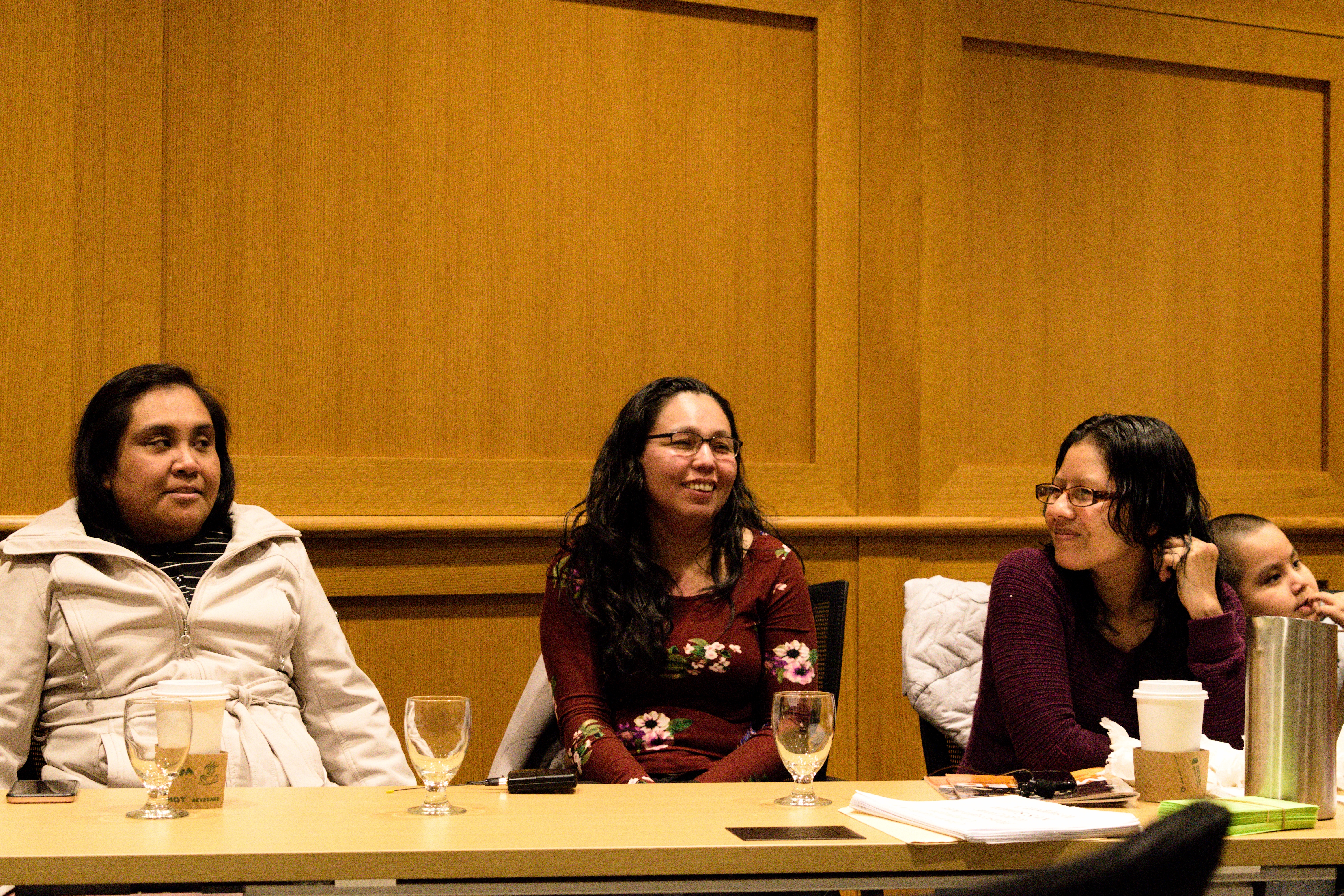
Six undocumented farmworkers detailed the exploitation they face and the strides they’ve made to protect themselves and others in a panel discussion at the Humanities Center on Wednesday. The panel — made up of women who migrated from Mexico or Guatemala — was organized by Dining Team Green, and was the capstone event of National Farmworker Awareness Week.
“[The bosses] give us housing but abuse us,” said panelist Biatriz Gatica, who has worked in agriculture for 12 years. Dairy farmer Alma Tzalain, told of seeing her boss hit her husband with a metal hose at the workplace.
The panelists also expressed concern about their constant exposure to pesticides without protection. Carina Diaz, who has worked in agriculture for 14 years, said that the relentless exposure has led to instances of birth defects.
Diaz also spoke about the pervasiveness of workplace sexual violence. “Many women keep quiet about these abuses and many have been found dead,” she said. Diaz credited women’s silence on the issue to the discrimination meted out by police and hospitals towards undocumented immigrants.
Gatica said that her fear of immigration officials and doctors had led her to continue working with a back injury after falling off a ladder at the farm.
The women make efforts to support each other through organizations such as Mujeres Divinas, where they take classes on topics including English, painting, and computer skills.
Tzalain said they experienced hardships due to not knowing U.S. laws when they moved here. “[The farm bosses] would pay me $7 per hour for not being able to speak English,” Tzalain said.
Diaz added that although they are undocumented, they still have rights protecting them from sexual harassment and abuse in the workplace — rights she has taken a proactive role in making other women aware of.
“When you have spent so much time here learning the laws, you begin to value yourself, and you will no longer be quiet,” panelist Maria Gonzalez said.
The panelists agreed on the importance of community organizations.
Many of the farm workers have been arrested for not owning drivers licenses — their status prevents them from doing so — or have had police or Border Patrol called on them, at which point community organizations were key to avoiding deportation.
Though they are viewed by some as simply criminals, the panelists said, their chief motivation is to help their families. Event organizer and senior Sophia McRae expressed gratitude to the women for sharing their stories, which she feels play an important role in creating sustainable food systems. “It is very crucial to hear from an underrepresented portion of the food system: the farmers,” she said. “[We] should know these things as eaters and lovers of food.”
Carly Fox, an advocate at the Worker Justice Center of New York, acted as translator during the event as the panelists addressed the audience in Spanish. At the end, she expressed her admiration for the women.
She said, “They have turned hardships into power and vehicles for change.”