http://www.stlzoo.org/
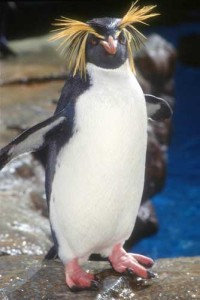
Living on the most remote, uninhabited islands in the world, the endangered Rockhopper Penguins — along with many other species — are facing an unexpected challenge. Early on March 16, a cargo ship called the M.S. Oliva hit the coast of Nightingale Island in the South Atlantic. It proceeded to break in half, leaking about 1,600 tons of heavy crude oil along the Tristan da Cunha island chain. The M.S. Oliva had been heading from Brazil to Singapore carrying 66,000 tons of soybeans, but it would not complete its journey. While the ship’s crew escaped safely, some of the island’s wildlife may not.
Conservation groups are the most worried, as 40 percent of the Rockhopper Penguins are found on the Tristan da Cunha islands. They believe around 20,000 penguins live on the islands, all of which have been put in danger by the shipwreck. Hundreds are covered by oil, and the rescue process has been slow going. The Tristan da Cunha chain, consisting of five volcanic islands along the mid-Atlantic ridge, lies about 1,700 miles from the nearest landmass in Africa. Along with being remote, there is no airport on the Tristan da Cunha islands, making it more difficult for a rescue team to reach the disaster area. Even without additional obstacles in the way, it is at least a four-day expedition. Meanwhile, the cleaning equipment is in short supply.
The most affected island was Nightingale, which is a part of British territory. Currently, rescuers are collecting penguins from Nightingale and bringing them to the larger of the Islands, Tristan, where they are cleaning the penguins with hot water and detergent. The penguins waiting to be cleaned and those that have yet to come in contact with the oil are being penned up on Nightingale Island to prevent them from returning to the sea. This requires the rescue team to find enough food for the penguins being contained as well. Of course, the timing could not have been worse. Rockhopper Penguins are nearing the end of their molting season, which heightens their struggles regardless of this incident.
In addition to the birds that are coated in oil and the overall environmental contamination, it is possible that rats from the ship may have found their way onto the island, presenting a huge threat to various indigenous species. In response, rattraps have been set up around the island, but there is little else that can be done. Though observers have yet to spot any, rats could be more damaging to the ecosystem of the previously rodent-free island than the oil, according to some experts.
While the accident seems minor compared to other current events, the sudden state of ecological distress put upon such a fragile island is nothing to ignore. It is tragic that humans are unable to protect even a small, previously pristine chain of islands with a unique evolutionary history. Luckily, those who understand the value of the Tristan da Cunha islands are doing the best they can to address the crisis.
Goldstein is a member of
the class of 2013.
