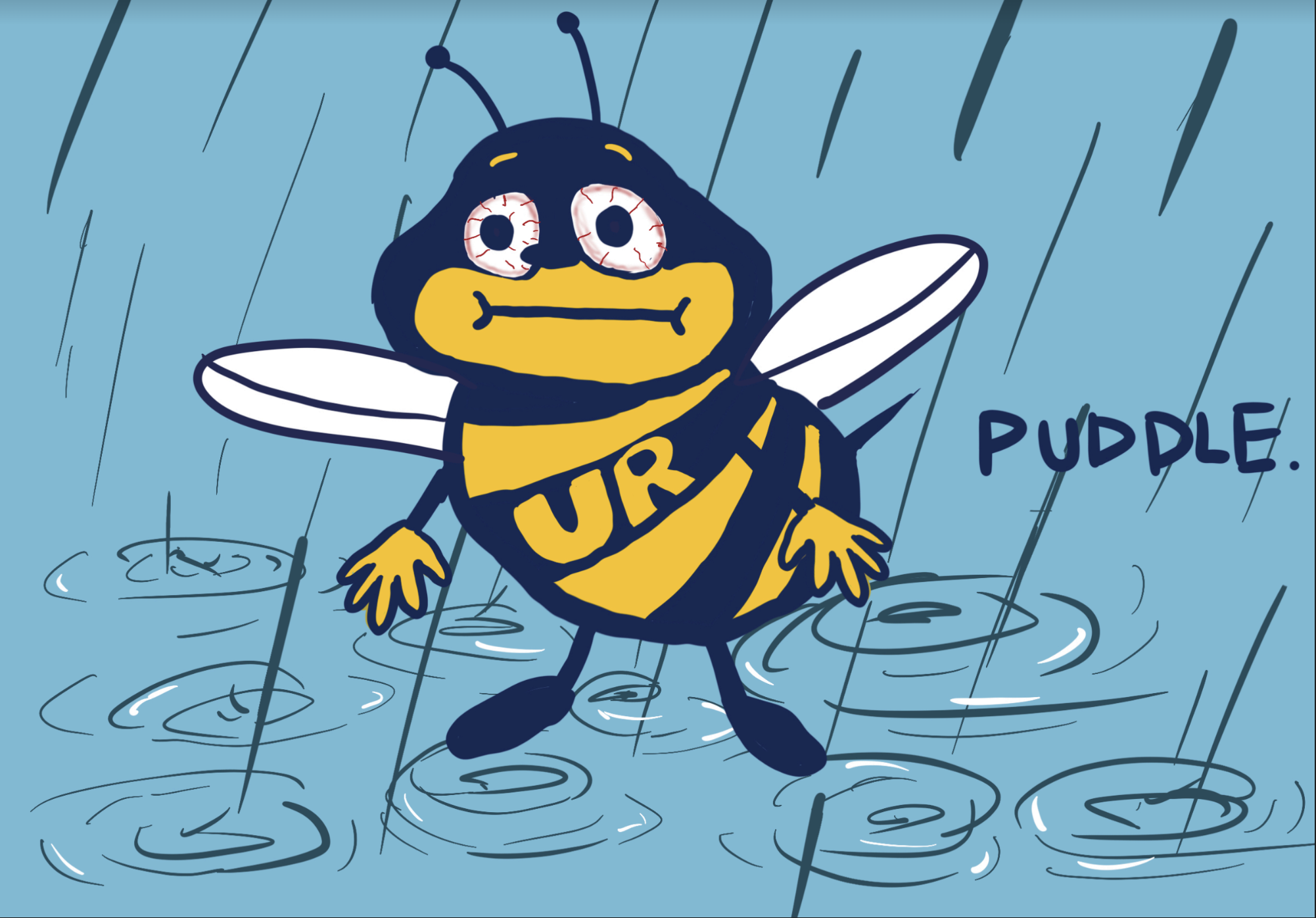
Don’t have the money to go to a water park? Don’t worry, just step outside and onto campus! The splash park that awaits you is one near impossible to beat. You may think that a place with almost constant precipitation should have a good draining system, right? Wrong. After six months on campus, I have determined that Rochester is prone to puddles.
Going to school in Rochester means you prepare yourself for the clouds and winter weather. Nobody warned me, however, that I would be living with chronically-soaked socks. Some puddles are visible, like those on the steps of Dougie (how the fuck are there puddles on stairs? I don’t know), but others, to my chagrin, are hidden. I cannot tell you how many times I’ve been sneak-attacked by a puddle on my treks across campus. A puddle. Just a few weeks ago, I was assaulted by a sneaky puddle outside the GAC in my crocs. My poor socks were soaked.
I can deal with the snow and ice here, but I’ve drawn the line at puddles. I have learned that the line between me becoming a feral raccoon and staying an academic weapon is just about the size of a tiny puddle. I’m afraid of the puddle-palooza that awaits us once spring arrives. Soon, I fear that campus will become one giant puddle, and maybe one day become part of the Genesee.