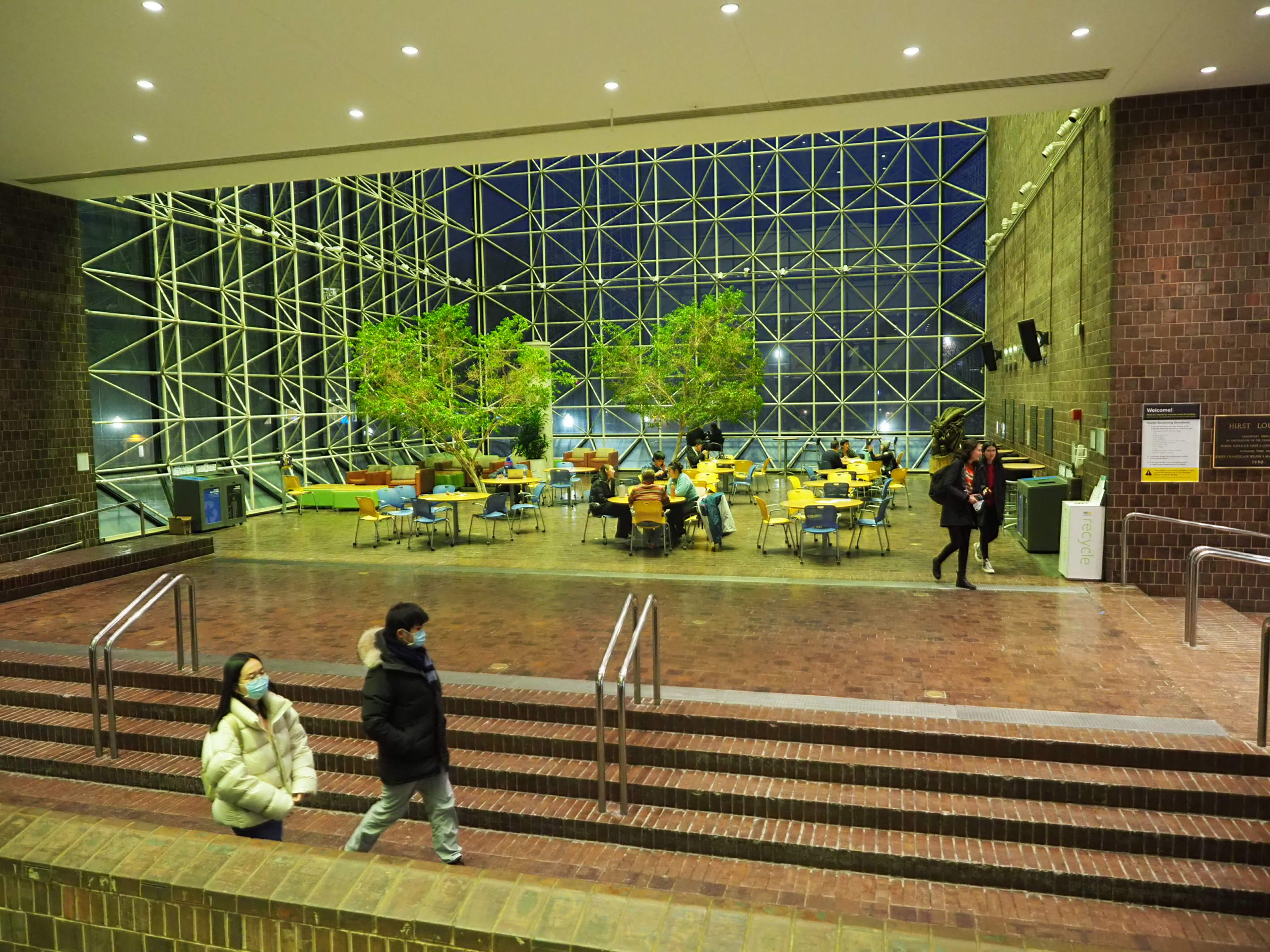
The Hirst Lounge flags are gone for good. What will take their place is up for students to design — with administrative approval, of course.
In April, the Global Celebration Committee (GCC) will begin accepting proposals for diversity-celebrating displays to replace the flags that once hung in Hirst Lounge, according to GCC member and sophomore SA Senator Miraz Sadi during the senate’s March 14 meeting.
While the specifics won’t be finalized until their formal email announcement, proposals will be accepted until a yet-undetermined deadline in the Fall 2022 semester —likely in September — after which the committee will sift through the drafts and present President Sarah Mangelsdorf with suggestions. The actual creation of the new display will be funded in part by alumni money. The GCC is aiming to pass ideas to the president by December, Senior Campus Life Chair and GCC member Lilly Hutton said.
The official announcement will also be accompanied by a formal apology from Mangelsdorf explaining the controversial handling of the flag display removal in August 2020. SA leadership was initially told the flags were being taken down for cleaning, and administrators did not issue any rationale for their removal until Spring 2021. This all came in response to multiple controversies involving the display, particularly around how it categorized certain flags and discluded others. Students organized protests and petitions against Mangelsdorf’s decision to make the removal final in September 2021.
There will be a reward structure to incentivize submissions, and the committee will be organizing workshops through SA and iZone to help students think about different ways to celebrate and respect diversity in their designs, Sadi also said. They are looking for an installation that can honor the many ways that differences manifest among the students.
“It’s not about just the international students, but also local students who have so much difference between themselves because of coming from different backgrounds,” Sadi told CT. “The University is trying to do something that represents the diversity of the students in terms of that: Where are you coming from, how many languages you speak, what are you bringing to the table at this school?”
He also said that the goal is to develop a geopolitically-neutral display.
“The University is trying to represent all the students and not necessarily hurt a certain group of people, so it has to be something that is neutral towards everyone,” he said. “There will [always] be people coming from different backgrounds, and they have their own conflicts and all that, and the University cannot take sides on that.”
The GCC was formed in October 2021 and was tasked with benchmarking diversity celebration ideas with installations at other universities to come up with a replacement. Sadi explained it as being composed of administrators, some River Campus and Eastman faculty, a student from the medical center, Hutton, and himself.
Originally, Hutton was the only undergraduate student on the GCC. Sadi was added after she brought this complaint to the committee. In his first meeting, Sadi proposed the idea of accepting student submissions to determine a replacement, and the committee has oriented around that idea since.
Sadi said students will be able to reach out to Professor William Fitzpatrick or Deputy to the President Joe Testani with questions or input to the committee once the official call for submissions is released.