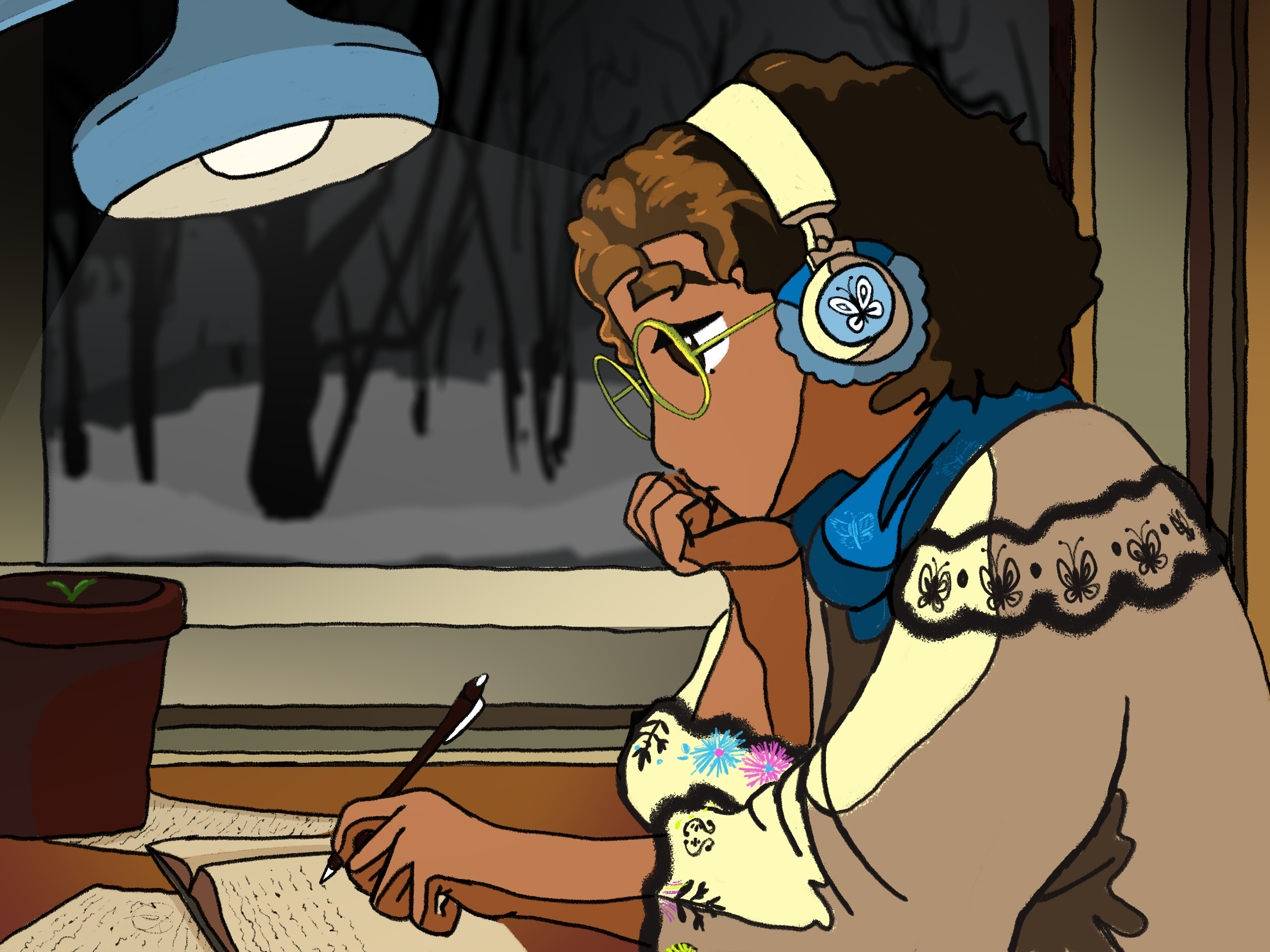
After being bombarded with TikToks, Instagram reels, and Tumblr posts all from people pouring their hearts out about how hard Disney’s “Encanto” hit, I figured it’d be a worthwhile watch. While “Encanto” is primarily about generational trauma within a Latinx family, I couldn’t help but read deuteragonists Isabela and Luisa’s story arcs of identifying and addressing internal struggles as valuable lessons from which we as college students could really learn. Being able to explore the value of seeing a character struggle as you have is one of the biggest benefits of film, and “Encanto” utilizes this to its highest potential.
Luisa and Isabela, the older sisters of protagonist Mirabel, are personifications of workaholism and perfectionism respectively. They bury their mounting fear and anxiety over making mistakes beneath their smiling façades, Luisa’s song in particular punched me square in the gut — the lyric, “I’m pretty sure I’m worthless if I can’t be of service” is a direct call-out to those of us who measure both our sense of self and our worth by our academic success and perceived level of productivity.
The CT has countless articles warning us against toxic Meliora, overworking and perfectionism, but the concept of taking care of our own mental wellbeing can be pretty difficult to swallow if we can’t even identify that we need some TLC in the first place. First-generation, international, and low-income students especially may feel extra pressure to overload, overwork and overachieve due to their families investing in and depending on them. It can feel like the weight of the world is on their shoulders. And now that we’re all back on campus, that surface pressure to succeed can easily suffocate you if you don’t stay wary of it. After all, there’s just always so much to do.
Some of us have become so used to constantly operating under a state of anxious stress that it’s become our norm. On the surface, we feel fine, but if you so much as teared up during “Surface Pressure” or “What Else Can I Do,” it may be an indication that you’re subconsciously harboring some form of unhealthy pressure that needs to be addressed. As the song notes, it’s only a matter of time (tick, tick, tick) until the accumulation of various little pressures (drip, drip, drip) cause us to either blow or burn out.
What I particularly love about “Encanto” is that it offers healthy solutions in response to the unhealthy behaviors it identifies. Luisa longs to shake the crushing weight of expectations, and by the end of the movie, she is able to free up some time for relaxation and simple joys, and chooses to value herself over her power.
For the chronic workaholics, I know it may be hard to hear, but you have limitations just like everyone else. Take time to evaluate them and enforce boundaries. You’re allowed to say “no” to overloading. You’re allowed to question how draining your workload is. Leaning on a support system and asking for help doesn’t make you part of the burden you’ve been carrying. Make small changes to keep yourself from tipping over the edge, because if you keep going without self-evaluation, you’re bound to break.
For the perfectionists out there, remember that you’ll maintain the same 4.00 GPA with a 95 as you will with a 100. There is no need to do every extra credit assignment and every optional reading if it comes at a physical and mental cost. You’ll still be okay. Most professors allow two excused absences for a reason. Use them. Sleep in. Recharge. Then go again. I promise, the world won’t crumble to pieces.
For any of you miserably pursuing the major your parents want you to, at least allow yourself a club or cluster that you’ve always wanted to explore. Like Isabela, you may need to search for meaningful connections, step outside your comfort zone, test your limits, and just let yourself be, regardless of whether or not that version of yourself lives up to the expectations of your family. Do something, anything, just for yourself — you may find it unimaginably freeing.
Disney’s “Encanto” has gotten us talking, sharing, and taking the first steps towards addressing internal struggles we may have been blind to, but so desperately needed to attend to. “Frozen” and its “conceal don’t feel” mantra definitely hit back in the day, and “Inside Out”’s Sadness was spitting truth when she said “crying helps me slow down and obsess over the weight of life’s problems.” That’s why it’s so important to see our real, unfiltered mental health reflected in pop culture, and in a “kids’” show especially — lots of our problems have roots in our younger selves, which is exactly why Disney can still have so much value to an adult. Disney elegantly portrays internal struggles in an easily accessible way that makes us feel less alone. Seriously, do you know how many adults cried watching this movie?
Personally, I’ve grown to love Disney movies even more as I’ve grown older. I hope, even if you don’t immediately rush to watch “Encanto” after reading this, that you can at least see the value in them, too.