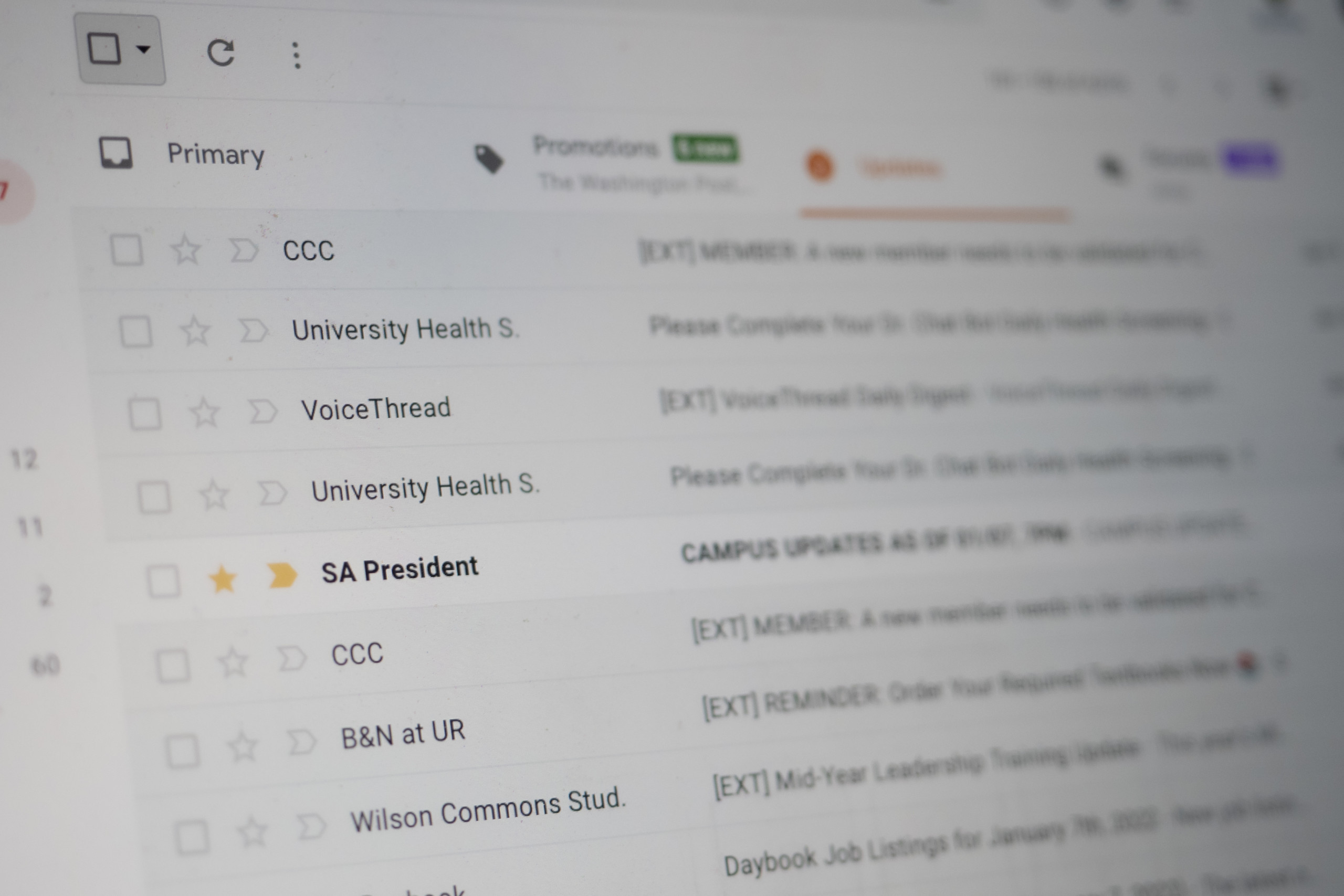
On Jan. 7, UR students pretty much only had one thing on their minds: processing the last three emails sent by the UR President’s Office. The first email, sent on Jan. 4, said school would resume as planned. The second email, which was sent a day later, was largely the same as the first, with the added specification that students had to get a negative COVID-19 test result on their own before arriving on campus. And a little over 24 hours after the second email was sent out, the third one completely changed course, announcing that learning would be remote for the month of January and that students should strongly consider delaying their return.
In typical Gen Z fashion, in came memes, cheeky comments on the UR Instagram account, and fervent peer-to-peer texting. The office undoubtedly picked up on this reaction and sent out an email the next day to defend their most recent decision and the swiftness in which it came. What followed was a message from the Students’ Association Government (SA). The aim of this email, as stated in the opening paragraph, was to “clear up some misconceptions/share some important answers to [common] questions.” So how successful was SA in achieving this goal? Several UR students shared their reactions to SA’s response.
First-year Isabella Rocha mostly disapproved of SA’s response: “I feel like the email was more of a nay for me because it really just reiterated a lot of points that were addressed in the email from the [UR] President’s Office. There didn’t really seem to be a lot of new information, except for how to get reimbursed for costs and campus jobs. I also feel like the email could have been a lot more positive, such as maybe welcoming us to the spring semester. I get the importance of addressing questions, but I also think they should have tried to include some positivity about starting the new semester.” Rocha found that many of the questions SA addressed and promoted were merely a continuation of the office’s message. She next wondered how students are supposed to return to campus during ongoing classes. “Obviously, we still have to learn the material, but that can be a significant amount of time that people lose out on.” The strongest aspect of SA’s response, in Rocha’s opinion, was the direction given to find and utilize resources.
Another student, junior Esha Mardikar, reacted approvingly: “I liked how comprehensive and understandable the email was, and I also appreciated that they acknowledged the craziness of the situation. It felt very genuine and validating.” Mardikar got the Jan. 6 email 10 minutes before boarding her flight back to Rochester, so SA’s message proved helpful in addressing her uncertainties upon arrival. Mardikar also praised the time taken to format the email effectively, with the questions in bold and links embedded.
In conclusion, the last few lines of SA’s message indicate a strong stance on the need for remote learning during these times. The science indicates that remote learning is the safest option, “and we must respect it.”