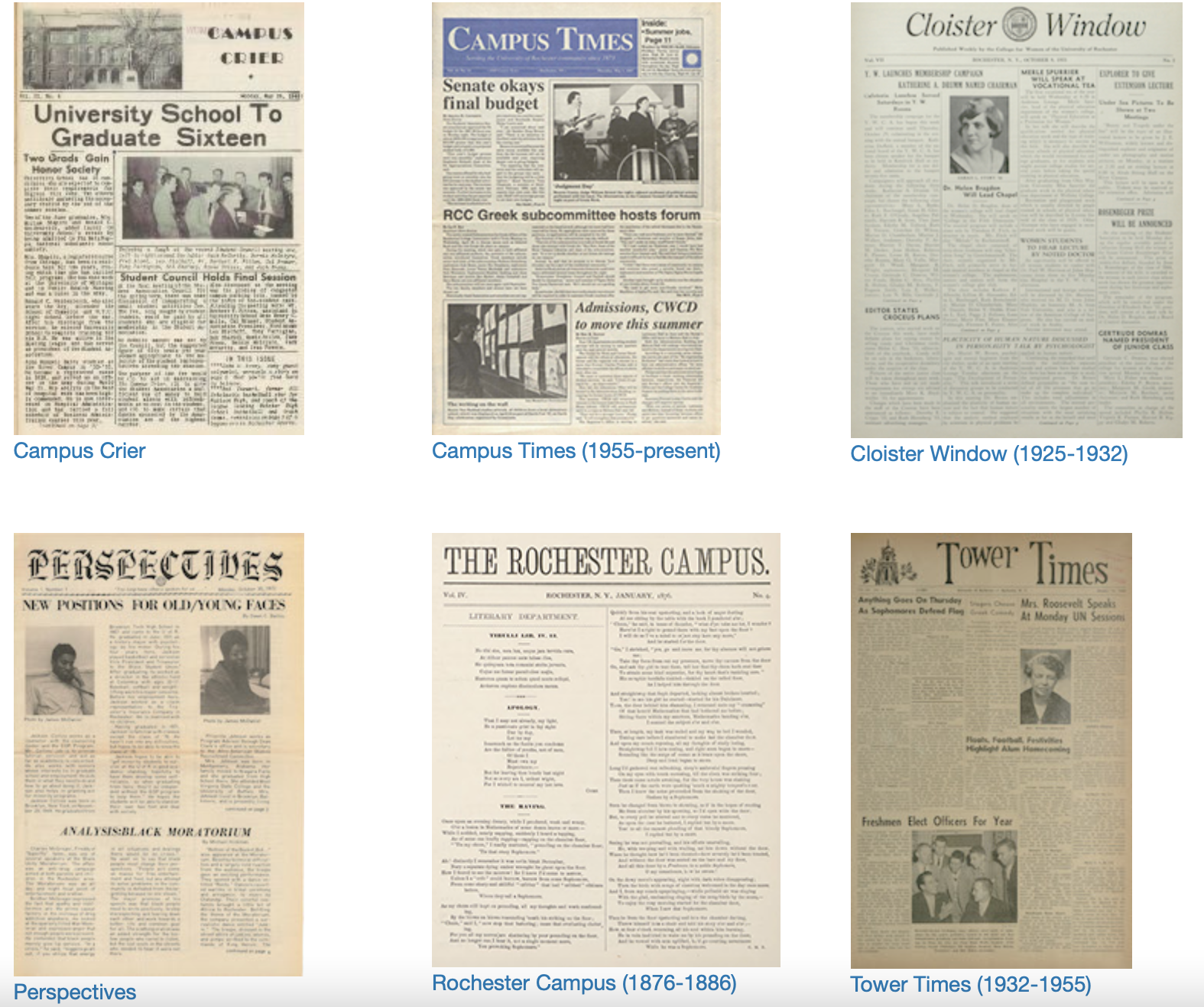
The Campus Times is old. So old, in fact, that one of its earlier iterations used to be called the Cloister Window. However, we’ve only had a website for — in the grand scheme of things — a tiny fraction of our history. While some of our older papers have been digitized before, a lot of them were previously inaccessible unless you were somehow able to get your hands on a physical copy locked away in Rare Books and Special Collections. That’s all changed.
The University Archives, with support from the friends and family of John “Swanee” Swanston ’83, a former Editor-in-Chief, has organized for all past editions of the CT and other related publications on campus to be scanned and uploaded here.
Everything, from the University Record to last year’s copies of the CT, has been formally scanned, uploaded, and organized for your viewing pleasure online. You can scroll through generations-past perspectives from women’s campus newspaper, Tower Times, or the much older male counterpart, The Campus, and see how things have changed (and how they haven’t). You can get an insider scoop on how student organizations, administration, and general campus life functioned decades ago. You can also learn about the issues that were important to students of the past, and maybe find solutions for today from suggestions of alumni.
CT’s digitization makes an important connection between the paper’s past, when physical print was delivered around campus every day (and as current editors, we have absolutely no idea how on earth they did that), to our current, mostly online publications. CT still prints physical editions every month, and will continue to do so. It’s an important part of our history, but more significantly, it’s an important way to reach the community that we serve.
We see when you share our posts on Instagram, and we see when you visit our website. But our digital work often doesn’t feel like a presence on campus. We feel the presence of CT when we see fresh stacks of paper in our dorms, when we see open copies strewn about laundry rooms, when we see dads on tours with a folded up CT tucked under their arms, and even when we see a spare copy used to steady a table in Hirst Lounge. The physical representation of CT as a part of campus life, despite the prevalence of online engagement, remains the paper itself. We’re lucky to be able to see what that life was like in years past, and we’re lucky to be reminded of the presence of CT as a result.
It’s easy to put our heads down and focus on trudging through each edition as it comes, with no thought for anything in the past or future. However, being able to look back and reminisce, even on days that weren’t ours to live, is a good reminder of why we do what we do. We don’t get paid, and we don’t receive credit, academically or socially. What we have, though, is a commitment to truth. We have the pride of taking a part in an almost 150-year-old tradition of serving the University community. These archives are evidence of that, and they are something we take pride in.
Thank you to Melissa Mead and the team in University Archives, thank you to the friends and family of John Swanson for your invaluable support, and thank you to all the students, family, and alumni who have made this paper part of campus for the last 150 years.
The Editorial Board is a weekly Opinions article representing the view of the Campus Times, co-written by Editor-in-Chief Hailie Higgins, Publisher Ethan Busch, Managing Editors Corey Miller-Williams and Olivia Alger, Opinions Editor Alyssa Koh, and Features Editor Melanie Earle.