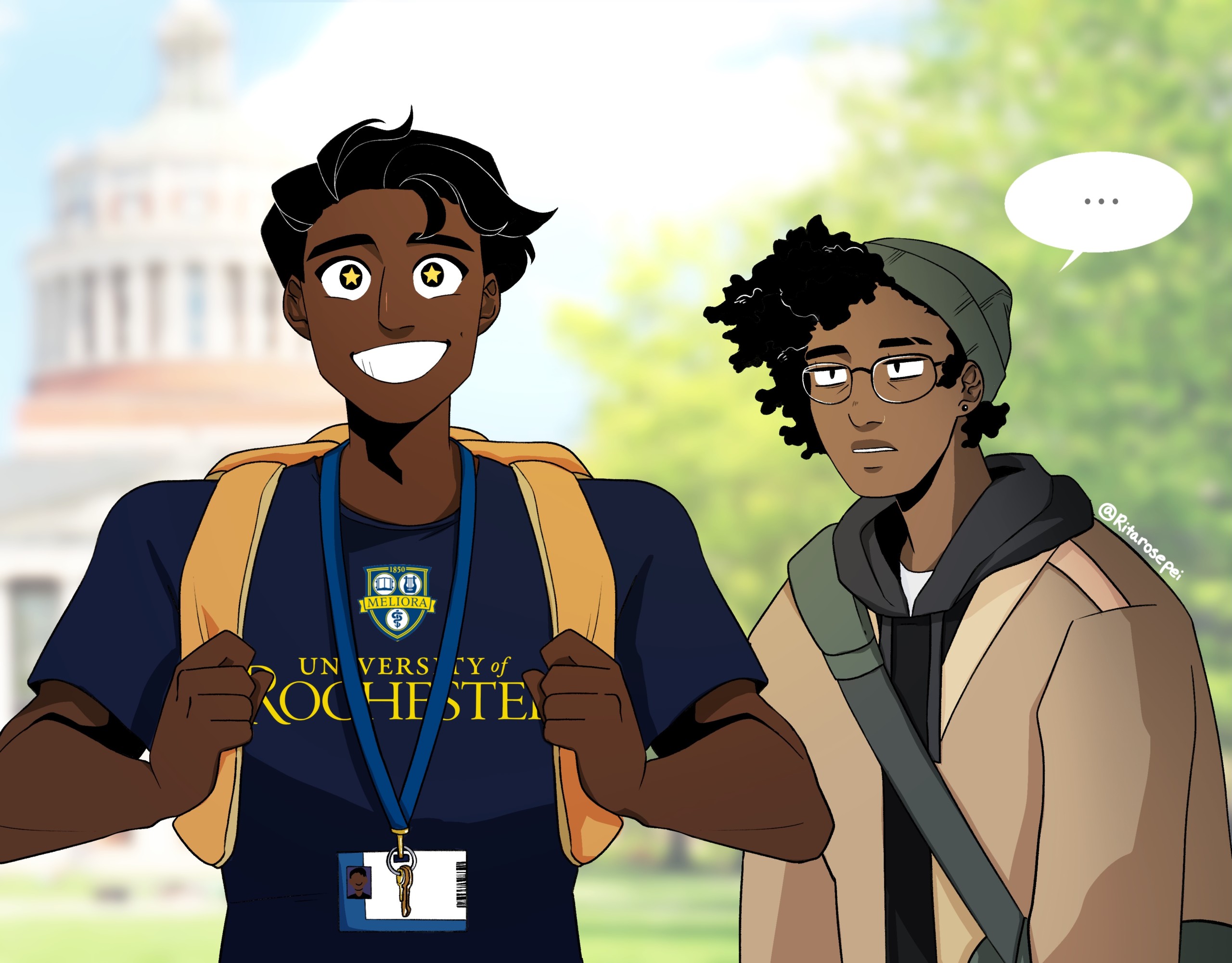
This class of first-years is easier to spot than usual, and not just because of the usual lanyards around their necks or the fact that they travel in packs. It’s because they still have light in their big, innocent eyes.
They are so full of hope it makes any upperclassman sick with the realization that they, too, were once full of bliss and a will to live. But our eyes are dull and heavy with the weight of Rochester winters.
Ah, for these first-years have not yet felt the raw, damp chill that resides in the very marrow of their bones, no matter how high maintenance cranks the heat in Morey. They have not yet known what it is to wonder if you will ever see the sun again, to forget what warm feels like.
No, no. They have not yet felt the joy of seeing yellow, penguin-covered signage, demanding that you walk like them to avoid eating it down the steps of Hoyt. They have not yet felt the panic seep in when they receive an email recommending they avoid being outside for more than 10 minutes, and realizing they live 20 minutes away from the engineering quad. And they have not felt frozen tears fall down their cheeks as the Silver Line drives off two minutes early, without them.
They have not yet felt the brutality of a wrong Starbucks order during finals week, nor the sweet relief of a Connections soup (yes, I’m still on that). They have not felt the collective disappointment that is watching the UR football team, nor the satisfaction of yet another great performance by UR Pep Band.
They have not yet broken down from Orgo I, nor felt the terror of being chased across campus by a swarm of YellowJackets (the a cappella group, obviously).
They do not yet know the true meaning of the word hate, as they have not yet had their wet laundry thrown on the dirty, bug-stained floor precisely 22 seconds before they got there to move the clothes from washer to dryer. They haven’t met the gnawing hunger that comes with being handed a plate of food at Dougie, half of which they are allergic to, half of which looks disgusting. They have not yet been humiliated by the Green Team as they force every diner to slowly discard all that wasted food in front of their peers whilst damning thy soul with their eyes.
Ah, for they have not yet experienced sweet, delicious disappointment from false spring I, II, and III. They have not yet had their senses accosted by the overwhelming smell of boiling urine in that one section of the tunnels, nor watched as their bathroom ceiling leaked who-knows-what all over their toothbrush. They haven’t known the defeat of buying a Coachella-ready D-Day outfit, only for it to rain for fourteen hours straight. And then snow the next day, for good measure. And they don’t know 2:00 a.m. fire alarms, nor the agony of being stuck behind a coffle of lost first-years on their way to class.
But the real reason why these first-years are still so innocently full of hope, why the light in their eyes is still glowing, is the simple fact that they have not yet dealt with the absolute gasoline-covered, flaming train wreck that is: campus parking.