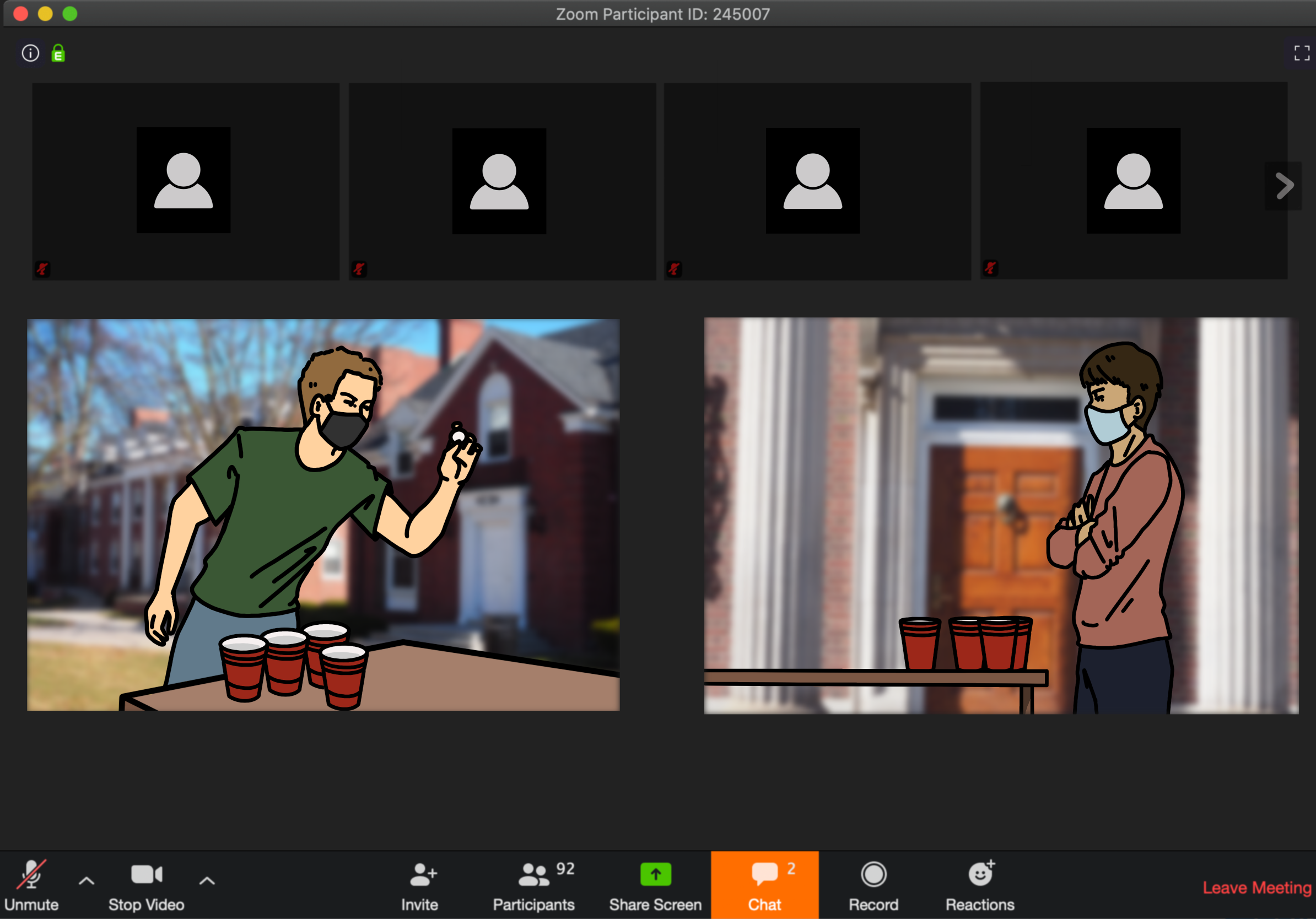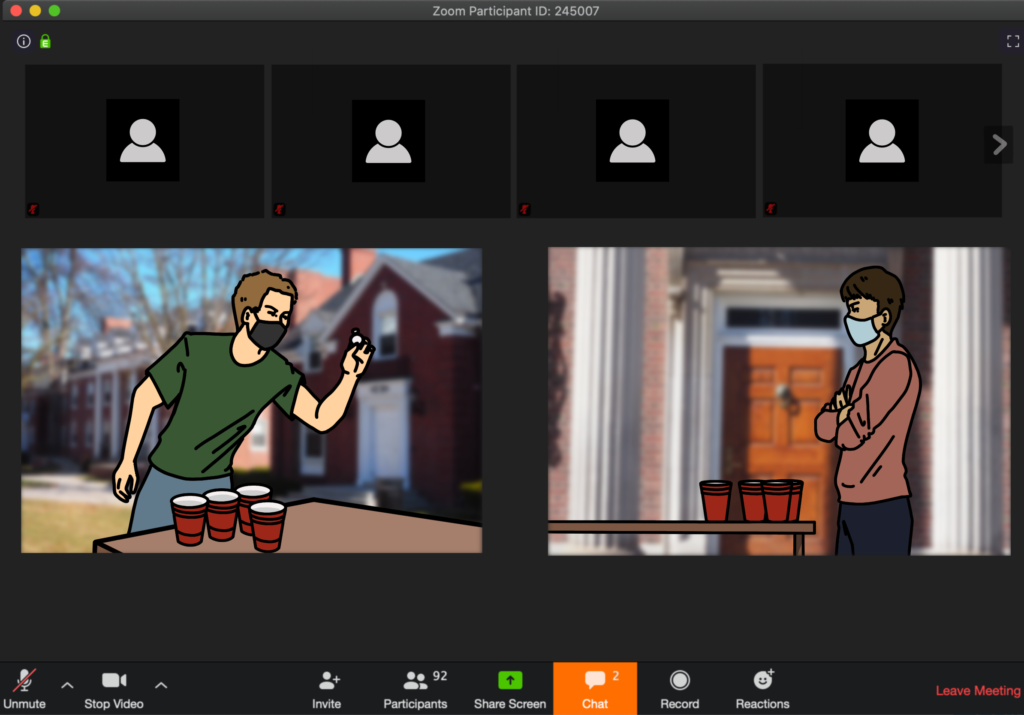
With the COVID-19 pandemic turning one full year old (happy birthday, by the way), people are growing impatient. I get it. I am, too. The vaccine is almost here; just a few more months. That doesn’t change the fact that we want to hang out with our friends. That’s why I made the ultimate guide to throwing a 100 percent virtual frat party.
- First up: Clean the pool. I mean, it won’t really matter, because no one is going to be using it. But like, you might as well.
- On that note, why not clean up the whole house? It’ll make a good Zoom background.
- Ask some of your guy friends, and especially girl friends, if they want to come over. I mean attend the Zoom.
- Next, get some of those iconic red solo cups. You obviously aren’t going to be using them for beer pong, but you need them for the cup stacking competition.
- Make sure to cater some food. Sliders work wonders, but wings, while they seem like a good idea at first, are a trap. This would all be delivered to the partygoer over Grubhub. Definitely.
- Remember to not cut corners on the DJ. Your DJ makes or breaks the whole thing. You need the right tunes and the right vibe to accompany your aquatic beer pong tournament and subsequent champion’s dinner. Sorry, my mistake. Virtual aquatic beer pong tournament and subsequent champion’s dinner.