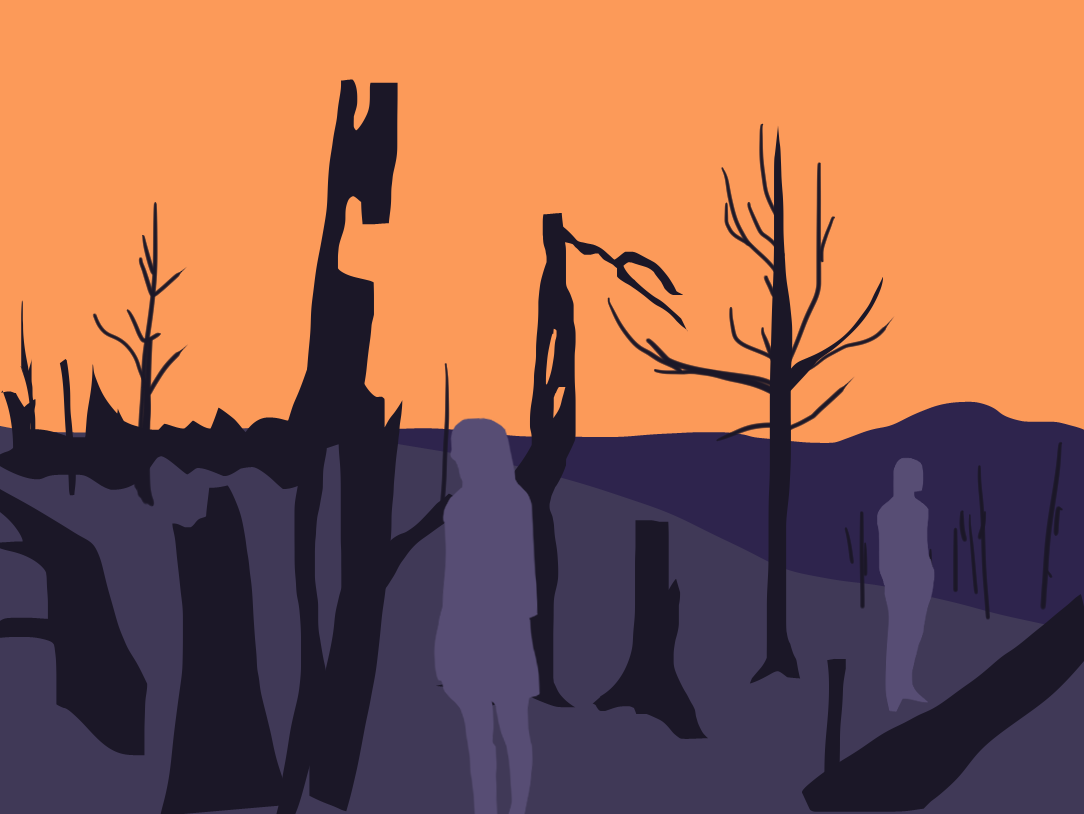
All along the West Coast, fires are burning paths of destruction through neighborhoods, towns, cities, and even entire counties. Many people have been left homeless and clueless as to how they’ll start their lives again. A lot of these people don’t have the means to rebuild, or enough media attention to get enough donations from the rest of the country.
Unfortunately, I don’t have the room in this article to bring your attention to every suffering town. So I’ll tell you about one I know very well.
Jackson County, OR is where I was born and where I’ll return for winter break. I worry that, even though I’ve lived there for 18 years, I won’t recognize my childhood home.
Two of the hardest-hit towns are Talent (the place I called home for 14 years) and Phoenix, which were also Jackson’s best options for affordable housing. These towns used to be full of families struggling to make ends meet. These same families have now been displaced, having lost not only their homes, but all of their belongings, too. The purely sentimental can be replaced slowly, but most of what was lost are essential pieces of their everyday lives, like clothes, birth certificates, school supplies, and even pets.
My friend’s aunt used to live in a place that cost $300 a month so that she could stay home and look after her children, two of whom have serious health conditions. The fires turned their lives upside-down, and she’ll have to leave her vulnerable children every day to go to work during a pandemic. In addition to the ability to provide the care her children need, she lost precious heirlooms and immigration papers. This happened to thousands of people.
While I know now that my house is safe, I’m terrified to go back during winter break. I have no idea how much is still standing, no idea how many of those local businesses I loved to frequent are still there, and no idea how much of the greenery and forests that make Oregon Oregon have survived. All that I know is that it will be a horribly sad reunion.
Jackson’s poverty may be an insurmountable obstacle. Rebuilding won’t be fast or easy, and it’s going to take a lot of time and funds that don’t exist over there. Donations will be key to securing the funding to rebuild, but people are struggling to help themselves, let alone donate to their neighbors or to community spaces. And with the almost nonexistent news coverage of this area, the pool of people to offer donations is pathetically small.
I’m positive that the damage — both emotional and physical — could be alleviated if these vulnerable areas received news coverage from sites outside of the miniscule ones based in Oregon.
Maybe if Jackson County were a little bigger, its community wouldn’t be so desperate. If it had gotten even a small amount of the news coverage it deserved, then maybe I wouldn’t be going home blind, and Jackson’s residents would have a hope of recovering.