Faced with a mounting hunger crisis and a rising number of students running out of declining as the semester winds down, UR administration has announced an alternative to the common student practice of “declining daddies.”
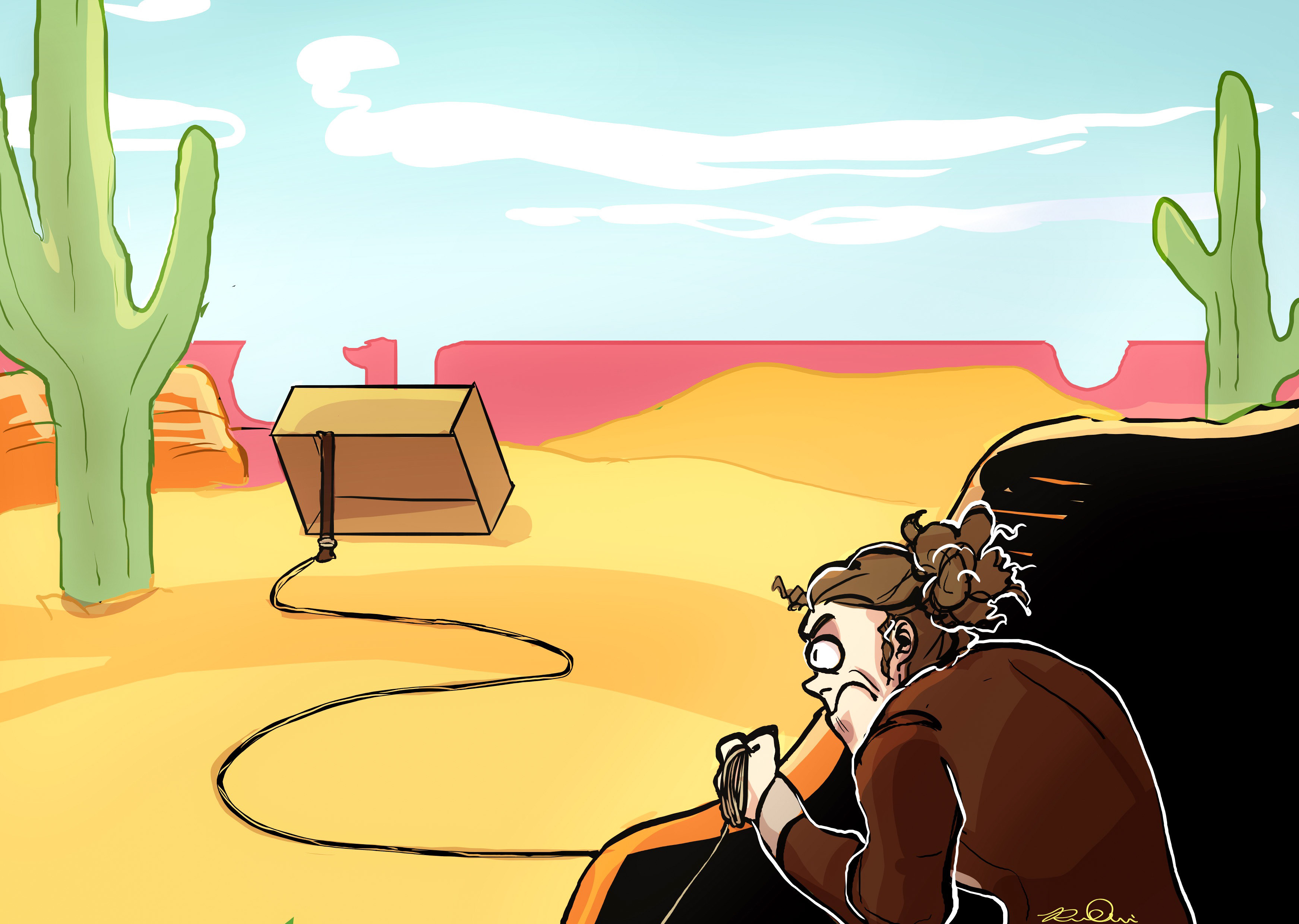
They suggest catching wild game with a simple trap made out of a cardboard box, a stick, and a piece of string.
The traps, part of a larger UR initiative entitled “I Don’t See Why You Should Be Entitled to Food,” will be available for pick-up alongside clamshells at Danforth and Douglass dining halls this Tuesday.
According to official instructions sent to the Campus Times by the “I Don’t See Why You Should Be Entitled to Food” managing committee, students must supply their own bait – scraps of meat, peanut butter crackers, etc. – and then wait just out of sight until an unsuspecting animal follows a trail of said bait underneath the stick-propped box. The student will then theoretically be able to pull the stick out with the string, trap the animal beneath the box, and then slay the doomed creature with a large rock, a small knife, or by vigorously shaking them.
The plan was announced in the wake of a survey which found over half of the UR student body had, at some point, sought a “declining daddy:” a well-endowed student who showers their less-fortunate counterpart with meals in exchange for friendship, small favors (sexual or otherwise), or nothing at all. This practice, while ensuring that no student goes hungry, forces UR to spend thousands of dollars on extra food each semester.
“We find it truly admirable that students are banding together and pooling resources to make sure no one goes without,” a UR spokesperson said. “This kind of thinking is exactly what we need to build a better future; a kinder, gentler future. We just don’t think anyone should be thinking that way right now.”
At time of publication, multiple students could be seen trying special, early-release versions of the box, stick, and string trap on the Eastman Quad, with multiple successful captures ultimately resulting in release when the snared animals were revealed to be groundbois.