Nervously awaiting the election results, SA presidential candidate and junior Jamal Holtz watched a Barack Obama speech while he and vice-presidential candidate Anne Marie Cortes, also a junior, sat in a tense Ruth Merill.
After 45 minutes of refreshing the results page, the unofficial count came in: Holtz and Cortes won the SA presidential and vice-presidential race with 900 votes.
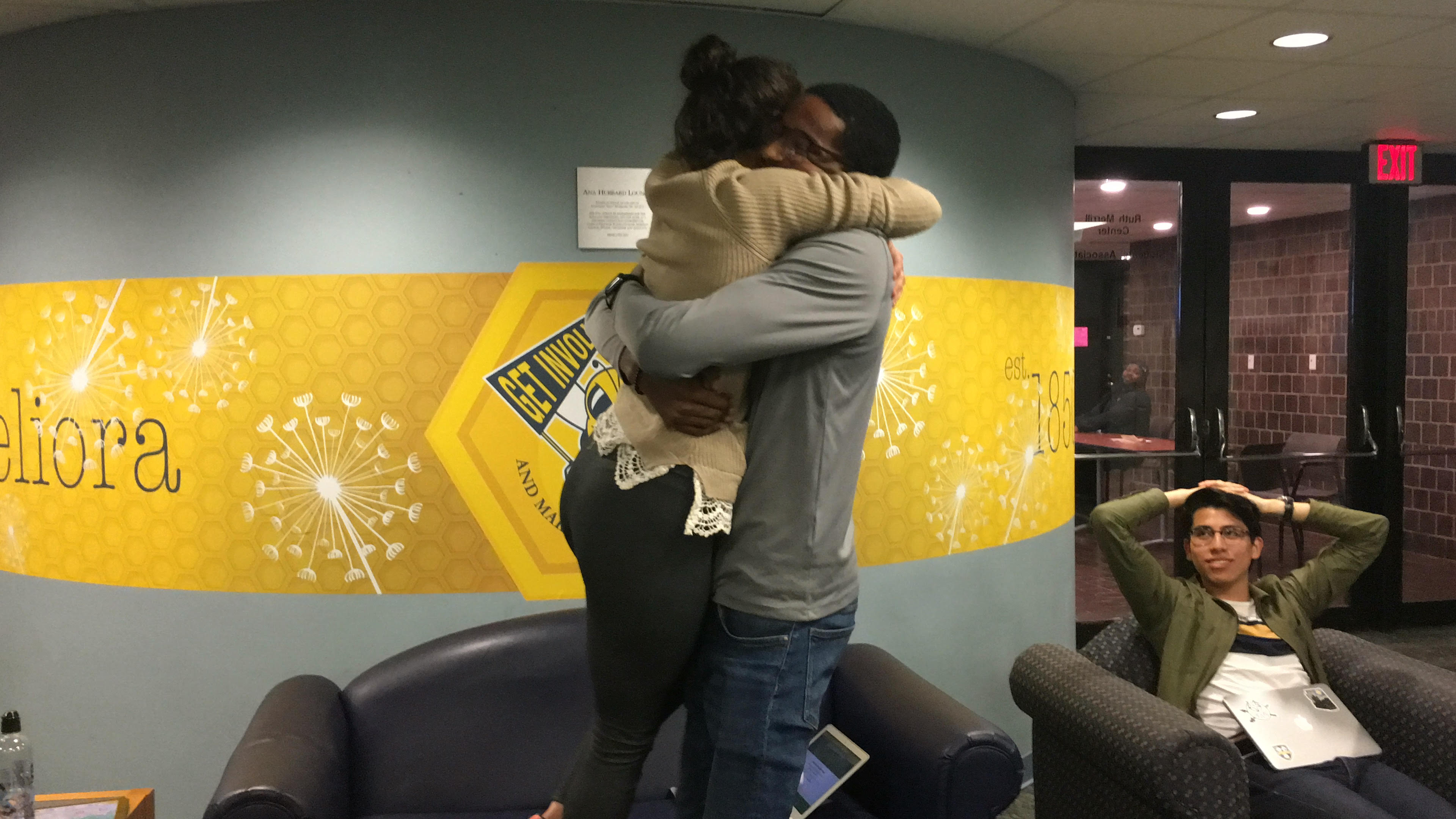
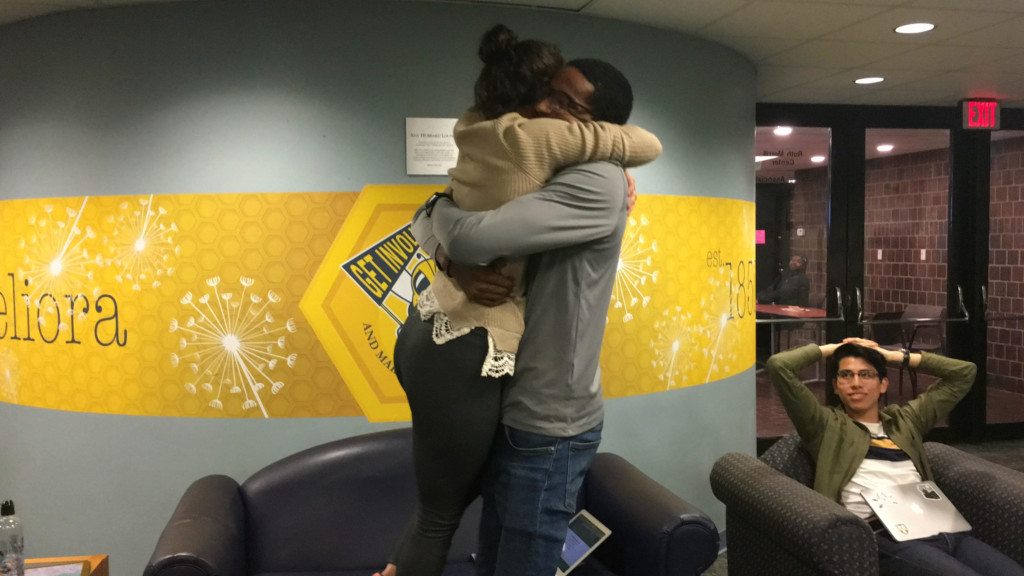
Holtz and Cortes shed tears as they hugged each other and the supporters in the room.
“It’s just amazing to have the opportunity to continue the work that we started,” Holtz said.
“We had a lot of support from all different parts of campus, and it helped us get to the point we’re at now, so we’re very grateful,” Cortes added.
Surpassing last year’s turnout, 2,250 students cast their ballot this year.
Unlike last year’s uncontested election, where Holtz won the vice presidency, Holtz and Cortes were competing with two other tickets. Classmates Vlad Cazacu and Kamel Awayda finished second, with 718 votes, followed by 677 votes for junior Genessis Galindo and sophomore Lionel Kirenga.
On Facebook, Galindo thanked Holtz and Cortes for “an exciting race,” and congratulated the pair on their win. “I truly am excited to see all that you do within SA this coming year and implementing your platform,” the post said.
“For us, this year’s election brought excitement, learning experiences, new friendships, and importantly, a President and Vice President who we are proud to have representing the student body,” Cazacu and Awayda said in an email to the Campus Times. They hailed Holtz and Cortez for their history with SA, and complimented their dedication to meaningful legislature and actions yielding results.
During the campaigning period, Holtz and Cortes went hard.
“It was tough,” Holtz said. “We spent every day campaigning, whether it was going to dorms talking to people, whether it was sitting at the Pit […] To me it’s less of trying to be on social media, more of touching people and engaging people.”
The two didn’t work alone, and thanked their team profusely amid the celebration. 32 members officially, who Cortes credited for their support, helped get the duo’s message out. Much of that message involves ensuring student voices are heard.
“I think one thing that really shined through was definitely our dedication to the students, and our ability to bring forth results and then have a platform with initiatives that showed our desire to continue working on things that students care about,” Cortes explained.
Holtz said their mission focused on their policies and goals instead of the other candidates. He attributed the win to their focus on getting results and letting students know their plans for the future. The two are especially interested in reaching out to historically underrepresented communities.
“It’s mobilizing the community that’s been unheard,” Holtz said. “I’m the first black president in two decades, and I think lifting voices […] is what we want to do. It’s making SA the most representative body that we can make it, and [ensuring] all of the ideas and initiatives that we come up with are student-led, and not president and vice-president led. I think our goal is to execute the vision of students.”