To complain about the youth is perhaps a timeless sign of aging. As far back as the fourth century B.C.E, Aristotle declared “They think they know everything, and are always quite sure about it.” So, I’ll follow this tradition, and by the end of this article, I expect to find my first gray hair.
Each generation of youth has its new marvel, usually doubling as a conundrum for the older generation. In recent years, this marvel has usually come in the form of the newest technological gadget. When the cellphone emerged in 1973, it was a four-pound brick. It morphed into a clam-like flip phone. It was possible to text on a flip phone, but only if you had enough time to press each number three or four times to get the right letter.
Then, as early as 1992, came the smartphone. It was the child of the cellphone and the computer: the mother of convenience. Almost anything you needed a computer for, you could do on a smartphone.
This was revolutionary. Communication across the globe was possible instantaneously. You could check the weather, your email, and social media. You could reserve a ride, a room, a table. It is not surprising that people eat up their spare time by using their smartphones.
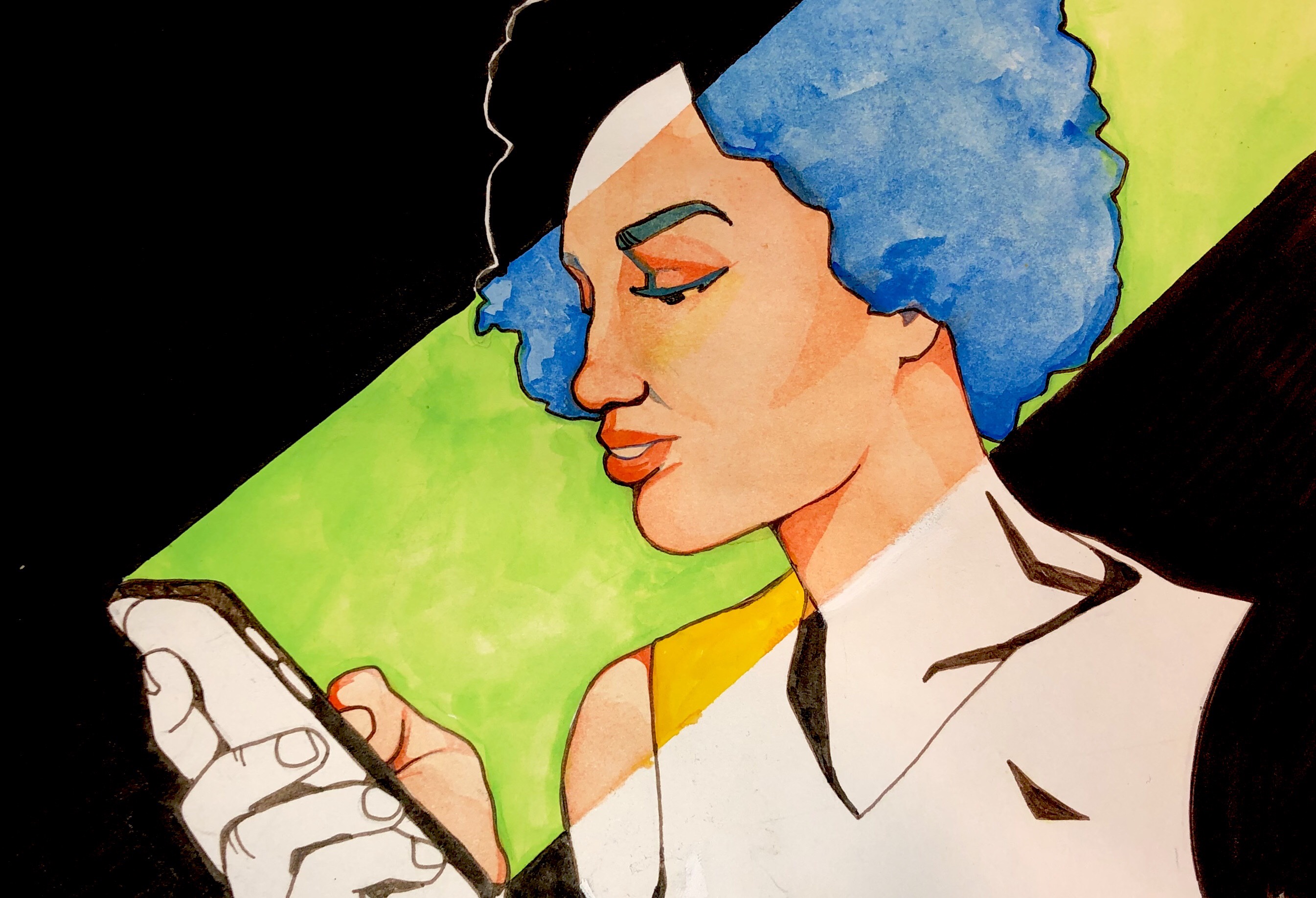
Imagine yourself in a small class, fewer than 10 students. You arrive several minutes early, and the professor, along with a few students, is already there. More often than not, you will find that people are on their phones and are not socializing. The use of smartphones in social situations precludes socializing, and is sometimes even done purposely, in order to avoid it. As a result, we are more tribalistic and cliquey than ever before, since we can talk to our inner circle wherever we are.
Various studies have linked the time spent on phones to teenage depression and suicidality. Specifically, psychologist Jean Twenge argues that smartphones are “destroying a generation” by leading teens to have short attention spans, and to be individualistic, narcissistic, and asocial, even towards their families. Critics such as Sarah Cavanagh, however, point out that this very same generation, perhaps by virtue of their smartphone use, is less prone to risky behaviors, especially unprotected sex.
Will our generation grow out of it? The answer is probably yes and no. The Boomer generation that was famously led to “turn on, tune in and drop out” arguably did not generally continue the hippie counterculture. However it would be foolish to think that the counterculture’s influence has died. Similarly, the smartphone is here to stay, as it is one of the most versatile tools in today’s world. We can expect to continue using them, and we can expect that future generations will also use them.
That said, perhaps we want to become introspective in regards to our smartphone use, such as timing and/or limiting our usage. We should make a concerted effort to socialize more with those around us in our spare time, rather than contributing to a cold, silent atmosphere by staring into the world wide web on a small rectangular screen.