Many scientists are driven to pursue a career in research simply because they love lab work. Others are dedicated to the pursuit of new knowledge. Researchers like senior Madeline Hoey, however, are motivated by the positive impact their work may have on society and the world at large. This week, Hoey describes her work developing bio-based materials from plant waste to make strides towards sustainability.
Step aside, plastic. Scientists, including Hoey, are working to develop bio-based composites from plant waste to replace unsustainable petroleum-based materials.
Microfibrils, tiny fiber-like strands, direct the strength and morphology of plant cell walls. Microfibrils in the cell wall are highly ordered and have a tensile strength comparable to steel. The robust properties of certain plant microfibrils make them strong candidates for use in sustainable industry. Understanding the design and materials plants use to construct sturdy and flexible cell walls can inform the development of new biomaterials.
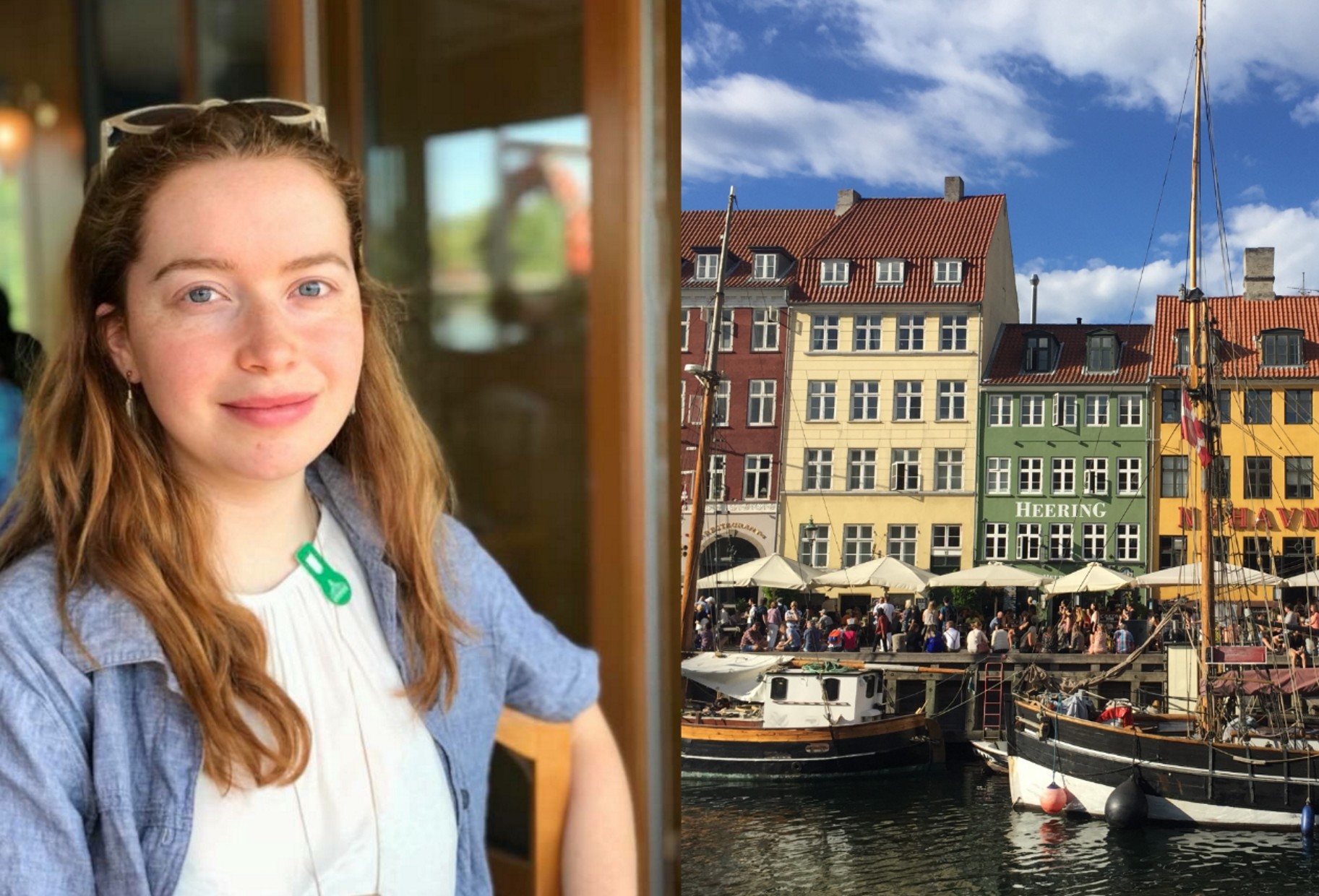
The green nature of this field interests Madeline Hoey, a senior biochemist at UR. “When I set out looking for a project, I focused my search on research teams that have motivations rooted in developing sustainable and environmentally friendly technologies,” Hoey said, pun intended. Her interest in green technology took her to the University of Copenhagen, where she worked with Peter Ulvskov and Bodil Jørgensen in the Plant Glycobiology section.
Efficiency and sustainability were also reflected in the work culture in Copenhagen. “The Scandinavian culture values time efficiency, and people often leave the lab earlier in the day,” Hoey said. A relaxed atmosphere and open-door policy fostered collaboration between supervisors and employees within and between labs.
Hoey also noticed profound mutual respect at every level. “I was strongly encouraged to challenge the ideas of my supervisors and mentors, which I believe empowered me to develop a greater sense of personal responsibility for my work.”
A more relaxed culture allowed Hoey to balance lab work with her other interests, such as running and biking. As a fourth-year veteran on UR’s cross country team, staying fit for the fall season was important. She also took advantage of opportunities to explore Copenhagen.
Still, the focus of her summer was on identifying new sources of sustainable biomaterials. Hoey worked independently and managed her own experiment schedule with support from her mentors. She found that pulp from sugar beets performs comparably to potato pulp for the fabrication of biocomposite microfibrils. These green bio-composites promise sustainable options in the future of industry.
Microfibrils distilled from these plant pulps act as rheological modifiers, which change the viscosity of liquids. They may replace petroleum-based compounds in liquids like paints, gels, and oils. Later on, they could have applications in the automotive industry and the construction of wind turbine wings. “This is probably the most exciting aspect to me — the real world application of an idea that has been confined to a single laboratory for months or even years,” Hoey said.
Doing research abroad and in Rochester has enriched Hoey’s academic experience and abilities as a student. “Since my mentors in the Ghaemmaghami lab (at UR) and at Copenhagen University have all been professors who have a clear passion for teaching, I feel that they put a similar emphasis on my academic and personal development,” Hoey said.