The Society of Women Engineers reached for the stars this past Saturday during its semesterly science and tech workshop for girls in the Rochester area, which explored the theme of outer space.
“Early exposure is how girls get interested and stay interested in engineering,” said head organizer Kathryn LaBine, explaining how the RIT chapter of the group gave her science experience as a child.
The event, held in Goergen Hall, saw considerable success with 96 girls registered and 39 volunteers, each with unique motivations for spending their day teaching children.
“I really want to work with kids when I’m older, and I just think it’s a really important opportunity,” sophomore Amy Burke said.
The event was lively, as the facilitators spun the girls on a stool to demonstrate the principle of angular momentum, eliciting giggles from the children and proud picture-taking from the parents. Balloons and golden stars hung around the interior, and water bottles were labeled “rocket fuel,” in faith with the theme.
Volunteers took away memorable experiences, too.
“I like seeing how much fun they’re having,” sophomore Louisa Anderson said.
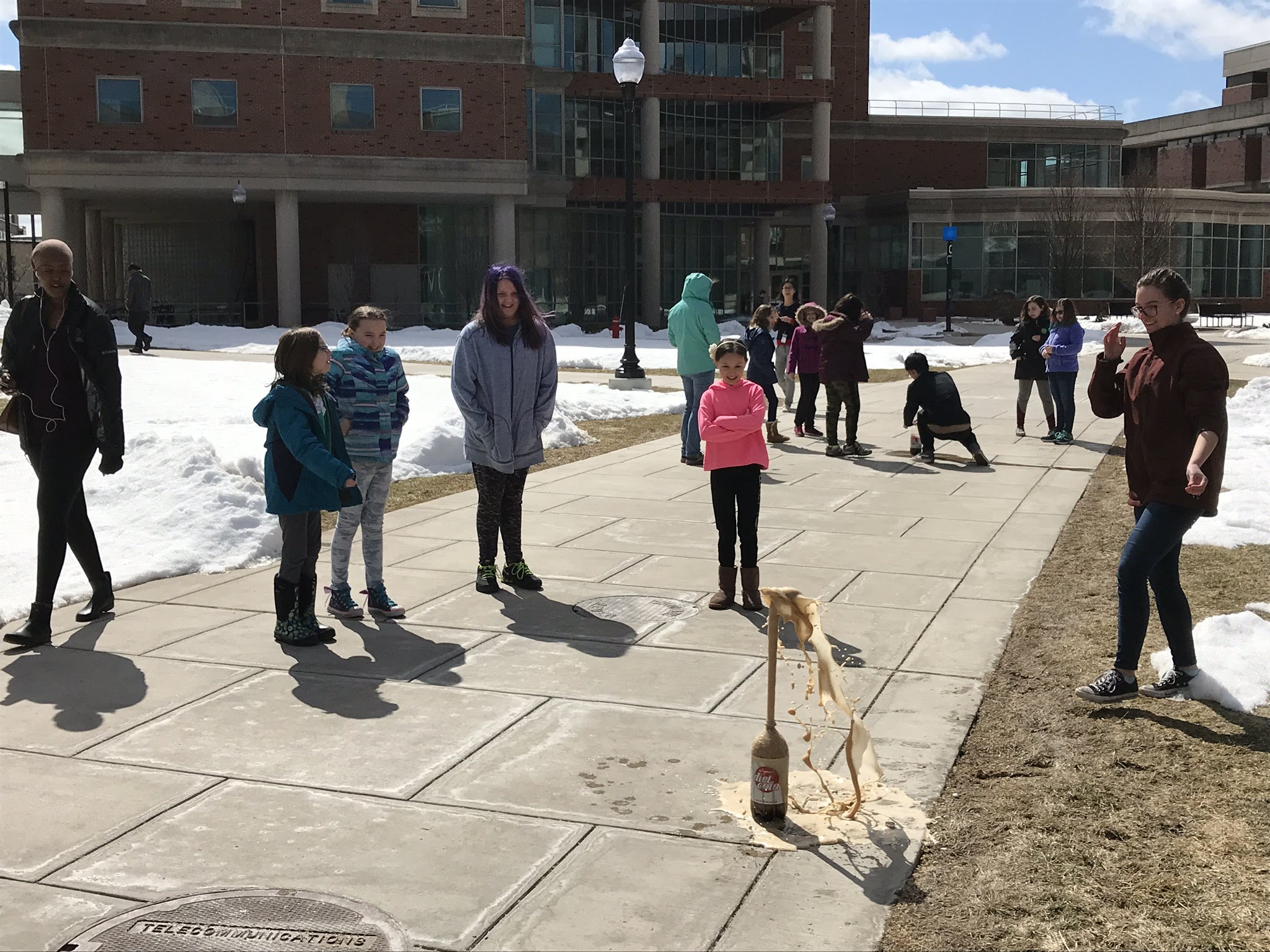
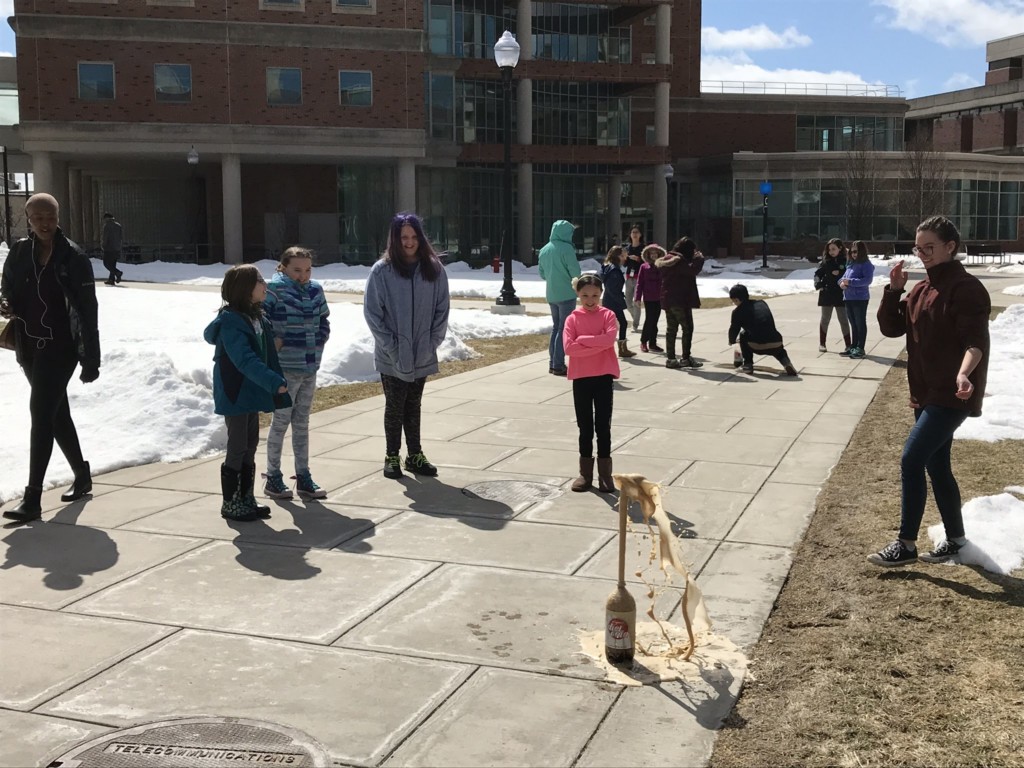
The breakout sessions, designed for educative amusement, featured a mechanical engineering lab that involved making a rocket with Coke and mentos, an optics lesson on why stars twinkle, a chemical engineering lesson on making solar cells with berry juice, and more.
“Right now only 20 percent of the world’s engineers are female,” said LaBine, who believes that we need a more diverse group of problem-solvers to tackle the world’s problems.
For LaBine, the event’s benefits went both ways: “We get re-inspired, and we’re like, ‘Oh yeah — this is why I’m an engineer. This is why I love it.’”