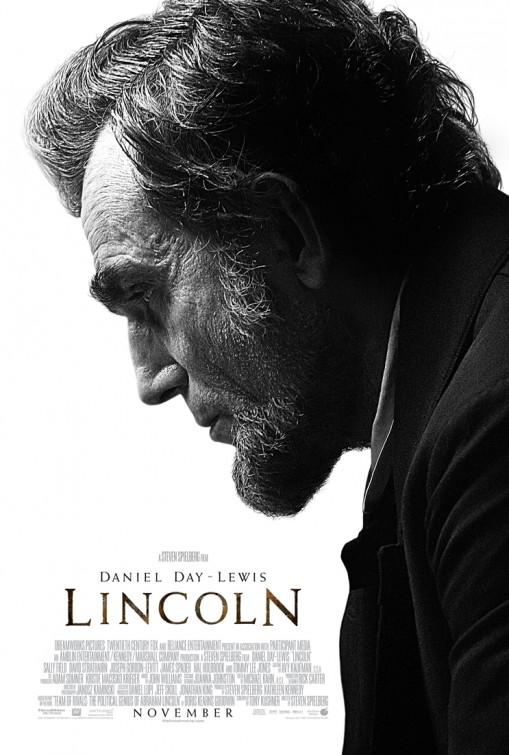
Courtesy of impawards.com
In a year filled with several high-quality movies and an even larger number of disappointments, Lincoln somehow finds a way to hover on the line between the two. Though the story of Abraham Lincoln’s fight to ratify the Thirteenth Amendment is both interesting and poignant, the hype built around the movie made its flaws more evident. Academy Award winning director Steven Spielberg (Schindler’s List, Saving Private Ryan) brings out the best in his talented cast, especially Daniel Day-Lewis (who plays Abraham Lincoln), Tommy Lee Jones (Thaddeus Stevens), and Sally Field (Mary Todd Lincoln).
Despite its immense talent, the film introduces over 50 different major and minor players, none of whom get enough screen time for us to justify their parts in the story. Despite having seen the movie twice, I am still unsure why it began or ended the way it did and why so little time was spent on key players Thaddeus Stevens, Francis Preston Blair, and Fernando Wood. It is still an obvious favorite to take home multiple Academy Awards on Feb. 24. However, the inconsistent plot and lack of character development diminished the film’s potential to be among Spielberg’s best.
Film Grade: B
Pascutoi is a member of the class of 2015.