Junne Park, Photo Editor
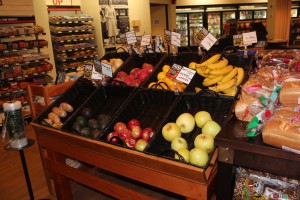
Hillside Market’s assortment of produce is as inconsistent as it is varied. Its website shows pictures of an abundant fruit and vegetable selection, which is not always the case. This problem can be rectified through a variety of means in order to provide students with more fresh produce options on campus.
Many students who live in dorms with kitchens rely on Hillside for nourishing vegetable and fruit options to cook with on weekdays when University shuttles do not run to Wegmans or Tops. Even with these shuttles running on the weekends, many students often prefer to buy produce at Hillside with their pre-paid meal plans. This dilemma is further aggravated by the fact that Hillside receives its last delivery of fruits and vegetables for the week on Fridays, and it does not get its next shipment until Monday, which leaves students with dwindling produce options as the weekend progresses.
Even when Hillside has replenished the produce selection, most of the fruit is past its prime; for example, the bananas are often brown, the mangos quite moldy and the random leftover pears full of bruises.
Hillside should stock its baskets with fruits and vegetables that are in good condition so that the selection of available options will be more fresh and ready to eat. Buying local produce from farms around the Rochester area could be another route to look into. After all, Hillside already buys local milk from Upstate Farms. Buying local produce would support community farms and their owners and make students aware of their food source.
In addition to the lack of produce variety at Hillside, the irregularity and inconsistency of fruits and vegetables does not match the University’s laudable emphasis on healthy eating. The amelioration of this problem would help point the University in a stronger, healthier, more fruitful direction.