Courtesy of J. Adam Fenster, UR Photographer
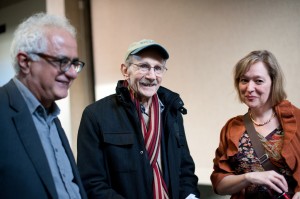
United States Poet Laureate Philip Levine gave a well-attended reading at UR on Thursday, April 12.
The approximately hour-long event featured recollections and orations by Levine. He read from a wide body of his works, beginning with “What is Work,” from the collection by the same title. Levine also read poems from his collections entitled “A Simple Truth,” “Unselected Poems” and several more recent pieces, such as “Gospel.”
The event was a part of the 2011-12 Plutzik Reading Series, which was established in 1962 to honor UR poet Hyam Plutzik. Each year, it features readings by several poets and/or fiction writers of varying prominence. The series is the longest-running, and one of the most prestigious, collegiate poetry reading series in the U.S.
At this event, Levine recalled several anecdotes from his life with humor and wit. He spoke of his mother, a Russian immigrant, and his childhood in Detroit. He also talked about writing terrible poetry as a child and described various memories from his adulthood. These recollections included working in factory jobs, living in Fresno, Calif. having to walk up 42nd street because he couldn’t afford other transportation while living in New York City.
It is this candidness and descriptiveness which marks Levine’s work, which centers on the laboring class and the common things in life. Levine is quoted as saying he writes “for people for whom there is no poetry.” He has been called “one of America’s greatest narrative poets.”
Levine was awarded the 1995 Pulitzer Prize for Poetry for his book of poetry entitled “The Simple Truth.” He was appointed as the 18th Poet Laureate of the United States in 2011 by the Library of Congress and has won numerous other awards for his poetry.
Hansler is a member of the class of 2015.

