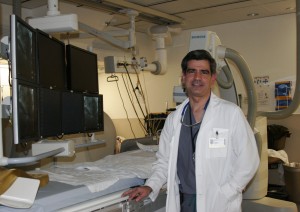
Drue Sokol - Photo Editor
The UR Medical Center has received a patent for implantable diagnostic technology, which will let physicians monitor their patients through a “living chip” and gather real time information about patients’ health.
According to Spencer Rosero, the cardiologist at URMC who developed the technology, the interdepartmental cooperation at URMC played a major role in the new advancement.
“Fostering a multidisciplinary environment where faculty from different fields can get together and work on a common problem encourages the development of new methods and technologies,” Rosero said.
In 2005, Rosero founded Psychological Communications, the company that currently holds the URMC license to the technology.
The technology stemmed from the observation that many patients were not feeling well, although their blood work, blood pressure and heart rhythm were seemingly normal.
Rosero said his thought process at that time was, “how does an individual know that something is wrong before they actually get sick?”
Instead of looking at the usual diagnostics such as blood pressure, the idea of using living cells as sensors came up, he said.
While there are multiple potential applications for this innovative technology, two of the most important are for congestive heart failure and monitoring cancer patients undergoing chemotherapy.
In terms of congestive heart failure, the new technology would be able to guide patients with the type and dose of medication needed on a day-to-day basis, as activities such as completing household chores can be difficult for these patients.
As for cancer patients, the biosensor would be able to detect an upcoming severe side effect — such as toxicity of the chemotherapy — and send a signal to the healthcare team to adjust the dose to continue the treatment while reducing the side effects.
The actual manufacturing of the technology will take place off-site by another group. The research tool version is projected to be available within the next three years and the first human studies should be starting within seven years.
Rosenthal is a member of the class of 2012.