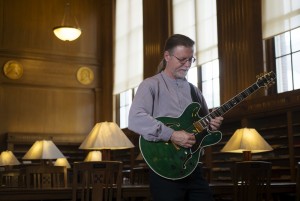
Courtesy of 585mag.com
On Tuesday, music professor John Covach, also director of the Institute for Popular Music, gave a presentation titled, “I Want to Take You Higher: Drugs, Trips, and Psychedelic Music.”
The lecture began with a brief background on drugs in popular music, from “jazz cigarettes” (marijuana) and heroin in bebop to the amphetamine-fueled Mod scene of the United Kingdom. From there, he described the discovery and subsequent experimentation with LSD. He flailed his arms and swayed wildly while reenacting the world’s first acid trip. One cannot help but wonder how much of his psychedelic knowledge comes from firsthand experience.
The majority of the lecture stressed the influence that psychedelics had on late 1960s songwriters, as well as pop culture as a whole. As people experimented with LSD, a belief grew that the drug could bring about permanent changes in perspective and awareness. This exploration of the mind was reflected in music that explored new influences and lyrical styles. While playing “Tomorrow Never Knows,” by The Beatles, Covach pointed out the Asian influence of the sitar as well as the lyrics that quoted Timothy Leary’s book, “The Psychedelic Experience.” “White Rabbit” used classical and jazz influences as well as surrealist lyrics based on “Alice in Wonderland.” Many people interpret the novel as a description of a wild psychedelic trip.
Covach did not shy away from giving his own opinions. He ridiculed Leary’s use of “The Tibetan Book of the Dead” as a source of “ancient wisdom.”
Covach’s opinions seemed to line up with those musicians who started to see the drug culture as an “easy way out” to spiritual enlightenment. Even today, one will encounter people on psychedelic forums who swear by the spiritual or religious benefits of these drugs. Some people, Covach explained, make a “secular religion” out of the drugs.
Part of what made Covach’s lecture so compelling was the fact that he lived through the time period he spoke about. This allowed him to provide insight that cannot be learned in books. His face lit up as he reminisced about an era of music about which he is clearly passionate. Everyone in attendance left with a better understanding of psychedelic music, as well as many good reasons to take a music history class with Covach.
The presentation was hosted by Delta Upsilon fraternity, and co-sponsored by Alpha Phi, Chi Omega, and Phi Sigma Sigma sororities.
Carman is a member of the class of 2016.
