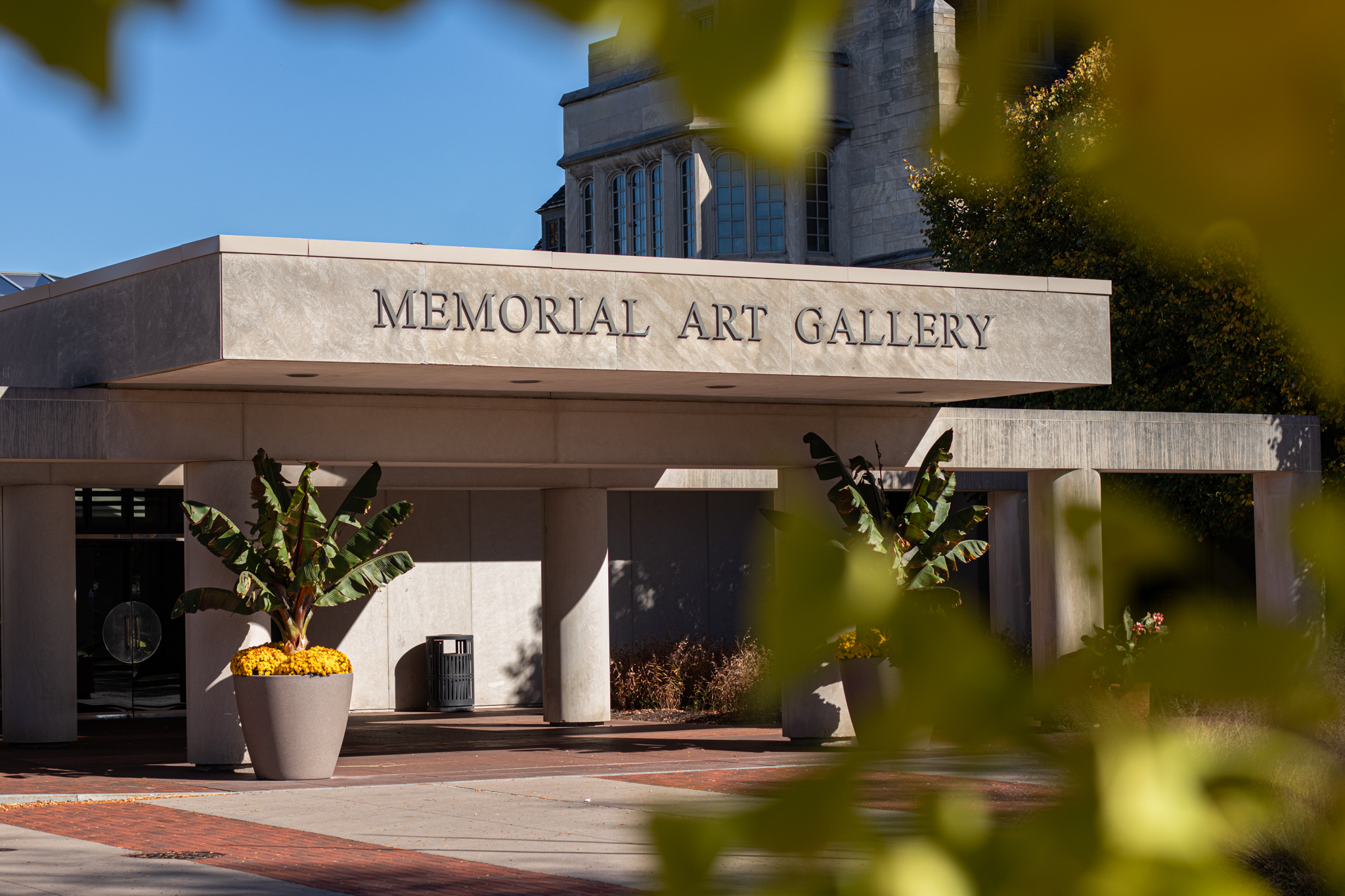
For Rochester residents, a trip to the Memorial Art Gallery (MAG) may soon become more accessible than before.
Beginning May 1, 2027, the MAG of the URochester will eliminate general admission fees for all visitors, officially launching its “Free For All, Forever” initiative. This change will make the MAG one of the city’s most accessible cultural institutions, removing the cost of admission in an effort to bring more of the local Rochester community through its doors. The museum has described the initiative as a mission of providing a space where everyone can experience art and cultural education, regardless of their ability to pay.
While admission has always been free for URochester students, tickets for the general public currently range from $20 for an adult ticket to $9 for visitors under 18.
“Removing the economic barrier of an admission fee is the most important action we can take to ensure generations of community members can benefit from MAG’s collection and educational programs,” said Sarah Jesse, the Mary W. and Donald R. Clark Director of the MAG.
The initiative has been made possible through a growing endowment funded by private donations. During the University’s “For Ever Better” campaign, which is an ongoing fundraising initiative aiming to reach its landmark goals by 2030, the MAG received several major gifts — including early support from Abby and Doug Bennett with the Sands Family Foundation, $2 million from Mary Ellen Burris ’68W, and a $1 million gift from Alexander “Al” A. Levitan ’63M (MD) and Lucy K. Levitan.
Contributions from the community such as these have helped the MAG in raising more than $9 million towards the endowment. The endowment is intended to replace the revenue that the MAG currently receives from admission fees while simultaneously helping to cover the additional costs that come with welcoming more visitors. In other words, the museum is attempting to build a financial foundation that will allow the policy to continue indefinitely. The move has also received immense support from local government officials. Monroe County Executive Adam Bello pointed to the county’s existing efforts to expand access to art and arts education, while Rochester Mayor Malik Evans connected the initiative to the city’s broader goal of strengthening Rochester’s reputation as an arts and cultural hub.
This is not the first time the MAG had experimented with admission-free days. According to URochester, attendance at the MAG increased more than sixfold during previous free-admission days, highlighting a massive surge in community interest when the barrier of price was removed.
For the MAG, the decision is also something of a return to its roots.
The MAG celebrated its 113th birthday on Oct. 9. In the center pavilion of the museum, there was a festive atmosphere, featuring live music, birthday cakes, and refreshments for visitors. This event not only celebrated the history of this beloved Rochester institution, but also the story of URochester and the MAG.
In 1913, MAG was founded by Emily Sibley Watson with support from several local artists and philanthropists in honor of Watson’s son, architect James Averell. In the same year, it was dedicated to the University. An article in the Union and Advertiser on April 23, 1912, wrote that, “the art gallery is a gift to the University of Rochester, and the title will be vested in the university, but the building will be maintained primarily for the instruction and edification of the citizens of Rochester.” The first Board of Managers included Watson and the third President of the University, Rush Rhees.
The museum has expanded multiple times since its founding. In 1926, it had already outgrown its original Italian Renaissance-style building, and so the 14,000 square feet was expanded to include an auditorium, central Fountain Court, and a children’s museum. In 1968, a modern-style infrastructure further increased the museum’s size, and in 1986, an enclosed, skylit sculpture garden and pavilion by Rochester architect Frank S. Grosso became the museum’s third-largest addition.
The museum was, and still is, located along University Ave. As the name suggests, the grounds were once part of URochester’s original Prince Street Campus. The campus was used for classes from 1861 to 1930, though it remained a dorm for female students until 1955, when all University students were moved to the River Campus. Next to the museum was Cutler Union, the University’s women’s student union. Since the 1920s, the basement of Cutler Union has offered art classes, although it was only officially integrated into the MAG in 1987.
With free admission for URochester students and faculty, and the elimination of general admission fees coming soon in May 2027, it is the perfect time to explore the exhibitions at the MAG. The October birthday bash marked my first time at the MAG. For those who were in the same boat as me and looking to become first-time visitors, here are my suggestions.
Entering the main entrance takes you to the pavilion. The Cutler Union and Brown Hound, the museum cafe, are on your right. To your left is the museum gift shop (check it out and get a URochester print!) and the entrance to the galleries. The first floor includes rotating exhibitions, as well as art from Africa, Oceania, and the Americas, and modern and contemporary art. The rotating exhibits celebrate local Rochester artists and special events, like the current exhibition that celebrates America’s 250th anniversary this year. Walking through the gallery, there were many interactive elements that add to visitors’ experiences, such as providing paper and writing utensils for visitors to draw and record their thoughts on the pieces. One particular gallery space is dedicated solely to one painting, with the goal of making visitors stop, look closely at the work, and reflect on it.
The second floor is home to the MAG’s permanent collection: It is made up of European, Islamic and ancient Middle Eastern, Asian, and ancient Egyptian, Greek, and Roman art. The European section encompasses pieces from the Medieval, Renaissance, and Baroque periods, up to the 20th century.
Of the almost 13,000 works of art in the MAG collection, a few pieces stood out to me. “Veiled Sun,” within the series “Waterloo Bridge” painted by the famous Impressionist, Claude Monet, was the one that stood out to me the most. Another unique piece is an Italian Baroque Organ, originally built around the eighteenth century. It was the first organ acquired and installed by the Eastman Rochester Organ Initiative of the Eastman School of Music.
After experiencing everything the MAG has to offer, don’t forget to stop by the Centennial Sculpture Park, a public art space and an urban oasis, on your way out.