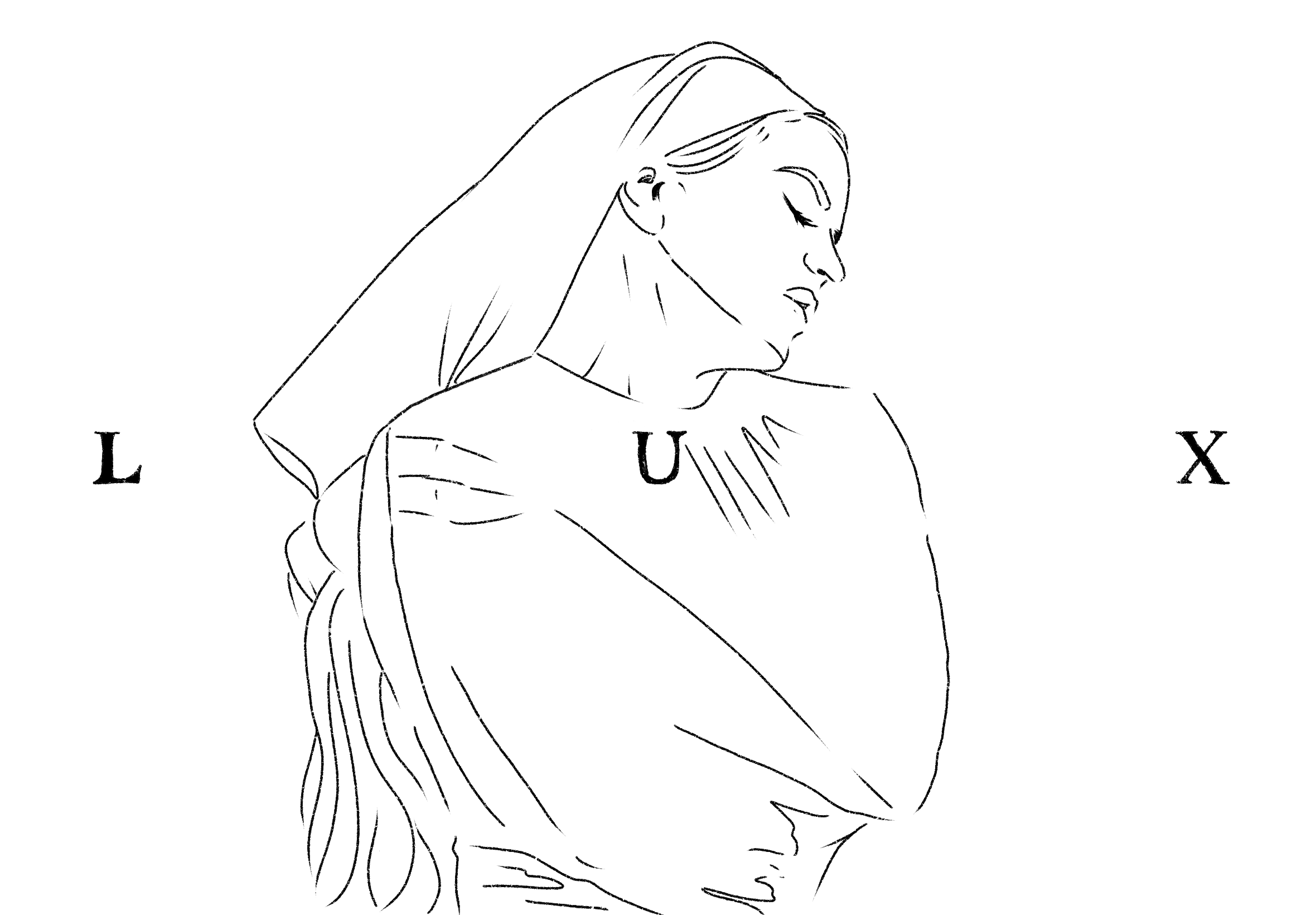
There’s so much to talk about in “Lux,” from the use of 13 languages, to the inspiration taken from the lives of female saints, to the use of the London Symphony Orchestra with what The New York Times calls “formal audacity.” The artist (in the truest sense of the word) described her album in a press release in October as an “emotional arc of feminine mystique, transformation, and transcendence,” and that is what one experiences upon listening.
Rosalía, the album’s creator, told Popcast that “it’s a lot of trying to understand how other languages work” and collaboration with professional teachers and translators to make the phonetics work. This shows dedication to her music as organic pop; she refused to use AI and engaged with real humans to create an album that works cross culturally and picks up languages from across the globe, including Hebrew, English, Japanese, Ukrainian and Sicilian, as well as her native Spanish and Catalan.
One of my favorite tracks on the album is “La Yugular,” and although it has a Spanish title, it has verses and a chorus sung in Arabic. Rosalía’s ability to work with a language like Arabic, one that belongs to the Semitic language group rather than the romance group, shows her skill and her dedication to creating art that transcends our idea of how translation works. Rolling Stone called the album a “truly timeless work of art,” putting Lux into a league of its own.
Part of the creation of this album was a three-year process of language learning and research. “La Yugular” was inspired by Rabia Al Adawiyya, the first female Sufi saint in Islam. She is known for founding the doctrine of divine love, essentially saying to love Allah for his own sake, rather than for reward or out of fear. Rosalía takes this and creates moving lyrics in Arabic that translate to, “For you, I would destroy the heavens, for you, I would demolish hell, without promises and without threats.” Later in the song, she sings in Spanish and addresses a ‘you,’ using a Gitano word for God. This could literally be the religious figure, or perhaps her turning a romantic interest into something worshipped. In another track she references an ex with anger, but “La Yugular” and the invocation of Rabia Al Adawiyya suggests a reorientation towards peace. Even the title of the song references Arabic and the Qur’an, translating to ‘The Jugular,’ in English, and calling back to Surah Qaf 16 (Qur’an 50:16): “Indeed, it is We Who created humankind and fully know what their souls whisper to them, and We are closer to them than their jugular vein.”
She references further female saints in other songs, Saint Ryonen Genso of Kyoto in “Porcelana,” Saint Rosalia of Lima in “Reliquia,” and Saint Hildegard of Bingen in the first single of the album that was released, “Berghain.” Her geographical range of divine figures reflects her mastery of language and her classical training. Having studied as a conservatory musician with a preference for vocal flamenco performance, her understanding of operatic and classical music becomes clear in “Berghain” in what Pitchfork calls “violin fireworks” borrowed from Vivaldi’s ‘Winter’ to her consistent collaboration with the London Symphony Orchestra across the album. She brings in further influence on this track with three distinct languages and collaboration with Yves Tumor and Björk. She told Billboard that in learning to use an orchestra, it was a challenge to “understand all the instruments, all the possibilities,” but she has done so masterfully to produce an album with four movements and an incredible range of sounds, and Rosalía’s own version of an aria to boot.
“Lux” has a 95 out of 100 on Metacritic, coming in second on the site’s top 40 albums of 2025. AP’s Maria Sherman said of the album: “If there is a single avant-garde saving grace in the pop music landscape, it’s here.” She gave the album a 4.5 out of 5 stars. I believe that it is worth 5 out of 5 stars, and would go even further and break convention, as Rosalía herself does, and give it 6 out of 5 stars. It has acted as an entryway into Spanish language music for me, as well as encouraging me to move into listening to albums as a whole, rather than select tracks. Rarely have I had anything on repeat as much as I have this work of art; I’ve sat with it, read about it, stewed on it, and am happy to be able to express the awe that I hold for this album here, if a little late.
I’d like to finish this belated review as Rosalía finishes “La Yugular,” using a 1976 interview with Patti Smith as a reminder of the ground breaking nature of this album and the inspiration that listeners can take from it: “Seven heavens — big deal! I wanna see the eighth heaven, tenth heaven, thousandth heaven. You know, it’s like, break on through to the other side. It’s just like going through one door. One door isn’t enough, a million doors aren’t enough.”