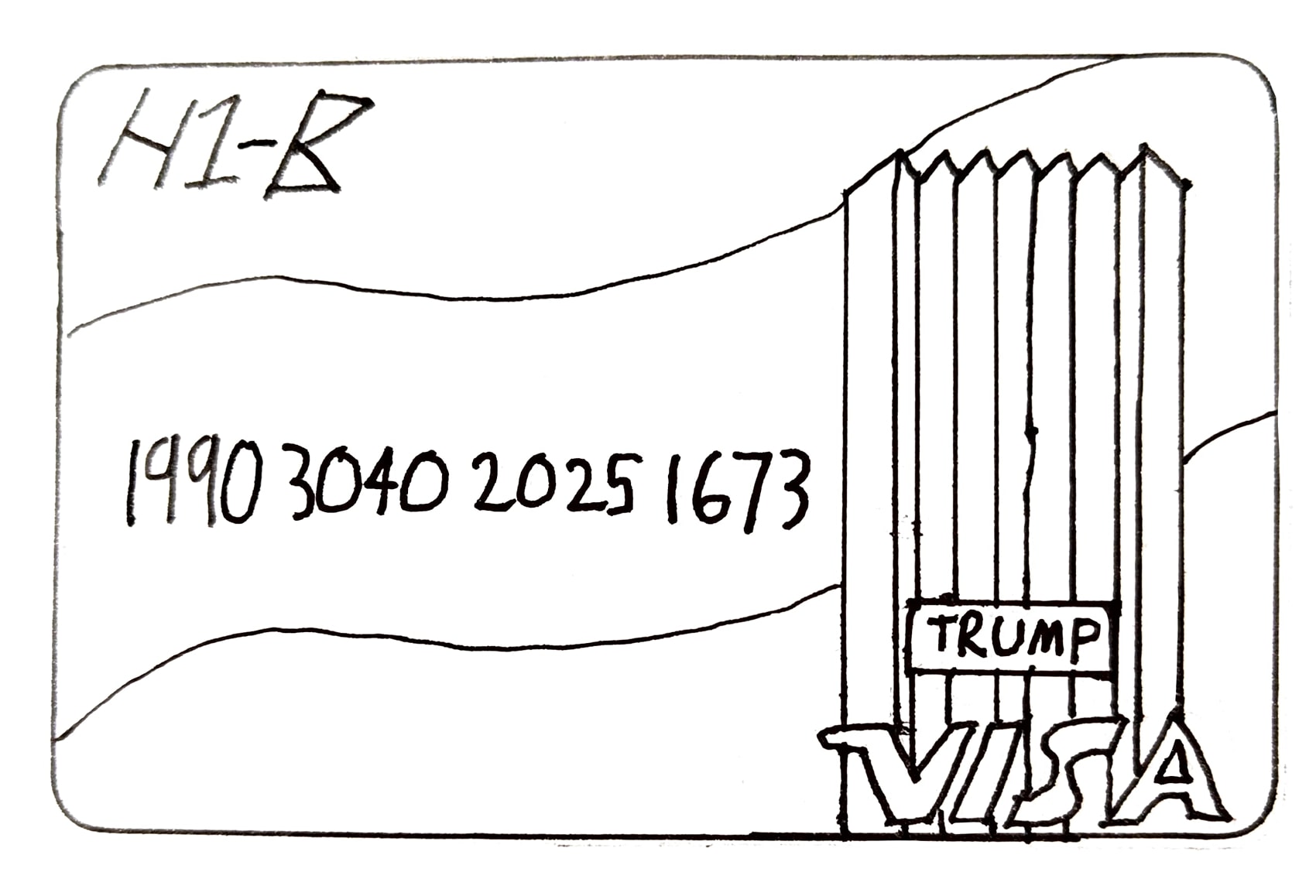
President Trump released a Proclamation in September restricting those entering the U.S. on an H-1B visa, a visa specifically for specialized workers, by adding a $100,000 fee to petitions filed by private companies and higher education centers that they are required to pay per employee that they want to sponsor. This is yet another example of the Trump Administration’s nationalism and xenophobia taking precedence over the concerns and needs of the American people. Ultimately, the people will be the ones to pay the price.
It seems a common talking point of xenophobes that H-1B visas steal the jobs of those born in this country. This is simply not true. H-1B visas are only granted to immigrants that can fulfill roles that Americans cannot. Experienced economics have determined that these immigrants actually boost the economy and have a generally positive effect on American-born citizens’ place in the job market.
Of the 304,000 H-1B visas issued as of late September in the 2025 fiscal year, only 16,733 were allocated to workers in higher education. This limits the number of vitally-necessary academic positions able to be filled, and thus worsens the quality of education available to American students in American universities, reducing the number of skilled workers that American universities produce. In short, through limiting H-1B visa workers, the Trump administration is increasing the necessity for H-1B visa workers.
Education is also one of the country’s most successful exports: in 2024 the country received nearly $55 billion dollars from around 1 million international students. This supported around 400,000 jobs, allowing international students to contribute positively to the American economy. Many use the H-1B visa as part of the pathway from study to work to green card so that they can stay and work in the US. Now that getting an H-1B visa is much more difficult, the worth of a U.S. college education in the first place is much lower. Should international students choose one of the many other developed countries with well-reputed and more international-friendly higher education, the U.S. economy will suffer when jobs inevitably leave the U.S. in favor of wherever skilled workers are centered.
The American Council on Education also said that the introduction of the $100,000 fee would “harm foreign-born medical residents and other professionals in critical national-need areas.” The American healthcare system is already buckling under workforce shortages, the pressures of inflation and recovery from the COVID-19 pandemic, and these new fees will only damage American healthcare further, and by extension harm millions of Americans every year. Not only will it cost this country doctors and those that can teach doctors (at a time when both are in critically short supply), but it will also cost Americans money and, if hospitals are closed because they cannot afford to bring in workers, their lives.
Trump was called a “pro-business, pro-innovation President” by OpenAI CEO Sam Altman, and yet he has undercut his allies and donors in the tech industry that rely on H-1B workers. Around 65% of the H-1B visas approved in the 2023 fiscal year were in computer-related fields; Trump is cutting out the workforce of his biggest donors. Immigration into the United States shrank by 2.6% between January 2025 and June 2025, just months after Trump took office, and at the same time, the unemployment rate has grown by 0.3%. Less immigration doesn’t mean Americans have an easier time finding jobs — it just means critical sectors of the economy find themselves unable to hire workers to provide the service Americans need, from education to healthcare, software, and every other corner of the economy.