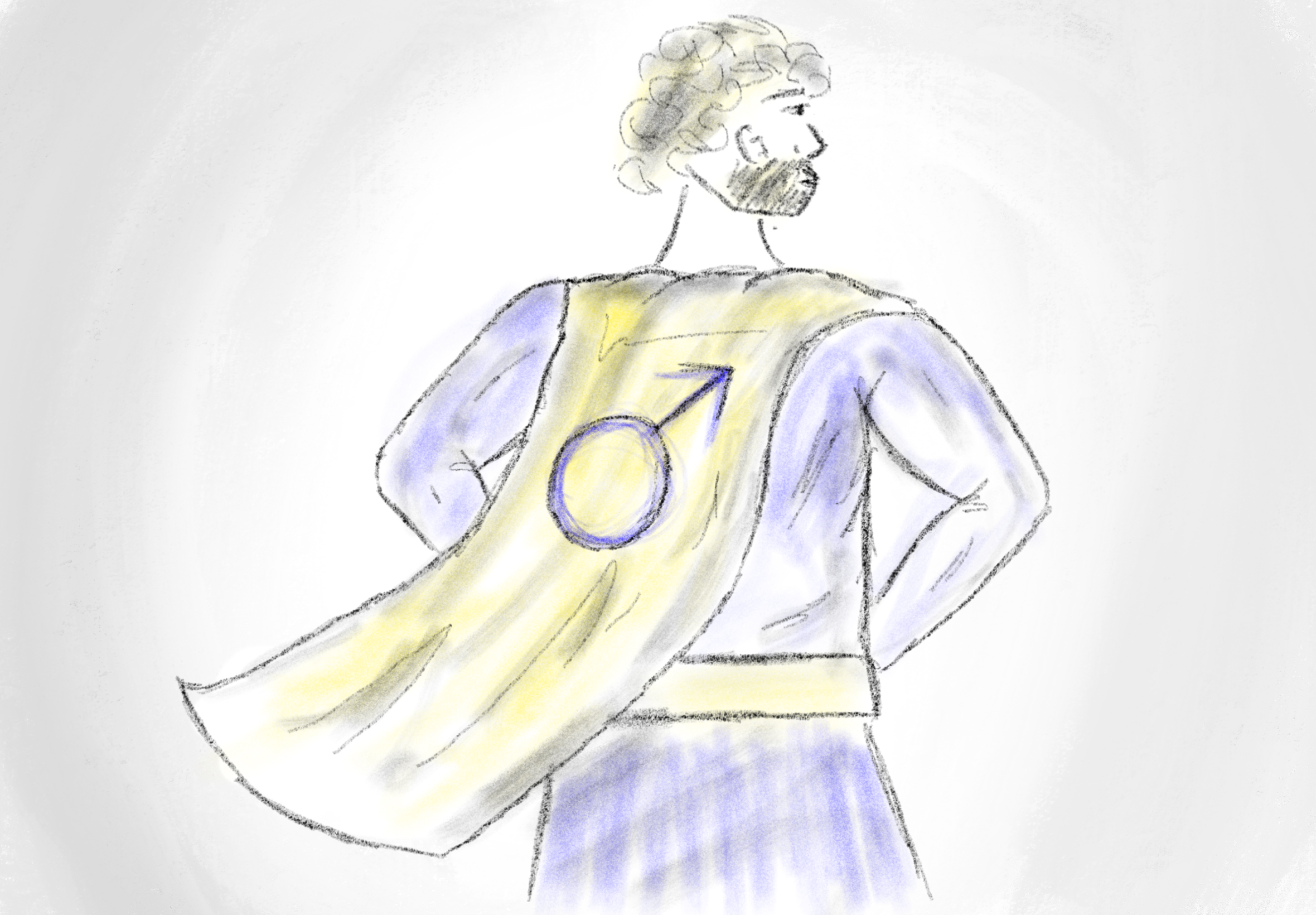
Being a man has always come with inherent social privileges. Traditional masculinity says that men are powerful, dangerous, and influential. By these rules, masculinity entails control.
This role was never given to men, but rather conquered, justified by supposed superiority over women. But this patriarchal view of manhood definitionally conflicts with the ideal of gender equality. Equality has no ruling class.
This disconnect between traditional masculinity and a dream of gender equality is precisely the reason why so many men fear the women’s rights movement — they see the expansion of women’s rights as a threat to their privileged role in society. Feminism tells women that they are just as powerful, dangerous, and influential as men, thus attacking the patriarchal superiority of masculinity. This has spurred the emergence of the neo-masculinity movement.
The modern-day patriarchal rhetoric of neo-masculinity preaches confidence and fitness, but not as a form of male empowerment; instead, it is a reflexive retort against women’s advancement. Spearheaded by figures like Andrew Tate and Joe Rogan, the movement preys on young vulnerable men, convincing them that their loneliness or angst is the fault of the feminist movement. Victims of this ideology are blinded, tricked by the purportedly strong, powerful male role models who spew this hateful rhetoric with a box full of salesmen’s tricks: If you want to be as confident as the man on your phone screen, you have to talk and think like him, and of course you have to buy his webinar and supplements too. Only then will you be the man you want to be.
Thinking this way is incredibly unhealthy. Men are trapped inside echo chambers and fed unattainable goals that only fuel frustration, putting everyone at risk. According to a study across 25 wealthy, population-dense countries, while the U.S. only housed 32% of the female population, a staggering 70% of all global cases of femicide occurred here. Though misogyny is global, with statistics already as grave as these, neo-masculinity’s efforts to enrage young men within the United States are a point of increasing concern.
Yet, for all its anti-feminist extremism, neo-masculinity — driven as it is by toxic aesthetics and social ideals aiming to restrict manhood — enforces a patriarchy that does not even benefit most men. Under this mindset, those who don’t subscribe to neo-masculine ideals are “low-value males,” “cowards,” and certainly not “real men.” With many men already feeling isolated, neo-masculinity only worsens existing struggles with male loneliness and social isolation. A CDC study on suicide prevalence and prevention indicates that 80% of suicides are committed by men. It appears men and women alike are predominantly killed by men.
Where exactly can we go from here? The women’s rights movement is not going anywhere, and a revival of patriarchal masculinity only serves to do harm. There is a crisis of identity among young men — and this presents us with an opportunity to redefine masculinity in society.
The fear of losing traditional masculinity can be boiled down to the fear of appearing weak. Men “used” to be strong; now, what are they? I don’t think that redefining masculinity weakens men. Rather, it gives us the opportunity to redefine what it means to be strong.
Strong men march for women’s rights. Strong men care about mental health. A man’s strength should not be his ability to lift himself up, but instead his ability to support those around him.