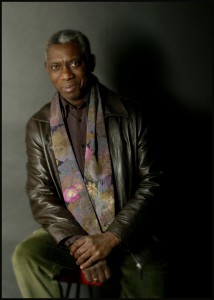
Courtesy of njn.net
The audience at the first installment of the 2011 Plutzik Reading Series mostly held its applause for poet Yusef Komunyakaa until the end of the program, so as not to interrupt his intricate cadence. But the impulse to clap or snap or emit some sonic response to Komunyakaa’s entrancing rhythms could be felt, as sparse applause bubbled up in between readings.
The Plutzik Reading Series is known for its uncompromising devotion to acknowledging some of the greatest artists of our time and is celebrating its 50th anniversary this year in conjunction with the 100th anniversary of the birth of professor and poet Hyam Plutzik, for whom the series was posthumously named.
The University will be celebrating the Series’ semicentennial by hosting a variety of artists whose work has endured over time. For this reason, Komunyakaa’s appearance in the Welles-Brown Room this past Thursday could not have been more appropriate.
To catalogue Komunyakaa’s collection of grants, awards and commendations would — as English professor and poet Jennifer Grotz cited in her introduction — “steal the thunder from the gorgeous poetry which you are about to hear … Komunyakaa’s poetry is so versatile and so shape-shifting.” She added, “It would take me quite a while to do his forms and subjects — his fusion of music and image — the justice it deserves.”
It is, of course, impossible to talk about Komunyakaa’s work without mentioning music. Komunyakaa’s poetry refers to a kind of verse that at once incorporates and embodies the wild and seductive rhythms of blues and jazz while never appearing untempered — these rhythms are always meticulously arranged.
Take for example this excerpt from his poem “Blue Light Lounge Sutra for the Performance Poets at Harold Park Hotel” with which he closed the reading:
the need gotta be
so deep words can’t
answer simple questions
all night long notes
stumble off the tongue
& color the air indigo
so deep fragments of gut
& flesh cling to the song
you gotta get into it
These images are tantalizing but they would not exist as such without the equally potent rhythms, evoking the kind of madness and dizziness we associate with Eros dopamine, and bebop. Komunyakaa could not keep himself still as he read. His knee twisted with each long stress, as his ascot hat bobbed up and down, keeping time. He was simultaneously possessed by the rhythm and in control of it as he sped toward the end of the poem.
After a moment, applause filled the room. Komunyakaa’s poetry, belonging to the same class of musical virtuosity as Dickinson and Ginsberg, is best heard aloud. Komunyakaa has a need so deep that he works on several projects at once and appears to have no intention of stopping. UR is lucky to have been graced with his presence.
In celebration of its 50th anniversary, the Plutzik Reading Series will continue this semester with readings from Irish poet Eavon Boland and Philip Levine, the newly appointed U.S. poet laureate.
Friedman is a member of the class of 2012.