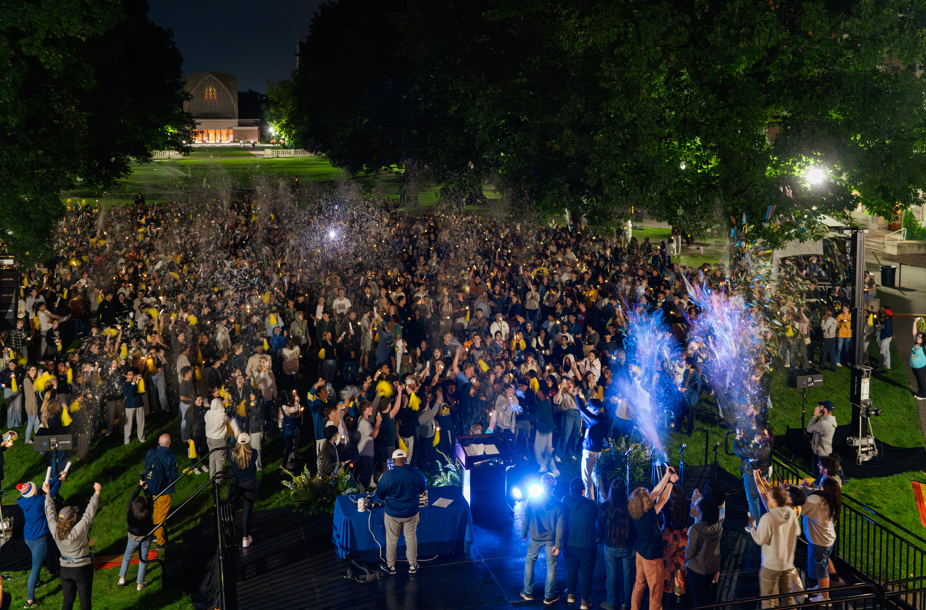
Dear University of Rochester Students (undergraduate, graduate, and professional):
I am delighted to welcome you to the 2024-2025 academic year. Since my arrival on campus, I have been inspired by your display of collective genius and incalculable diversity. Your presence at the University of Rochester, each one of you, is significant because you add a thread to the fabric of who we are as a community. As you begin the school year, my wishes for you are threefold:
- I wish that you make it a priority to engage in activities that give you joy, peace, and a sense of wellbeing. I believe that such activities make for better scholarship and citizenship in support of our campus, local, and global collectives.
- I hope you find time to engage the city of Rochester and the surrounding communities in meaningful ways. This place not only recalls rich history, but the community is alive with awe-inspiring people, landscapes, and opportunities to engage your fellows of all humankind.
- I trust that you will take advantage of living and learning in close proximity to some of the greatest minds in the world by building authentic connections of compassion with one another. My motto is if you are here then you are mine and I am yours. We must care for one another.
I wish you all success, joy, and accomplishment. May the future unfold in our favor. Meliora.
John H. Blackshear, Ph.D.
Vice President for University Student Life
Professor of Psychology, Department of Psychology
Clinical Psychologist