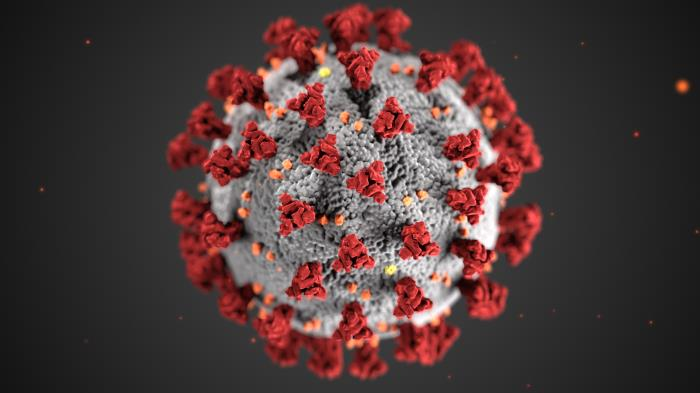
A new UR Medical Center study will research the effects of the immune system on COVID-19.
The study, announced April 16, may impact efforts to create a vaccine for the virus by investigating questions like why there are so many mild and asymptomatic infections, whether people can be re-infected, and whether the virus is mutating.
“This will be one of the earliest studies of acute infection with this new virus,” David Topham, a lead researcher and professor in URMC’s Department of Microbiology and Immunology, said. “It will help us establish what a ‘good’ immune response is to the virus and will inform on experimental vaccines against the virus.”
The researchers will follow 100 coronavirus-positive subjects in the Rochester area for 90 days, collecting samples along the way to track the immune system’s response to the virus — monitoring things like the speed at which antibodies are created and their effectiveness over time. The subjects are expected to be gradually recruited as the virus spreads.
The National Institute of Allergy and Infectious Diseases, the agency run by Dr. Anthony Fauci, granted approximately $5 million for this study.
According to another researcher, Infectious Disease specialist Dr. Angela Branche, the study will likely last through the winter if COVID-19 is still circulating in the Rochester area. Doing so will allow them to detect possible different strains of the virus, Branche said, especially if there is a seasonal second wave.
For some infectious diseases, immunity lasts a lifetime. But for others, including seasonal flu, immunity declines over the course of months or years. Topham said that re-infections for most diseases are years apart and, when they do happen, milder than the original infection, because they occur at the point when immunity has declined just enough to make someone susceptible instead of occuring when immunity has been completely lost.
URMC has also recently announced studies on the effectiveness of antiviral drug remdesivir as a treatment for COVID-19. Additionally, the Medical Center on Wednesday announced a different study regarding RNA and the coronavirus.
More recently, remdesivir has seen moderate success in studies, including one at UR, on COVID-19 patients, and has been approved by the FDA for emergency usage on more serious cases.