It’s no question that humans are fascinated by their own collective destruction.
In an iconic scene from the 1968 movie “Planet of the Apes,” the lead Charlton Heston stumbles upon the Statue of Liberty lying submerged in sand, her metal corroded by the sea, a ruined relic.
It’s not just fictional narratives either; just look up “what if all humans disappeared instantly?” and you will find a plethora of informational YouTube videos, articles, television series, and a National Geographic documentary called “Aftermath: Population Zero” — all testaments to our shared, macabre curiosity about our own vulnerable position on this planet.
All of them ask the question that disturbs and intrigues us so greatly: What would the world be like without human society as we know it, or humans at all?
Often, the most poignant answer is seeing our material belongings persist without us. Cities abandoned, once-busy highways still and empty, tourist sites with no tourists, familiar spaces turned alien with our absence.
Now, in the time of the coronavirus pandemic, social distancing, and quarantines, we can see our world without us occupying it.
So, what does our campus scenery look like, now that so many of us are gone and those remaining are encouraged to stay inside?
The halls students streamed through to attend classes are now mostly deserted.
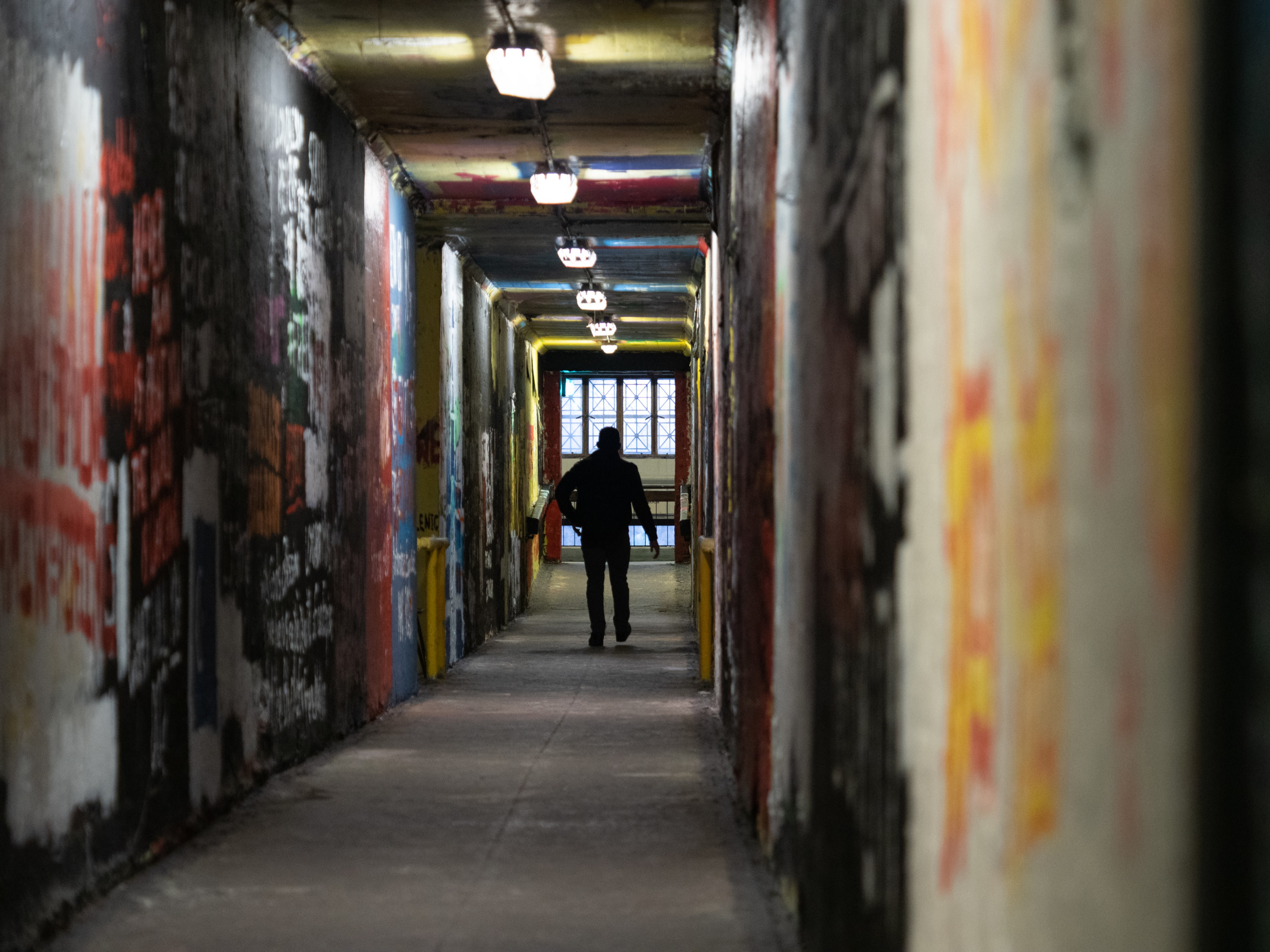
One of the few remaining students traverses Eastman Quad through the tunnel system. Photo by Henry Litsky.
Academic buildings and rooms across campus are devoid of students as all classes move online.
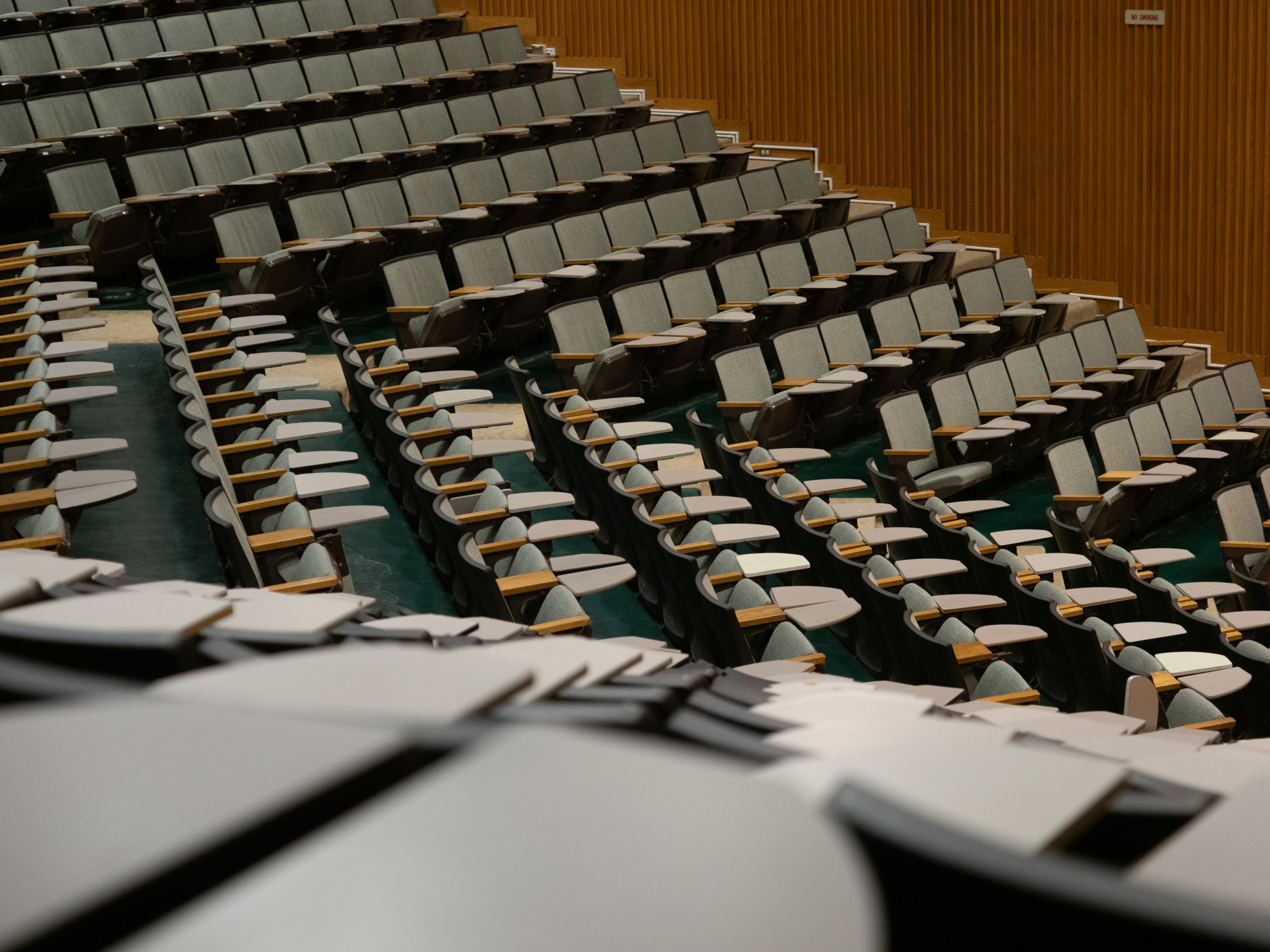
Hubble Hall, the largest of lecture halls, now sits empty. Photo by Henry Litsky.
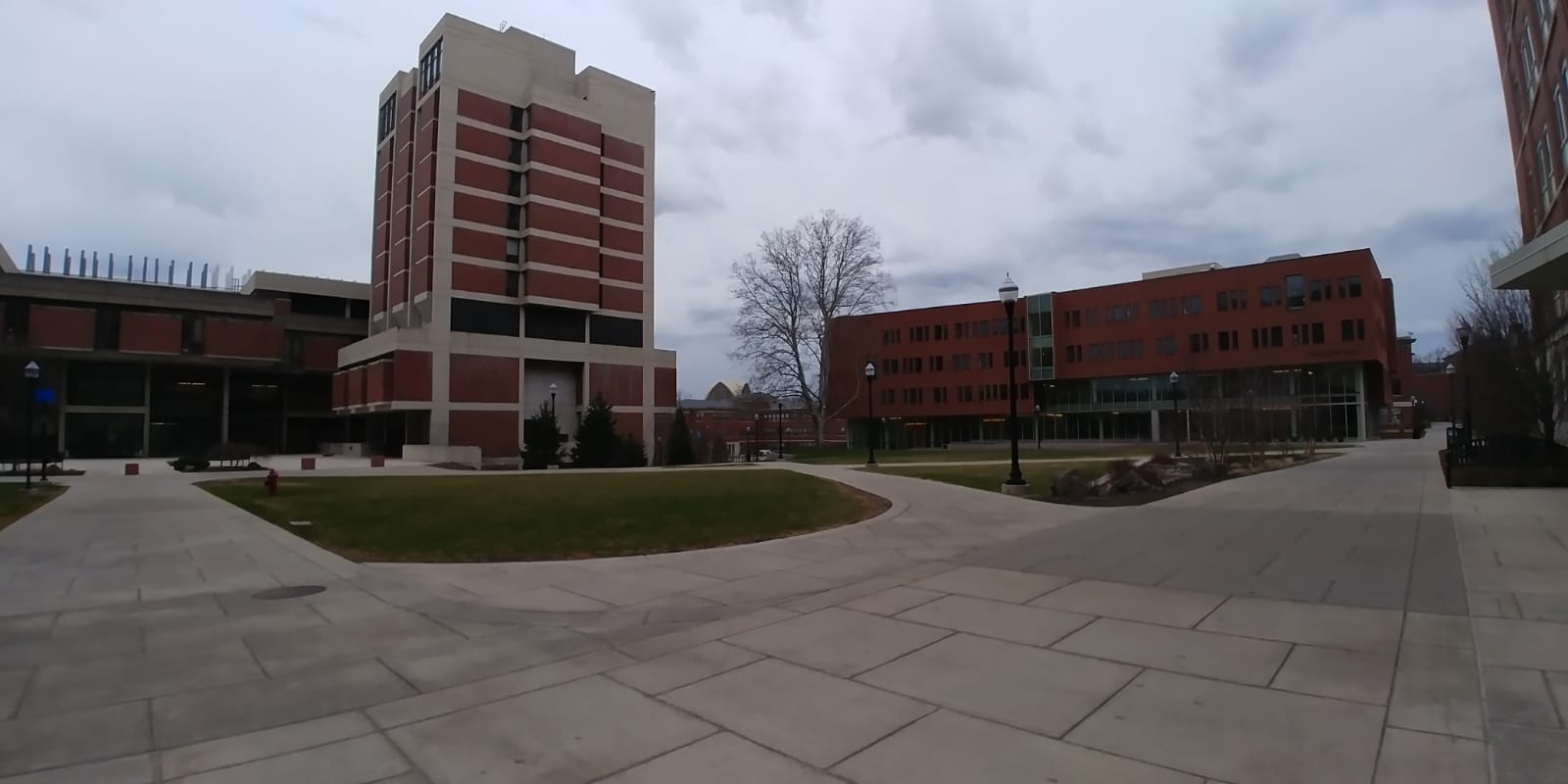
The vacant engineering quad feels too large as the University goes online. Photo by Yahia Ali.
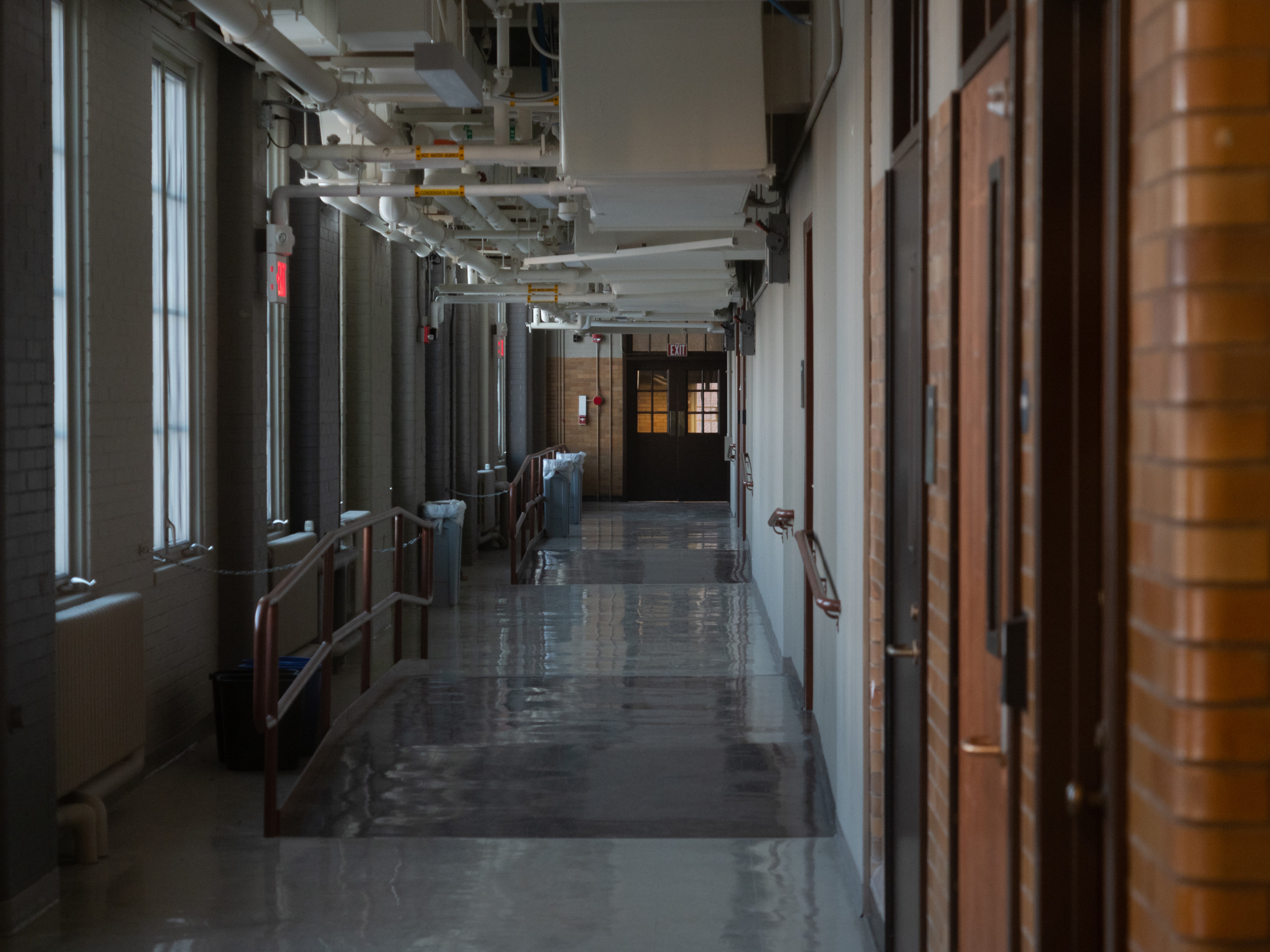
Hallways in academic buildings across campus remain dark and vacant. Photo by Henry Litsky.
The often-bustling campus center is stripped of tables and chairs to discourage gatherings and help contain the spread of COVID 19 on campus.
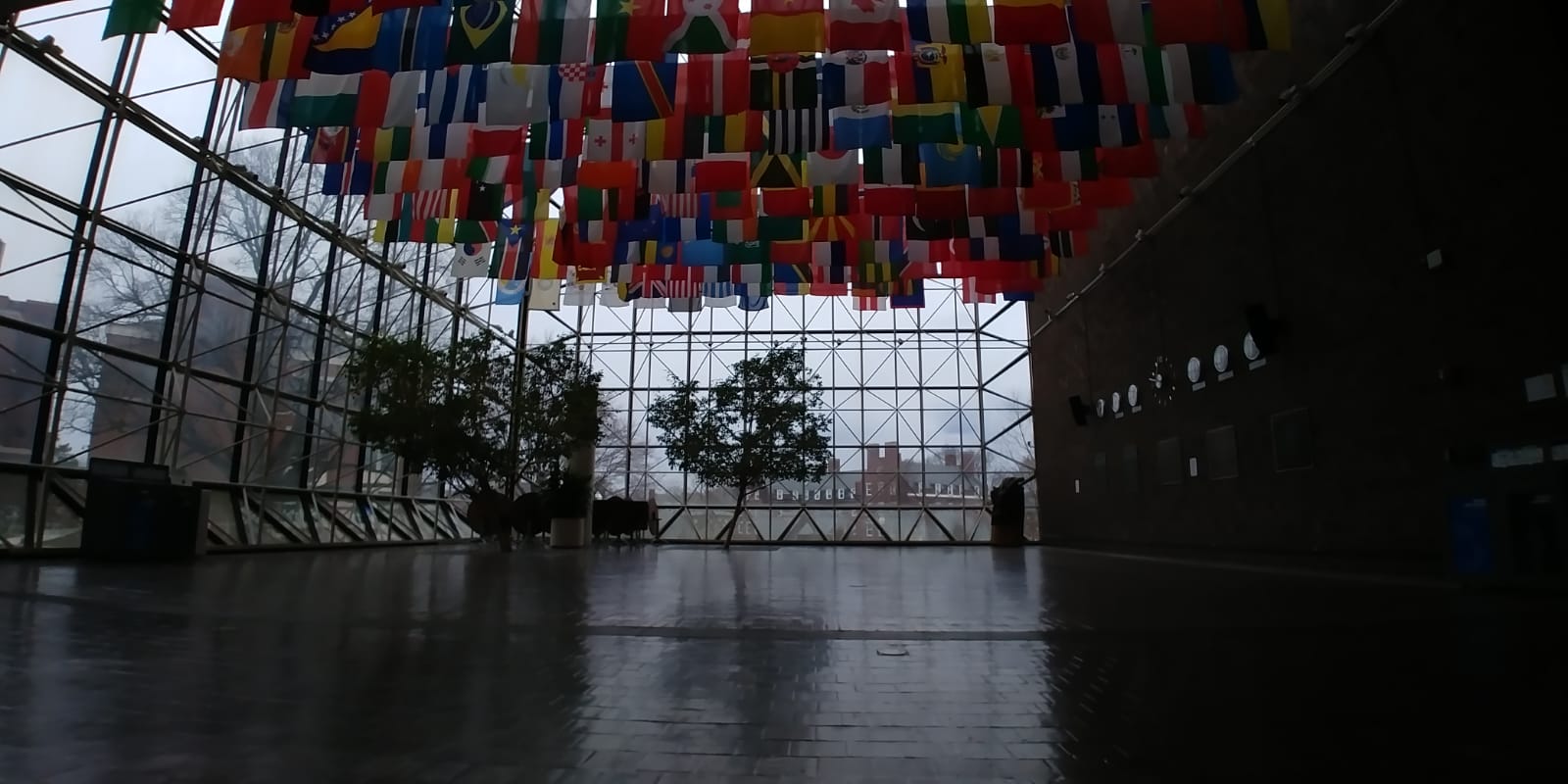
Hirst lounge sits devoid of chairs and couches. Photo by Yahia Ali.
Formerly packed with students on warm days, the Eastman Quad has become a squirrel’s paradise.
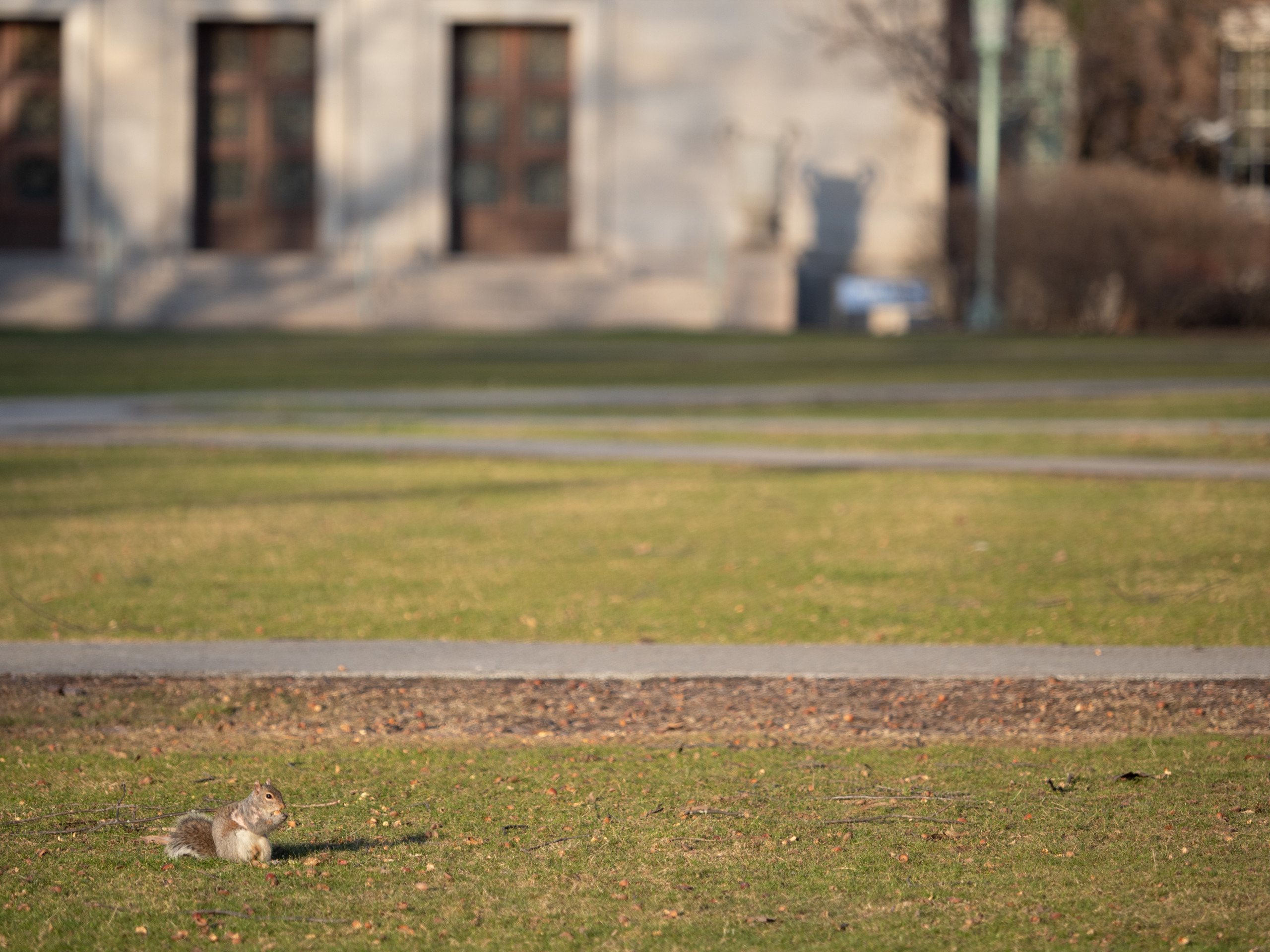
A squirrel enjoys an acorn alone on Eastman Quad. Photo by Henry Litsky
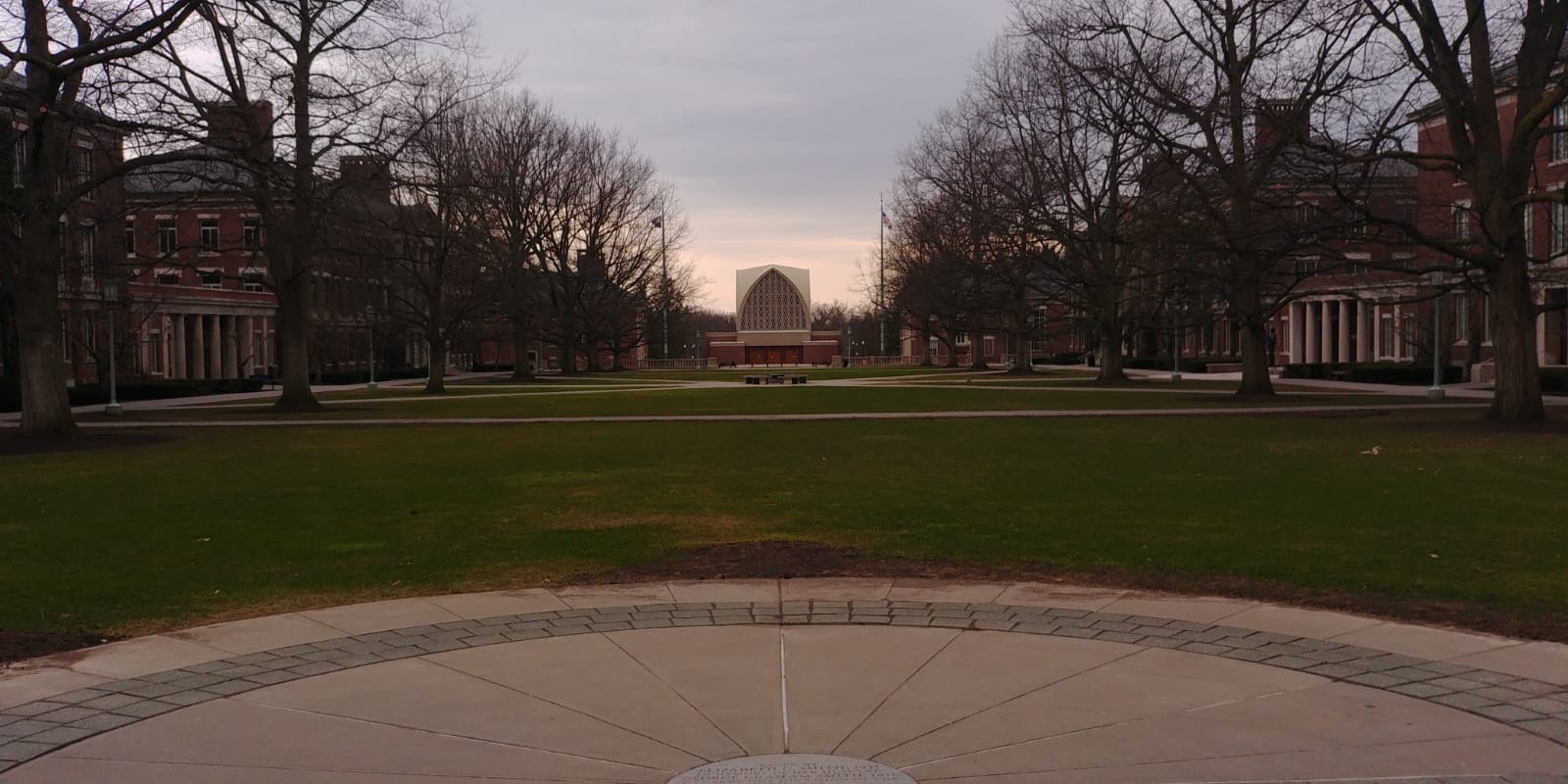
Eastman quad as seen from the steps to Rush Rhees Library. Photo by Yahia Ali.
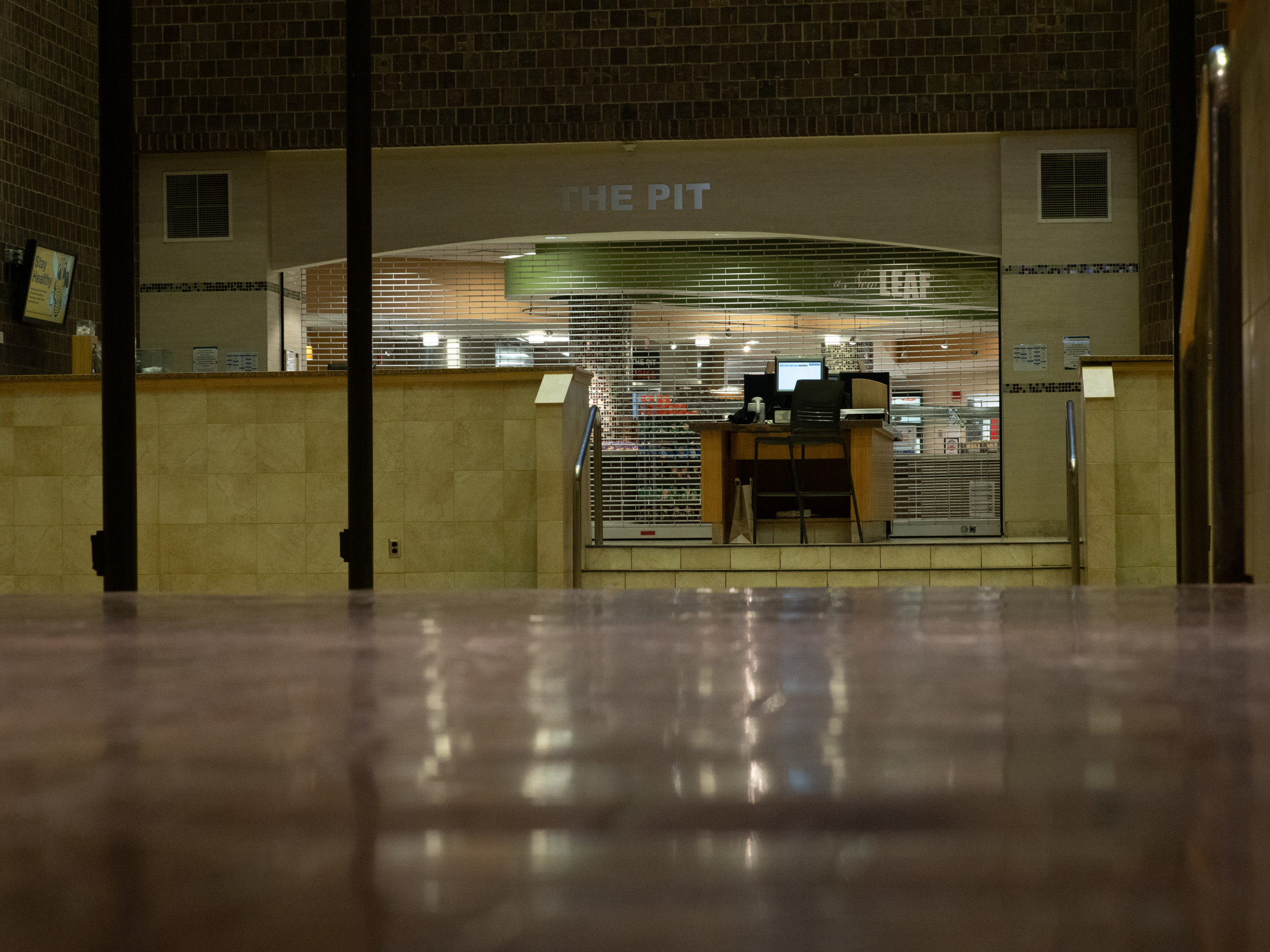
Few chairs and tables remain as Dining Halls become take-out only.
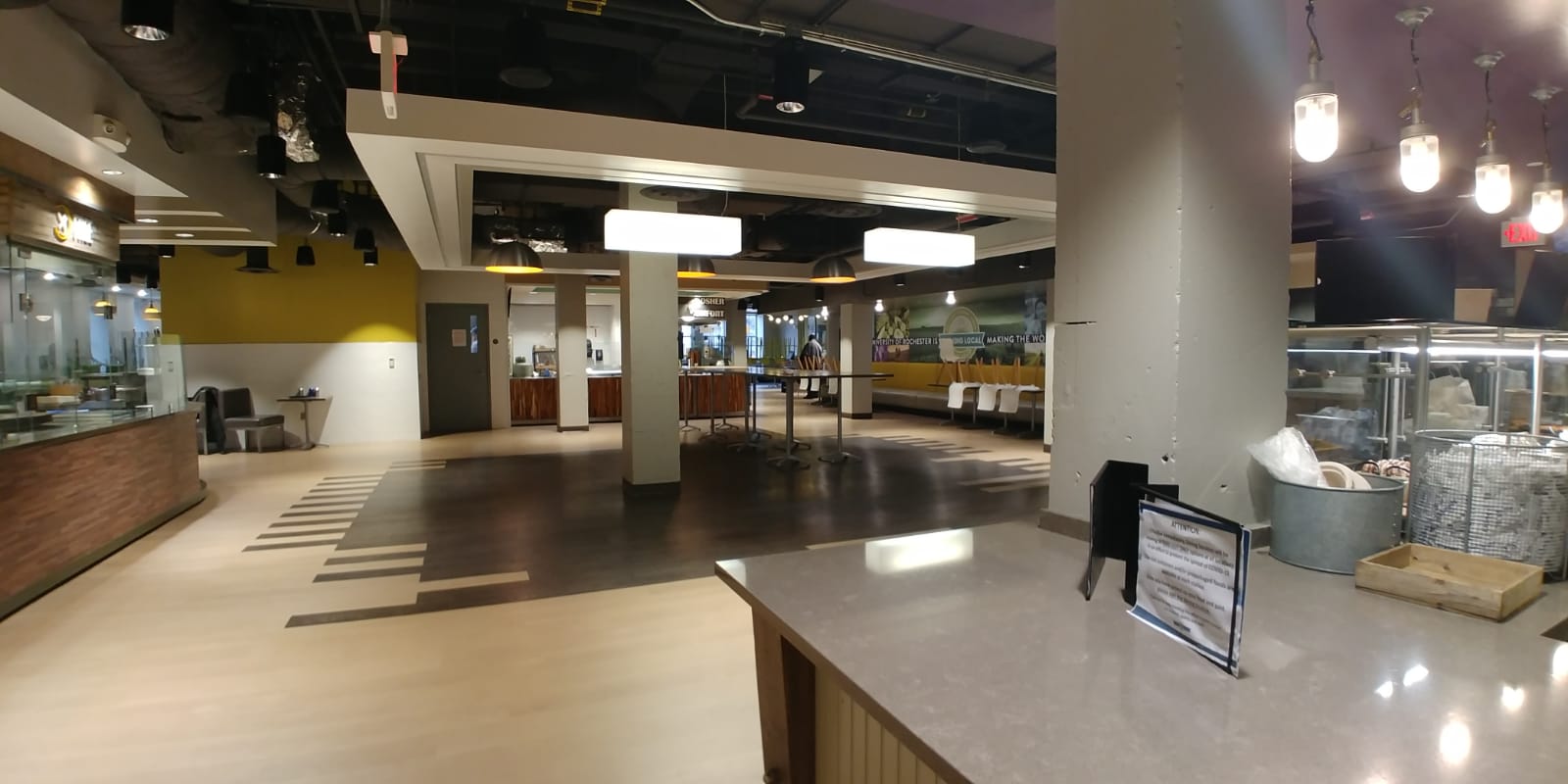
Douglass Dining Hall looks hollow as changes to its structure are made in compliance with health guidelines. Photo by Yahia Ali.
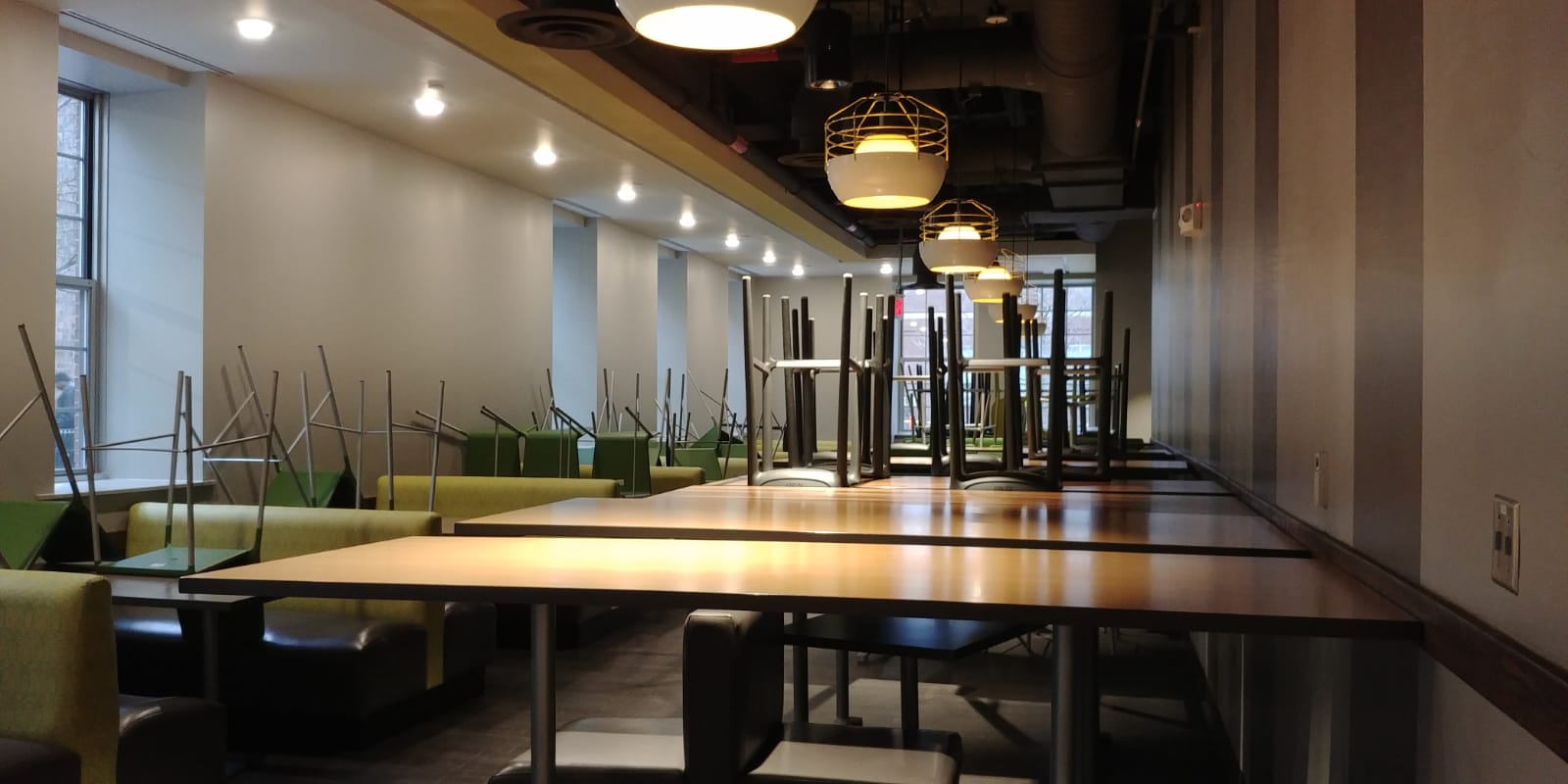
Chairs now rest on tables, blocking them from use. Photo by Yahia Ali.
Rush Rhees, the nucleus of river campus, stands near empty as study spaces and libraries close down.
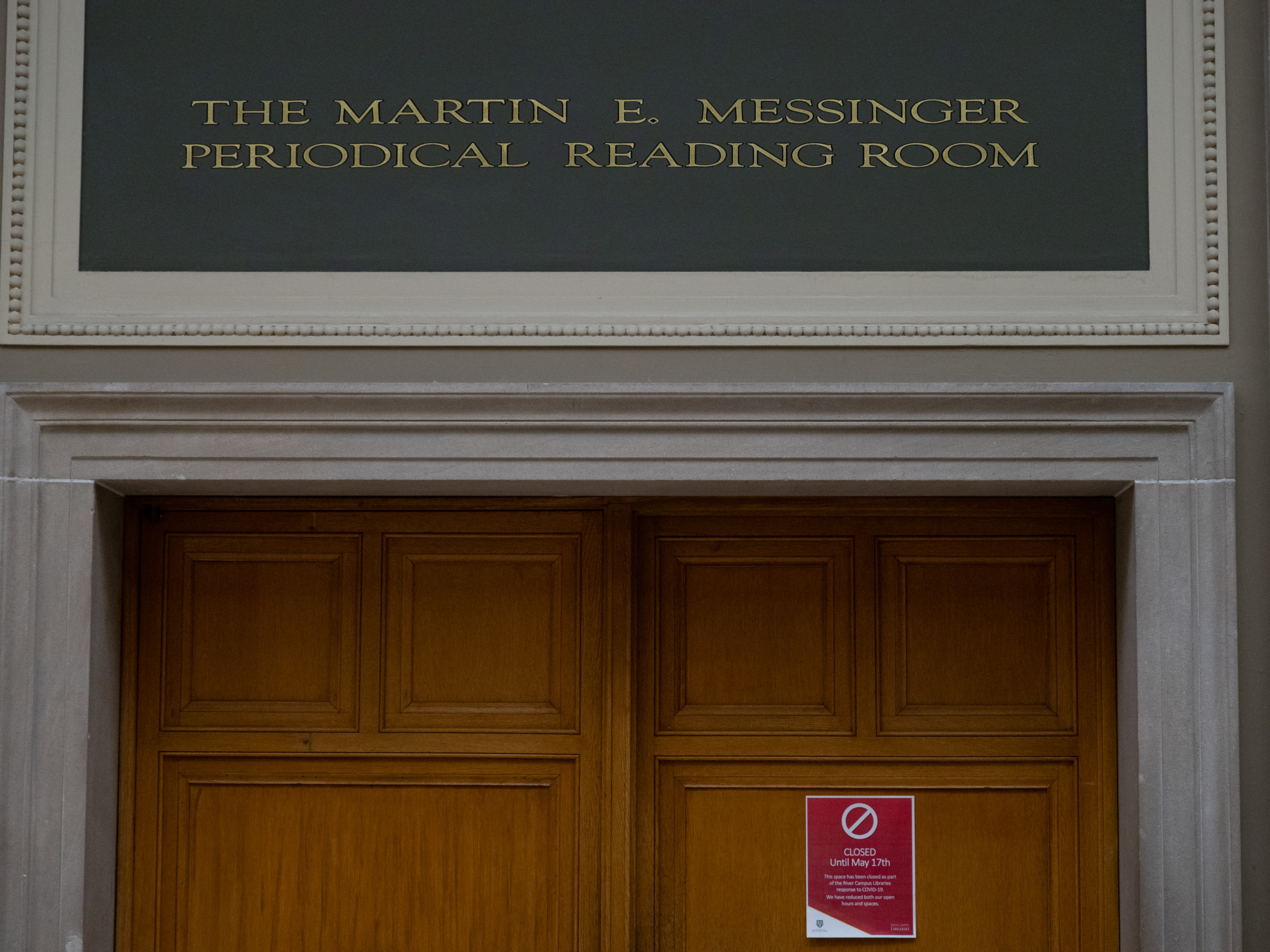
The PRR, normally filled to the brim with studying students, now lies empty, closed off to the world. Photo by Henry Litsky.
Most residence halls are largely unoccupied, only select buildings now house those remaining on campus.
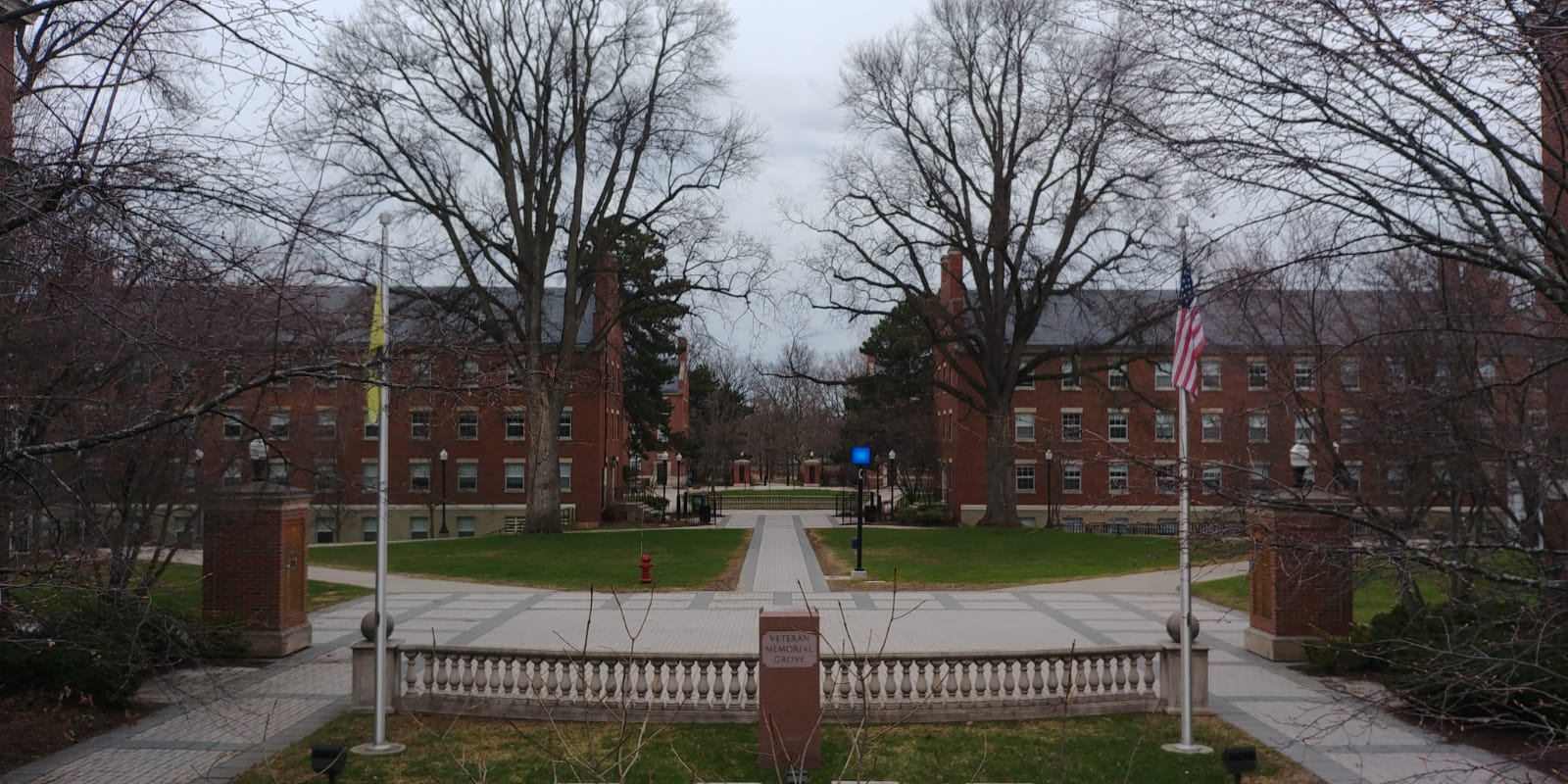
The first year quad now sits silent as former residents have moved off campus or to other housing. Photo by Yahia Ali.
Statues are some of the only human forms still regularly outside on River Campus.
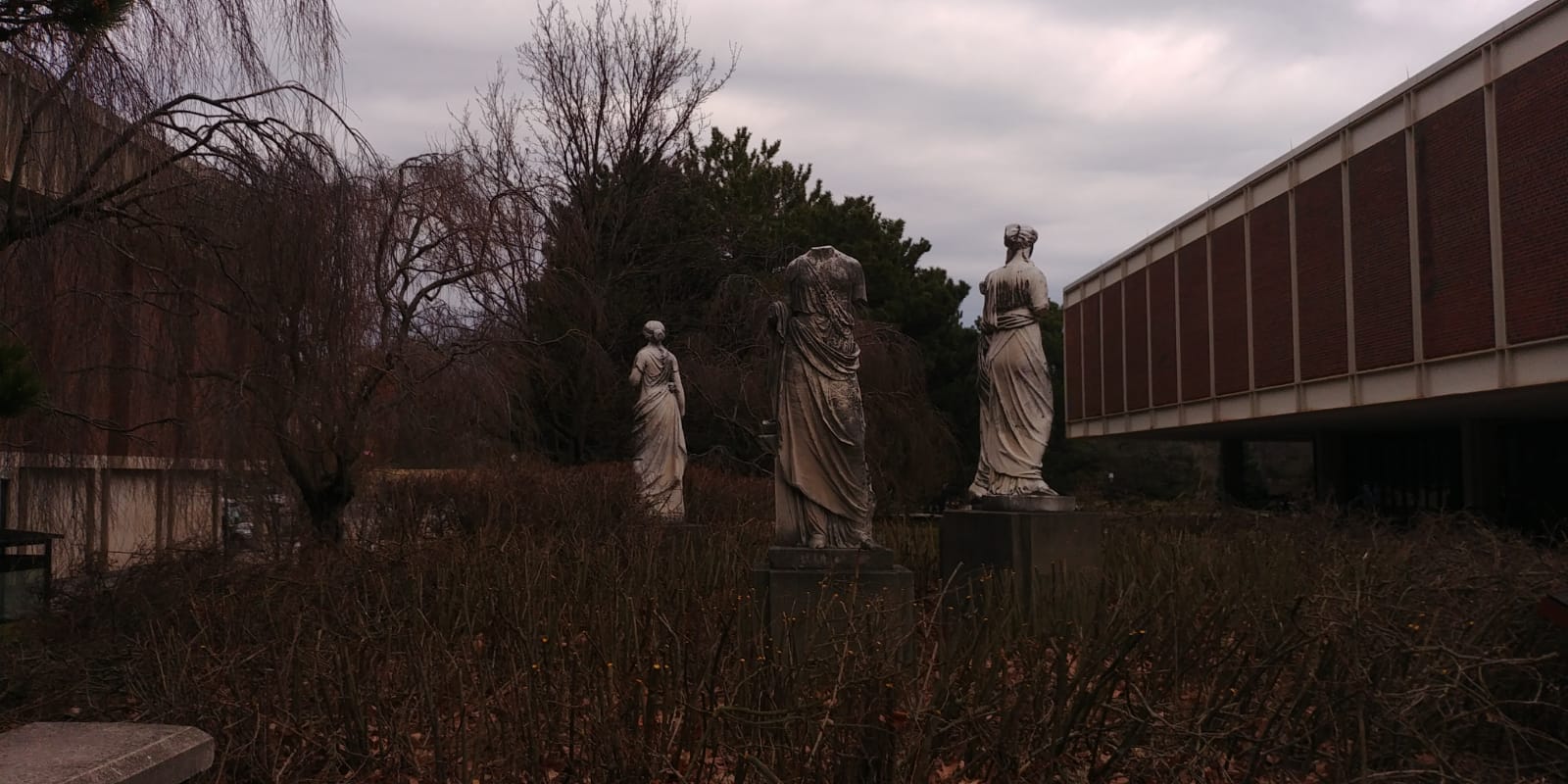
Some of the statues even practice social distancing. Photo by Yahia Ali.