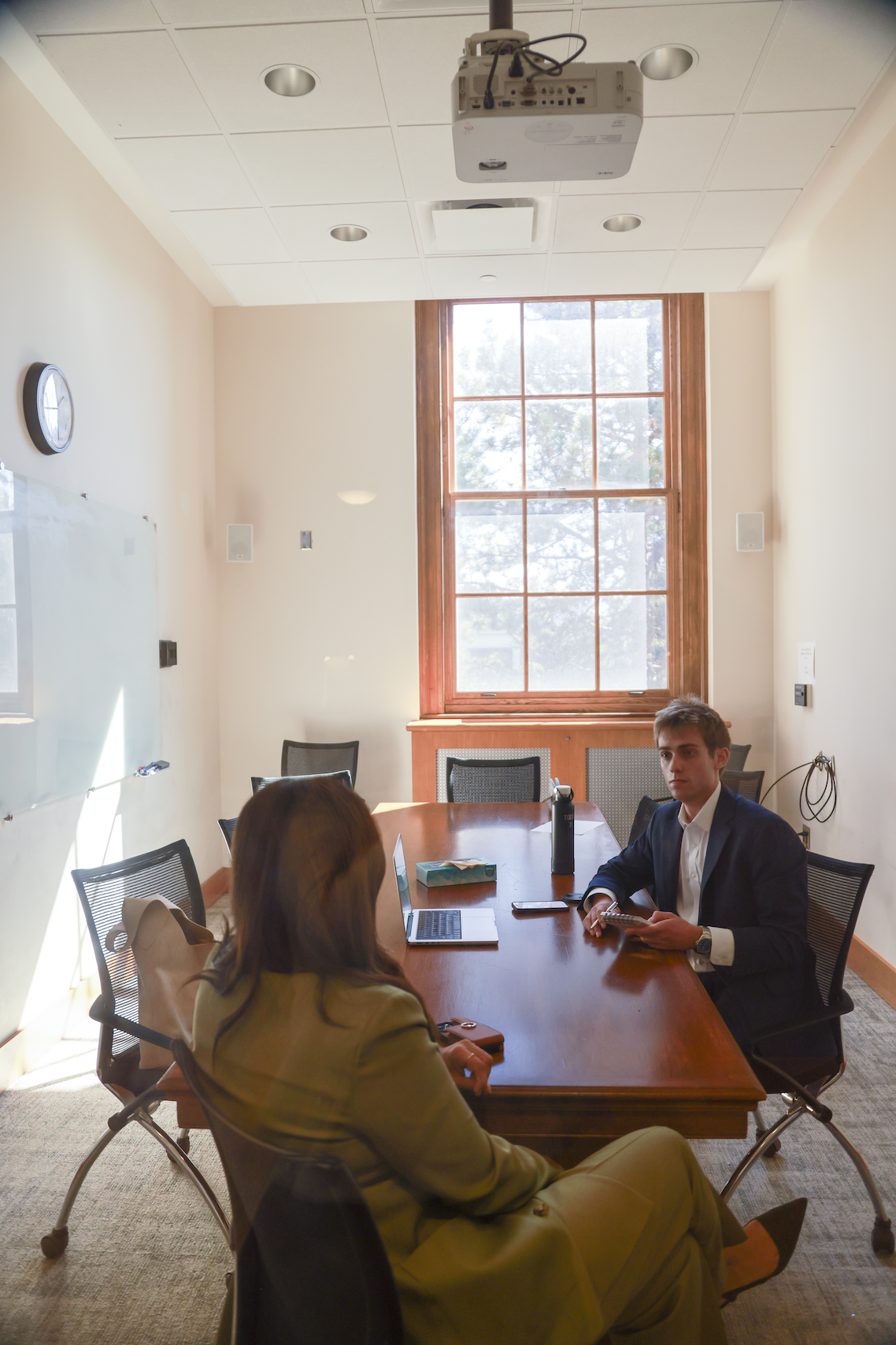
Dementia is difficult for patients and their families, but a new app made by a current student and an alum might lessen the weight.
Before his December 2017 graduation from UR, Kyle Ryan became involved in an app development project with junior Michael Woodbury. In the summer of 2017, Woodbury had asked Ryan to help with the technical side of the operation. Together they have developed OpenCare, a diagnostic tracking app designed for caretakers of dementia patients.
Ryan, who earned degrees in computer science and psychology, is from Connecticut, and he currently lives in San Francisco. He works full-time as a software engineer for Strava, a running and cycling mobile app company.
Ryan was known for his skill at designing apps and was recommended to Woodbury by a mutual friend. Throughout high school, Ryan had worked on several apps, mostly small games. In college, he also worked on a mental health community-focused app called Stigma.
Ryan was certain he would study the hard sciences, but as his college years went on, it became clear that what he once considered a hobby was going to turn into a career path.
Woodbury, a neuroscience major, came up with the concept for OpenCare after shadowing a neurologist.
“I noticed the difficulty caretakers faced in trying to accurately recollect all the symptoms the patient experienced,” Woodbury said.
Woodbury has family experience with dementia, and has also volunteered at hospice care facilities. He has worked with researchers, a neurologist, a neuropsychologist, and a nurse, all affiliated with the UR Medical Center, for their insight into how OpenCare could best improve patient and caregiver quality of life.
OpenCare allows caretakers to log the severity of symptoms, track progress over time, create patient profiles to keep note of care preferences, and store information on care history and medications. The goal of the app is to give caregivers more security over the status of their patients in a user-friendly, professional format.
Ryan and Woodbury both think they have accomplished that.
“It provides real value to the people struggling with these issues,” Ryan said. “Even if it’s a million users or 10 users, I want to be able keep it running so long as it’s helping caregivers provide better help to those that need it.”
OpenCare is currently in the process of being added to the Apple App Store, and Ryan and Woodbury are both looking forward to seeing the effects the app will have on both patients’ and caregivers’ quality of life.