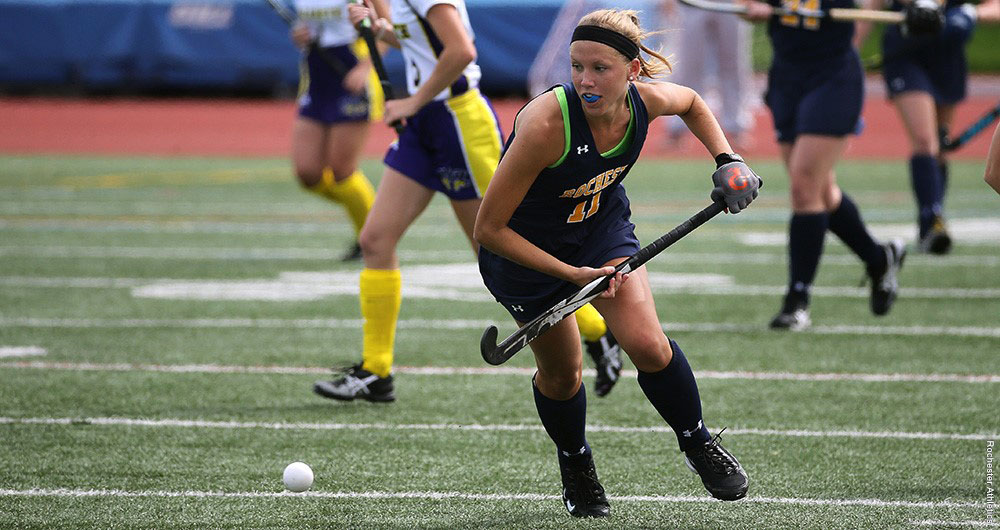
Senior attacker Claire Dickerson had three goals for UR Field Hockey against St. Mary’s College this Sunday and has six on the season. Her offensive surge contributed to the team’s 4–2 victory, the team’s fourth win after a disappointing 1–0 loss against Johns Hopkins on Saturday.
What is your first memory of playing field hockey?
I played it in a gym class before I played on my team in middle school. I wanted to play basketball but I was too short and clumsy.
How do your teammates impact you on the field?
I always want to work hard for them because I know they would do anything for me.
What do you enjoy most about playing?
The energy during big games and accomplishing things we never thought we could together as a team.
What do you think is your biggest strength?
Probably speed.
How did it feel to come back and beat St. Mary’s after a tough loss on Saturday?
Our loss on Saturday was a wake-up call that nothing is earned. It humbled us and encouraged us to change our game for the rest of the season and play at our full potential.
What are some good tips for people just starting off playing the sport?
Have fun with it! People take it so seriously but at the end of the day it’s just a sport.
What is your favorite pre-game pump up song?
“Boyfriend/Girlfriend” by C-Side

