“I’ve been ready my whole life.”
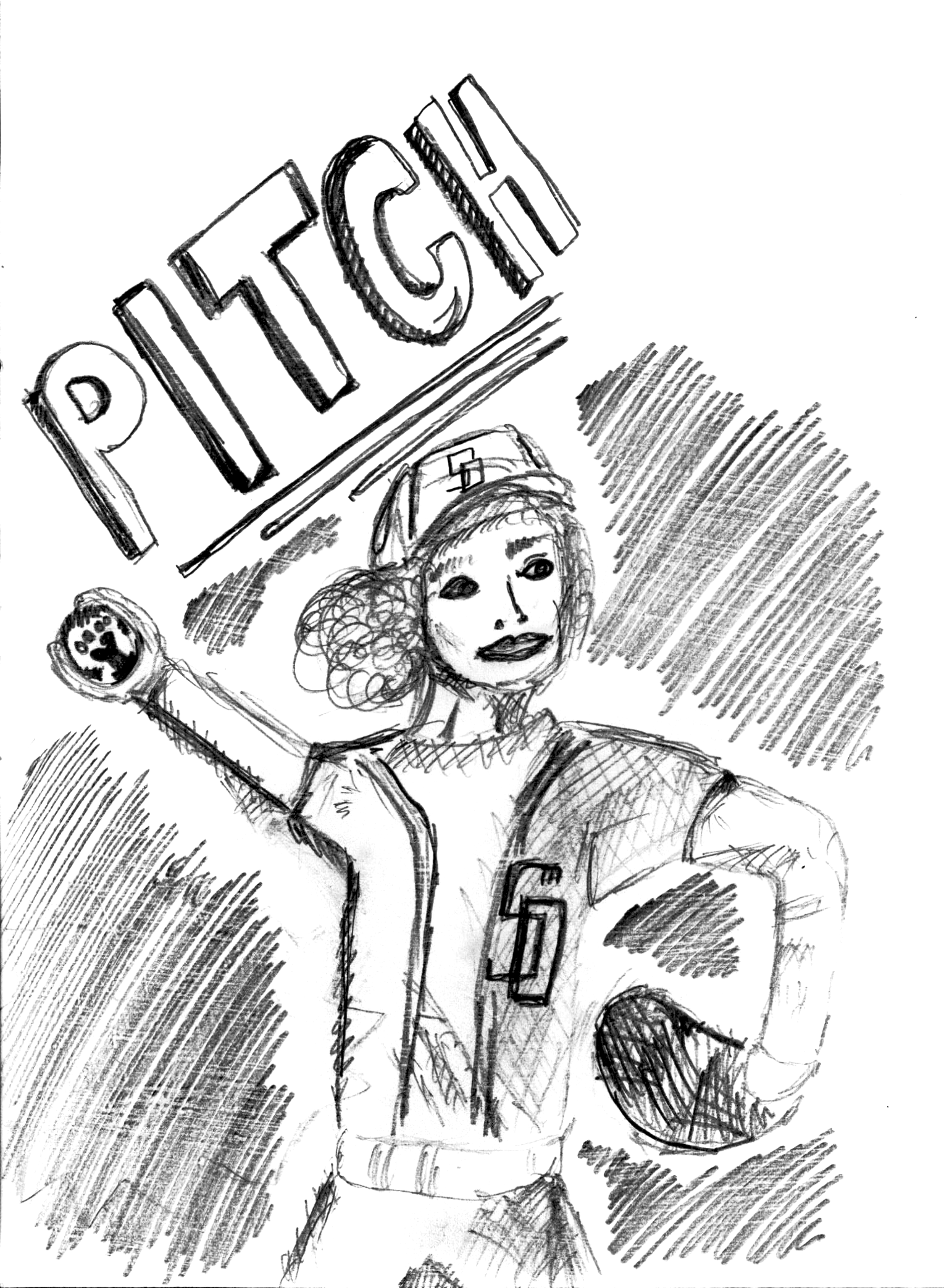
Those are the words uttered by Ginny Baker (played by Kylie Bunbury) in new Fox TV Sports drama “Pitch,” the fictional story of the first woman to play and pitch in Major League Baseball (MLB) for the San Diego Padres.
One could argue that Bunbury spoke those words not only as Baker, but as a actress yearning to make a difference in the lives of women across the country.
The series premiered this past Thursday evening and found a way to not only empower the viewer, but challenge and only seldom reaffirm society’s perpetual gender dichotomy.
Bunbury, who has garnered notable appearances on Freeform’s “Twisted” and CBS’ “Under the Dome,” portrays Baker convincingly as a “complex female character.”
 the first four minutes of the pilot, the 23-year-old Baker is stone-cold and focused, trying to digest the audience she has drawn: thousands of dumbfounded press representatives along with a multitude of young girls who see Baker as their champion.
Show creator Dan Fogelberg, however, humanizes Baker, allowing for Bunbury to expel angst and sensitivity in flashback scenes in which she fights for her father’s (Michael Beach) approval. The writing and portrayal of Beach’s Bill Baker challenges cultural expectations of young girls.
While Mr. Baker’s stringent approach to parenting his daughter appeared heartless, it was simultaneously refreshing. The former minor league pitcher acknowledged his daughter’s gender but considered it a strength rather than a weakness. He taught her the niche pitch and undoubtedly un-hittable screwball, which Ken Rosenthal referenced during the pilot as a “nasty” trick in her “arsenal of pitches.”
There were also instances where Beach’s character completely disregards female stereotypes. A prevalent example is when Mr. Baker slaps his son in front of a young Ginny to focus her to throw a strike. The older Baker doesn’t abide by the expectation that young women cannot be as tenacious as a man.
Although Bill Baker might view his daughter with relatively little gender bias, Fogelberg opened an intentional discourse regarding how Fox Sports and radio hosts regard women.
Fox commentator Joe Buck and retired pitcher and hall-of-famer John Smoltz deliver lines such as “I’m petrified” and “Can I go home?” after viewing Ginny Baker’s lackluster first start. Both commentators aren’t even written to provide analysis of Baker’s performance, and appear as helpless and discouraging buffoons.
There’s one radio host who refers to Baker’s looks as a reason for her extended tenure in the big leagues after she failed to throw a strike to the first three batters she faced.
“If you can’t throw a bat over the plate, but you’re really pretty, you can play in the big leagues,” the host said.
Ironically enough, the only sports media personnel that Baker even regards is none other than Fox’s own Katie Nolan, a sports feminist and host of sports criticism show “Garbage Time.”
There’s a scene in which Baker watches Nolan discuss her disappointing first start properly, and admitted uncertainty about the screwballer’s future.
The simultaneous digs at men in sports media and rewards to women in sports media definitely send a signal to the viewers.
While the show is incredibly well-written and provides clear characterizations of Baker’s agent and fellow female juggernaut Amelia Slater (Ali Larter) and hot-shot star veteran catcher and potential advocate for Baker Mike Lawson (Mark-Paul Gosselaar), it did employ some questionable themes. I’m still grappling over my opinions of Bob Balaban’s character, Frank Reid, the Padres owner.
Reid, along with the sports media, frequently compared Baker’s emergence on the Padres to that of Jackie Robinson, who broke the MLB’s color barrier in 1947. It’s difficult to pinpoint the owner’s intentions. Does he actually believe Baker will shock the world, or is he just using her image as ticket-selling crutch?
Additionally, the butt-slapping motifs that were implemented by Lawson and manager Al Luongo (Dan Lauria) were unsettling. While Baker stood her ground well and attacked both for doing so, Lawson dribbled up the excuse that everyone on the team partakes in that behavior, and this isn’t just directed at Baker and her gender.
Something else to consider is the heartbreaking twist that accompanies the last ten minutes of the pilot. Baker, or the grand gatekeeper of denying the gender dichotomy, is actually dead. He passed away in a car crash the evening after a Padres scout expressed interest in his daughter amid the clinching of her state championship. Bill Baker had been an illusion, but a clear symbol for the Padres hurler.
Leading up to the series premiere, the “Pitch” creative team, Fogelberg, and co-executive producer Kevin Falls deemed the series the “West Wing of Baseball,” and to some it might have the idealism of the highly influential political drama.
The New York Times and ESPNW have concurrently analyzed the reasons why women haven’t broken through baseball, which is what Jessica Mendoza refers to as the sport where size and strength are the least limiting for success.
The issues stem from cultural constraints. Young women feel belittled and isolated by their male teammates. Baseball scholarships are rarely provided to young women, which encourages young hurlers like Sarah Hudek (the first woman to receive a baseball scholarship, but to a community college) to flee to softball programs that do provide women with more fruitful opportunities.
Critics of “Pitch” wish that a show of its nature would be more realistic and offer the accounts of a women like Mendoza, who currently is an analyst on “Baseball Tonight.” Maybe the inherent idealism of “Pitch” will fare similarly to “The West Wing,” and inspire the change it portrays. The political drama dreamed of a liberal administration that, at the time, seemed out of reach. Ginny Baker’s story might be exactly what this country needs, as it’s imperative to lean in and support women and, in turn, make fiction a reality.