Courtesy of Steph Hao
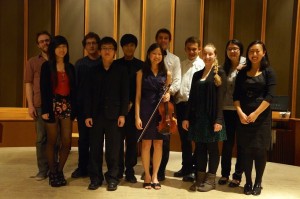
On Friday, April 11, UR’s Undergraduate Musicians Council hosted its first annual showcase at the Interfaith Chapel. The showcase presented an opportunity for UR student musicians to perform for their peers in an environment more formal than that of other on-campus music outlets – for example, No Jackets Required’s open mic or Starbucks’s “Friday Night Live”.
While the showcase mostly featured classical performances from students, it highlighted the diverse assortment of talent from the UR student body. Gavin Piester, freshman and Vice President for UMC, performed a movement from Paul Hindemith’s “Sonata for Trumpet,” while senior Benjamin Lovell treated audience members to “Basement Tropic,” an original piece built on the sampling and manipulation of cassette recordings. While the showcase embraced the experimental, the night also welcomed tributes of classical staples, such as freshmen Aaron Jo and Sarah Xu’s duo violin performance of Pachelbel’s “Canon in D”.
The UMC hopes to continue the Showcase as an annual tradition. UMC president and sophomore Jenny Sun emphasized that the showcase offers an “opportunity for musicians to come together,” and that the UMC is “hoping to expand” the tradition to incorporate the full range of musicians at UR. Vice President Piester noted that the showcase is “proof we’re going somewhere in the next four years,” referring to the club and the musicians it represents.
Performers and audience members alike treated fellow musicians with enthusiasm and respect. During intermission and the post-showcase reception, musicians chatted and networked with one another, underscoring the common bond UR musicians share and the importance of a group like UMC in bringing them together. If the warm reception of the first annual showcase is any indication, the UMC is well on its way to crafting a niche for itself in UR culture.
Howard is a member of
the class of 2017.