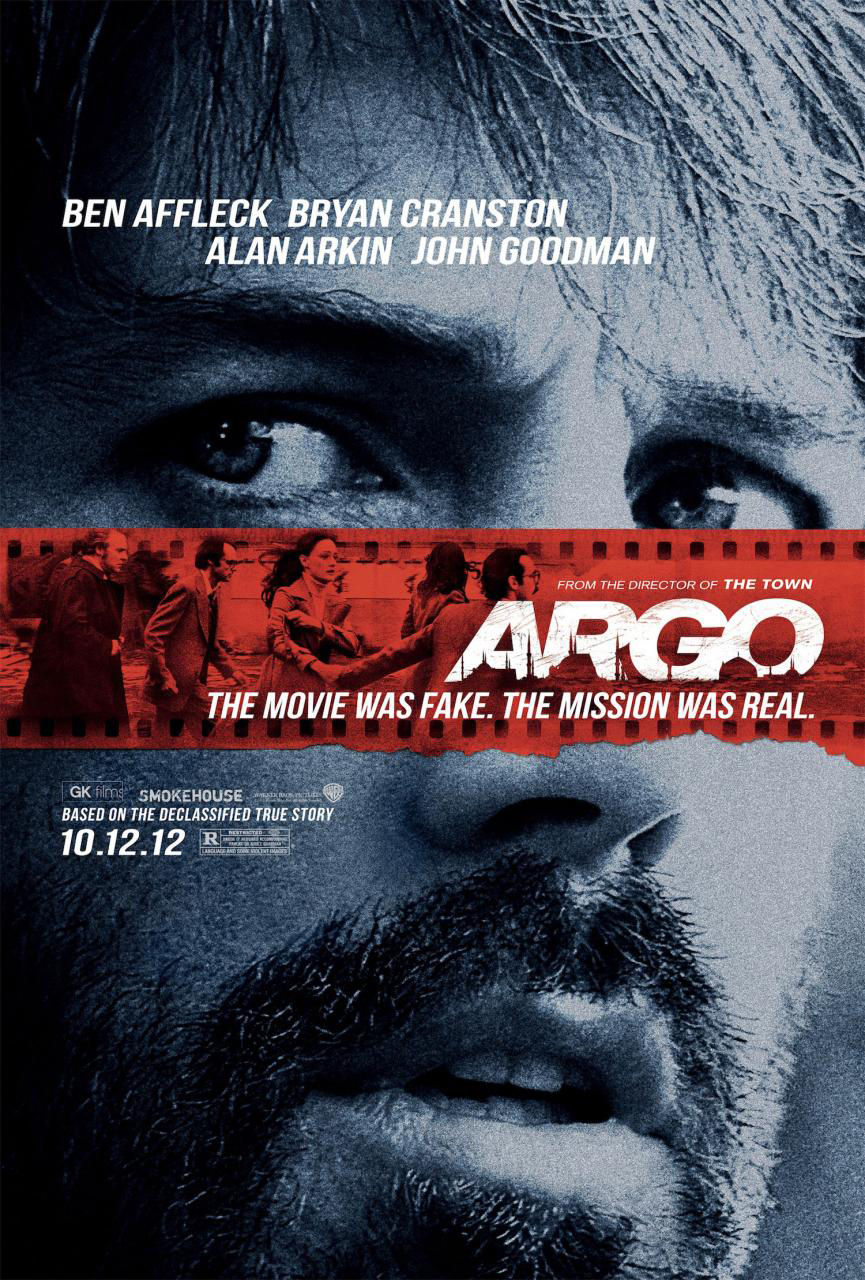
Courtesy of imdb.com
Ben Affleck’s third and arguably best film is a full-blooded thriller, expertly directed and deftly scripted, making it one of the most exciting pictures I’ve seen in recent years. It generates spectacular surges of tension by hinging the gravity of the central dilemma on an absurd solution. Six American diplomatic personnel are forced to hide out in a Canadian ambassador’s home after the U.S. embassy in revolutionary Iran is stormed by violent protesters. Wanted by the Iranian military, these six have precious little time to be rescued before they are caught. The only solution? Send in a professional extractor to smuggle them out under the guise of a film crew location scouting in Iran.
Though clearly a dramatization, the fact that Argo’s plot is grounded in truth is astounding. There are moments of paralyzing suspense and others of improbable humor; who knew that history contained such choice ingredients for a blockbuster film? At the same time, the movie’s claim to reality brings immediacy to the events onscreen and compels us to identify with the characters more than we would have otherwise. That real people’s lives depended on so cockamamie an operation is ridiculous and frightening, but such a plan was their only hope. And so we watch “Argo,” spellbound by fear, skepticism, and our penchant for first-rate moviemaking.
Film Grade: A-
Jeng is a member of the class of 2016.