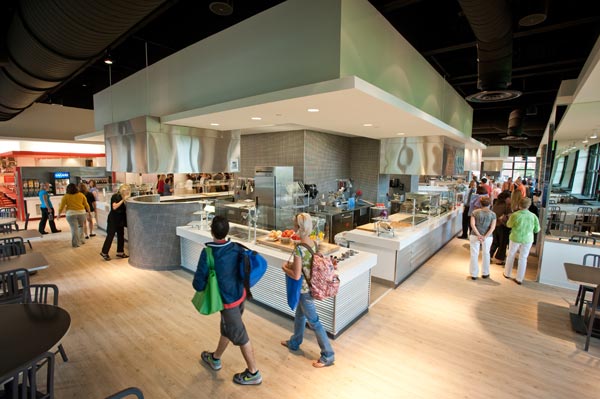
Courtesy of rochester.edu
No other department on campus works harder than Dining Services to communicate with students. It constantly welcomes feedback and, more importantly, responds to it.
For example, the monthly Dining Committee meetings aren’t just free food. All of the Dining Services administrators attend, not only to share updates, but to solicit student thoughts. What other department allows you to speak directly to its director once a month in person? Additionally, the frequent dining update emails keep all students informed about the common, yet varied, special events including promotions, limited time menu items, and food tastings.
Dining is a big part of campus life and much more than a meal; the food and the service have a tremendous effect on our days, our studies, and our moods. Dining Services recognizes this and often plans events such as “comfort food lunches” to make us feel more at home.
Besides putting on events and getting student feedback, Dining Services actually responds to the information it gathers, either actively or passively. Last semester, it responded to two Campus Times articles by adding Mel burgers to the Pit and a chocolate fountain to the Douglass Dining Center.
Dining Services also tries to remain transparent to the student body, often coming to Students’ Association Senate meetings to present updates on meal plans or other proposed changes.
Dining Services has the ability to make small changes easily, and we appreciate this, but other departments should try to follow their lead and put more emphasis on student feedback.