Drue Sokol, Photo Editor
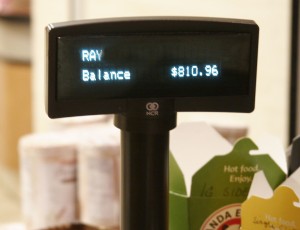
Under the current dining system, students must purchase a specific meal plan at the beginning of each semester, which includes a set amount of declining balance dollars. If any student’s balance remains at the end of the academic year, it returns to Dining Services as a planned revenue source. From the student perspective, this extra money seems to vanish into thin air, and — while practical concerns may prevent declining from being refunded back to the original customer — students should not feel as if their unspent dollars simply go down the drain. Instead, the remaining declining balance ought to be donated to a local charity or philanthropic cause.
Under the current system — in which declining is considered a sunk cost — students have no real incentive to budget it wisely. This mindset promotes wasteful spending, as many students do not consider declining to be real money. However, if students knew that their leftover balance would ultimately go to a charitable cause, they might make more conscientious spending decisions.
Overall, roughly 2 percent of the student declining balance remains unspent — a substantial pool of money when considering the entire student body. This has the potential to provide a real service to the Rochester community. Additionally, by participating in this proposed initiative, students could be inspired to seek out valuable opportunities to volunteer in the greater Rochester area, bolstering connections between UR and the city at large.
Offering students the option to donate their leftover balance would be neither impractical nor unprecedented. In past years, clubs have offered students the opportunity to use declining to buy canned food for local food banks. Instituting an offical donation policy would simultaneously raise awareness and participation toward this initiative.
Nevertheless, it is worth acknowledging that this transition may not be entirely straightforward and should be considered as a long-term strategy. Still, with appropriate planning and discussion, this initiative could make a positive impact at UR and its surrounding community.