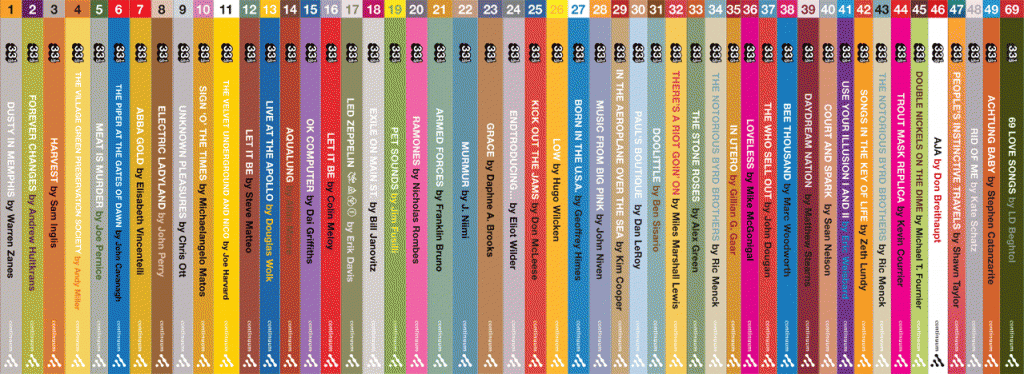
 Is pop music art? That might seem like a stupid question, but how often do you see a 45-minute album getting the same intellectual treatment as a classic novel or film? Fortunately, there’s a fantastic outlet for such serious, geek-tastic discussion: Continuum’s 33 1/3 book series. These pocket-sized books each feature a different author writing about one album of his or her choosing. In the beginning, the books mostly focused on obvious classic rock monuments like “Let it Be,” “Led Zeppelin IV” and “Born in the U.S.A.” But as the series has expanded — it now includes nearly 80 volumes, with new ones coming out every few months — it has covered an impressive selection of great albums, from hip-hop classics (Nas’ “Illmatic”) to modern masterworks (Radiohead’s “Kid A”) to obscure gems (The Afghan Whigs’ “Gentlemen”). Though what’s most impressive about the series is that every book is a unique learning experience. You’d think that after reading a few books breaking down a pop album, you’ve read them all. But after going through about 20 books in the series, I’ve learned that there are countless ways to intelligently look at pop music. No two books utilize the same approach. Some are encyclopedic reports, some are informative historical accounts, others are philosophical theses, song-by-song analyses, personal rants and even fanfiction, all stemming from one singular LP. It’s impossible not to return to your favorite records with a new sense of excitement after reading one of these books — it’s also impossible not to learn some fascinating things outside the realm of popular music. For more info and a complete list of books, visit 33third.blogspot.com.
Silverstein is a member of the class of 2013.