More than 300 faculty members from the College of Arts, Science and Engineering were nominated for a Goergen Award for Excellence in Undergraduate Teaching. Of them, three were chosen based on their passion for teaching and their success in conveying ideas to their students –– Kenneth Gross, professor of English, Carmala Garzione, associate professor of Earth and environmental sciences and Renato Perucchio, professor of biomedical and mechanical engineering.
These three professors were honored at a luncheon and award ceremony — which also featured performances by The YellowJackets and Vocal Point on Friday, Oct. 15, in the Meliora Grand Ballroom of the Frederick Douglass Building.
Kenneth Gross
Kenneth Gross’ teaching style is far from prototypical. He doesn’t teach out of a textbook. In fact, as he readily admits, he doesn’t even go into class with a structured lecture.
“I’m happy to leave a plan behind, if a fresh line of thought starts in class,” Gross said. “I never write out lectures. I like being surprised, or being forced to improvise in class.”
Gross also likes to promote new ideas by posing “odd or oblique questions” to the class, and he’s more than willing to wait through some silence to get a response. Gross maintains that by pushing students to think in ways they haven’t before, they come up with ideas that he has never come across — even with the poems and plays with which he is the most familiar.
Gross highly values debate and argument in the classroom, yet he also aims to keep his lectures light-hearted — an aspect of his style that makes him highly popular among students.
“Playfulness in general is part of what’s serious in literature, playfulness and pleasure, even if it’s an odd and difficult or mysterious kind of pleasure,” he said.
As for the award itself, Gross is moved that colleagues and former students supported him through their nominations, and to see what kind of effect he is having as a teacher.
Carmona Garzione
“One thing that I always try to do is give a broader context for [students’] learning,” Professor Garzione said.
This points to one of the most important aspects of Garzione’s teaching style — she promotes an environment in which students can relate new information to what they already know. She does this not just sporadically throughout the semester, but with every new topic her class covers.
Garizone was also one of the earlier UR professors to implement the concept of workshops in her courses, forcing students to figure out approaches to problem-solving on their own.
Professor Garzione’s impact is felt just as greatly outside the classroom as in it. She frequently takes undergraduates abroad to help her with research, creating incredible experiences for them as well.
On one particular trip, Garizone and an undergraduate discovered two meteorite craters in the Andes Mountains while collecting water samples.
“I think what was really exciting about that moment was discovering something completely unanticipated, and also seeing the student get so ignited by his interest in this topic,” she said.
Renato Peruchio
To Professor Perucchio, perhaps the most critical part of being an effective teacher is to involve students as much as possible.
“Ideally, I would like to have the lecture as a dialogue,” he said.
Although this might not always be possible in a large lecture setting, Perucchio has provided students with unique, cross-disciplinary opportunities for sharing ideas through serving as the director of the newly created Archeology, Technology and Historical Structures (ATHS) program.
Perucchio was one of the pioneers of this program, which integrates multiple areas of study to construct a unique viewpoint on historical structures.
“Just looking at an Ancient Roman monument from a purely archaeological point of view doesn’t allow you to appreciate the engineering challenges [involved],” he said.
Perucchio also influences students beyond the lecture hall by regularly taking both engineering and non-engineering undergraduates to Italy to study the unique structures of Ancient Roman architecture.
“Taking students to Italy has been a phenomenally beautiful experience, perhaps the most incredible I’ve had since I started teaching at the University in 1984,” Perucchio said.
For Perucchio, winning the Goergen Award was significant on two levels. On one side, the award recognizes the work put in not just by Perucchio, but by his colleagues as well.
“On a personal level, it recognizes that I have made a major professional investment in teaching,” he said.
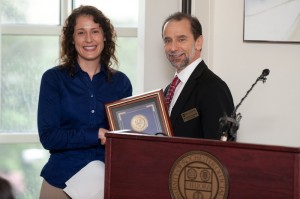
Courtesy of uofrphoto.com
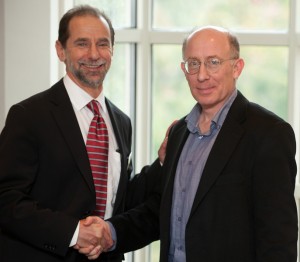
Courtesy of uofrphoto.com
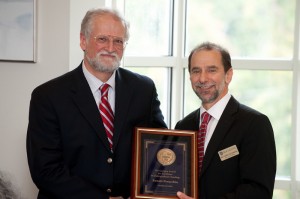
Courtesy of uofrphoto.com
The University will soon be publishing a pamphlet entitled “How I Teach” that further details the unique styles of all three professors.
Fleming is a member of the class of 2013.